Why Liability in Truck Accidents Is More Complicated
Differences Between Truck and Car Accidents
Truck accidents aren’t just bigger versions of car crashes. They’re fundamentally different from a legal standpoint. A standard car accident might involve one driver and one insurance policy. Truck accidents involve commercial regulations, multiple potential defendants, and much higher damage claims.
Trucking companies operate under federal regulations that don’t apply to regular drivers. The Federal Motor Carrier Safety Administration (FMCSA) sets strict rules about driver hours, vehicle maintenance, and cargo loading.
When a trucking company violates these rules, it strengthens your liability case. Additionally, trucking companies often carry insurance policies that far exceed what a typical driver carries, meaning higher potential compensation.
Federal & Texas Laws That Apply
Your truck accident claim is governed by both federal and state law. Federal FMCSA regulations establish rules for commercial drivers and trucking operations. These regulations cover everything from how long a driver can work to how trucks must be maintained. When a trucking company fails to follow these rules, that violation can prove negligence.
Texas law applies the rules of negligence and comparative fault. Texas courts use what’s called modified comparative negligence, which we’ll explain in detail below. Understanding both federal and state law is essential to building a winning case. Our attorneys are experienced in navigating both frameworks to identify all liable parties.
Who Can Be Liable in a Truck Accident?
The Truck Driver
The truck driver is often the first person you might think is liable. A driver can be negligent in many ways: driving while fatigued, speeding, driving under the influence, or violating hours-of-service rules. Federal law limits drivers to 11 hours of driving per 14-hour shift. Violating these rules is both dangerous and illegal.
Truck drivers must also maintain their vehicles and report mechanical problems. If a driver knew about a mechanical issue and didn’t report it, they can be held liable. Driver negligence is usually proven through evidence like logbooks, dashcam footage, and witness statements. The trucking company can also be liable for the driver’s actions under a legal theory called vicarious liability.
The Trucking Company
Trucking companies often bear more liability than the driver alone. Companies are vicariously liable for their drivers’ negligent actions, meaning you can sue the company even if the driver wasn’t acting recklessly. But that’s not the only way a company can be liable. Trucking companies must hire qualified drivers, provide adequate training, and enforce safety policies.
If a company hired a driver with a history of accidents or violations, they can be liable for negligent hiring. If they failed to train drivers on safety procedures, that’s negligent training. Some companies pressure drivers to meet unrealistic delivery schedules, which can lead to speeding and fatigue. We investigate whether scheduling pressures contributed to your accident.
The Cargo Loaders
Improperly loaded cargo is a common cause of truck accidents. If cargo isn’t balanced or secured correctly, the truck can become unstable or tip over. Third-party loading companies often handle cargo loading separately from the trucking company. If a loader failed to secure cargo properly, they can be sued directly.
Overloaded trucks also cause accidents. Federal law limits how much weight a truck can carry on each axle. If cargo loaders overloaded the truck, that’s negligence. Even if the trucking company didn’t load the cargo, they have a duty to inspect the load before driving. If they failed to do that, they’re liable.
The Truck Manufacturer or Parts Manufacturer
Sometimes truck accidents result from defective equipment. A brake system failure, tire blowout, or steering defect can cause an accident even if the driver did nothing wrong. If the truck or a component was defective, the manufacturer can be held liable under product liability law.
Product liability doesn’t require proving negligence. You only need to show the product was defective and caused your injuries. Manufacturers must warn drivers about known risks. If a manufacturer failed to warn about a known defect, they’re liable. We work with engineers and experts to determine if equipment failure caused your accident.
Maintenance Providers
Regular maintenance is crucial to truck safety. Many trucking companies hire independent mechanics or maintenance facilities to service their vehicles. If a maintenance provider failed to inspect the truck properly or made repairs negligently, they’re liable for resulting accidents.
Maintenance records tell the story. We obtain complete maintenance logs to see what work was done and when. If the truck was due for inspection but wasn’t serviced, or if a mechanic failed to identify a problem, that’s negligence. We hold maintenance providers accountable when their failures cause accidents.
Third Parties
Other drivers can be liable in truck accidents too. If another vehicle cut off the truck driver, forcing them to brake suddenly, that driver shares liability. Contractors working on roads, construction companies, and even government agencies can be liable if their actions contributed to the accident.
How Fault Is Determined in Texas Truck Accidents
Texas Comparative Fault Rule
Texas uses a “modified comparative negligence” system. This means you can recover damages even if you were partially at fault for the accident, as long as you weren’t more than 50% responsible. If you were 30% at fault and the truck driver was 70% at fault, you can recover 70% of your damages.
However, if you’re found 51% or more at fault, you can’t recover anything. This is why proving the truck driver and company were primarily at fault is so important.
Our attorneys build cases that clearly show the truck driver and company’s negligence while acknowledging any minor role you may have played. Insurance companies will try to inflate your percentage of fault to reduce what they pay.
Evidence Used to Prove Liability
Building a liability case requires gathering and analyzing evidence. Black box data from the truck is invaluable—it records speed, braking, gear shifting, and engine performance. This objective data shows what the truck was doing in the moments before the crash.
Driver logbooks show whether the driver violated hours-of-service rules. Electronic logging devices (ELDs) track exactly how long a driver has been working. Maintenance records reveal whether the truck was properly maintained.
Police reports document the accident scene and officer observations. Witness statements corroborate your account of events. We gather all available evidence and use expert witnesses to explain what it means.
Common Causes of Truck Accidents That Affect Liability
Driver fatigue is one of the leading causes of truck accidents. Federal hours-of-service rules exist because tired drivers cause crashes. If a driver had been driving for 15 hours when the accident occurred, the trucking company is liable for allowing it.
Distracted driving includes texting, eating, adjusting the radio, or using navigation. Trucks require more attention than cars, and any distraction is dangerous. A driver caught texting before a crash is clearly negligent.
Overloaded trucks shift improperly and become harder to control. If the truck exceeded legal weight limits, the company or loader is liable. An overloaded truck can flip on curves or have brake failure on hills.
Poor maintenance causes brake failure, tire blowouts, and steering problems. If maintenance records show the truck wasn’t serviced when it should have been, liability is clear. A truck with failing brakes that hits you is the result of negligent maintenance.
Speeding is particularly dangerous for large trucks. Trucks require much longer to stop than cars. A truck traveling 65 mph in a 55 mph zone has reduced braking capability. Speeding is negligence, and black box data will prove how fast the truck was traveling.
Improper cargo loading creates instability. If cargo wasn’t balanced or secured, the truck can tip or swerve. Evidence of improper loading—like photos from the accident scene showing scattered cargo—proves the loader’s negligence.
What Happens When Multiple Parties Are Liable?
Truck accidents often involve shared liability. The truck driver may be partially at fault, the trucking company may be liable for negligent hiring, and a maintenance provider may be liable for mechanical failure. Texas law allows you to recover from all liable parties based on their percentage of fault.
This is where having experienced attorneys matters. Insurance companies will try to shift blame to reduce their client’s percentage. They’ll argue the maintenance problem wasn’t the cause, or the driver’s conduct was separate from company policy. We present evidence showing how all negligent parties contributed to your accident.
When multiple parties are liable, you may recover from multiple insurance policies. A truck driver’s insurance policy has limits. The trucking company’s policy is usually much larger. A manufacturer’s policy may cover product liability. We pursue claims against all available insurance sources to maximize your recovery.
What Damages Can You Recover in a Truck Accident Claim?
- Medical expenses are the foundation of most claims. This includes emergency room treatment, surgeries, hospital stays, medications, physical therapy, and any ongoing medical care. If you need future surgeries or long-term treatment, those costs are recoverable too.
- Lost wages compensate you for income you couldn’t earn while recovering. If your injury prevents you from working, you recover the salary you would have earned. If the injury is permanent and affects your earning capacity, you can recover the difference between your previous and future earning potential.
- Pain and suffering covers the physical pain and emotional distress of your injury. There’s no specific formula, but courts consider the severity of injury, length of recovery, and lasting effects. Serious injuries typically result in higher pain and suffering awards.
- Property damage includes repair or replacement of your vehicle and any other property damaged in the accident.
- Future care costs cover ongoing medical treatment, home care, or modifications to your home needed due to your injury.

How a Texas Truck Accident Lawyer Can Help
Investigating liability is complex work that requires resources and expertise. Our firm has the experience and connections to conduct thorough investigations. We obtain black box data, subpoena maintenance records, review driver logbooks, and interview witnesses. We identify every party that contributed to your accident.
Preserving evidence is critical in truck accident cases. Trucking companies may destroy evidence or delete electronic records if given the opportunity. We send preservation letters immediately after an accident, legally requiring companies to preserve all evidence. We also hire engineers and accident reconstruction experts to analyze what happened.
Insurance companies have large legal teams and want to minimize payouts. We handle all communications with insurers, protecting your rights and preventing statements that might harm your claim. We build a compelling case that demonstrates liability and justifies your damages. If insurance companies won’t pay fairly, we’re prepared to take your case to trial.
Our attorneys have tried over 500 cases and bring that courtroom experience to settlement negotiations. Insurance companies know we’re willing to go to trial, which strengthens our negotiating position. We fight for maximum compensation on contingency—you pay nothing unless we win.
Contact our Texas truck accident attorneys today to discuss your case.
Steps to Take After a Truck Accident in Texas
1. Seek medical attention immediately. Even if you feel fine, get checked by a doctor. Some injuries appear hours or days after an accident. Medical records create the foundation for your damages claim.
2. Call law enforcement. Police reports are key evidence in liability cases. The officer’s observations help establish negligence.
3. Gather evidence at the scene. Take photos of vehicle damage, the accident scene, road conditions, and traffic signs. Get contact information from witnesses. Note the truck’s company name and license plate.
4. Avoid speaking to insurance adjusters without an attorney. Adjusters are trained to minimize claims. Anything you say can be used against you later. Let your attorney handle all communication.
5. Contact a truck accident lawyer right away. Don’t wait weeks or months. Evidence disappears quickly, and memories fade. The sooner we investigate, the stronger your case.
Contact a Texas Truck Accident Lawyer Today
You’ve suffered enough. Let our experienced attorneys handle your truck accident claim. We understand the physical, emotional, and financial impact of serious injuries.
We’re committed to holding all responsible parties accountable and securing the compensation you deserve.
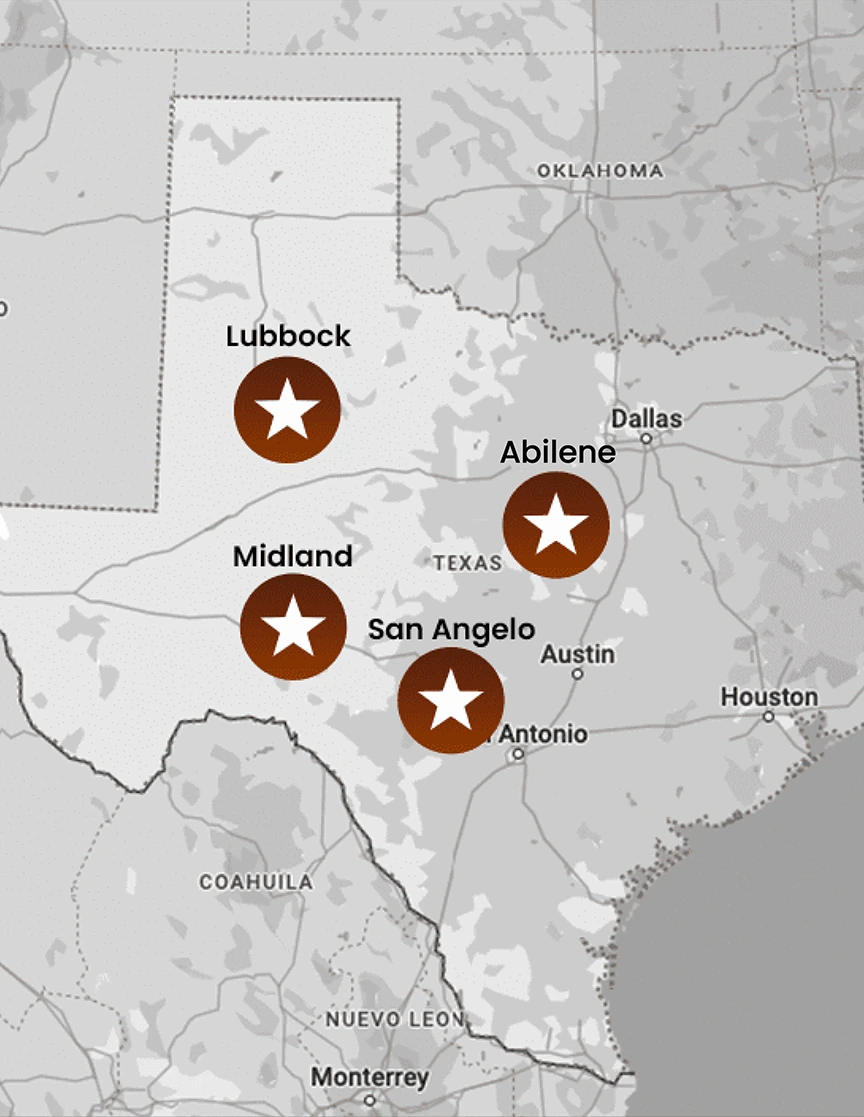
With offices in Abilene, Lubbock, Midland, and San Angelo, we serve all of West Texas.
We offer free consultations and work on contingency—no win, no fee.
Call us today at (325) 480-8100 or visit our contact page. Our attorneys are ready to fight for you.
Frequently Asked Questions
Who is usually at fault in a truck accident?
Liability depends on the specific circumstances, but truck drivers and trucking companies are frequently at fault. Violations of federal hours-of-service rules, poor maintenance, and negligent hiring are common. However, multiple parties can share liability, and our investigation determines who is responsible for your injuries.
Can a trucking company be held liable?
Absolutely. Trucking companies are liable for their drivers’ negligence under vicarious liability. They’re also directly liable for negligent hiring, inadequate training, scheduling pressures that encourage unsafe driving, and failure to maintain vehicles. We hold companies accountable for all these violations.
What if more than one party is responsible?
You can recover from all responsible parties. Their insurance companies pay based on their percentage of fault. We pursue claims against the truck driver, trucking company, maintenance providers, cargo loaders, and anyone else whose negligence contributed to the accident.
How long do I have to file a claim in Texas?
Texas has a two-year statute of limitations for personal injury claims. However, don’t wait until the deadline. Evidence disappears, memories fade, and witnesses become harder to locate. Contact us as soon as possible after your accident.