What Happens Immediately After a Truck Accident?
Emergency Response and Medical Care
First responders arrive at the scene within minutes of a truck accident report. Emergency medical technicians assess injured victims and transport them to hospitals. This immediate medical response is critical—it saves lives and creates medical records that document your injuries.
At the scene, fire departments may need to extract victims from vehicles. In severe truck accidents, the Jaws of Life and specialized equipment are required. The focus is always on emergency care first. Once victims are stable and transported, other processes begin.
Law Enforcement Investigation
Police officers respond to truck accidents and conduct initial investigations. Officers document the scene, take photographs, measure skid marks, and interview witnesses. They gather contact information from all parties and determine if traffic violations occurred.
The officer’s report becomes critical evidence. It includes observations about road conditions, weather, vehicle damage, and statements from the truck driver. In some cases, officers can identify violations—like a driver falling asleep at the wheel or excessive speeding. Police reports are available to you and your attorney through public records requests.
Evidence Collection at the Scene
Evidence at a truck accident scene is perishable. Skid marks fade, debris is cleared, and the scene is restored. This is why photographs taken immediately after an accident are so valuable. Photos show vehicle positioning, damage patterns, road conditions, and the overall scene context.
Witnesses scatter after an accident, making their statements difficult to obtain later. We encourage clients to gather contact information from anyone who saw the accident. Witness statements corroborate your account and establish liability.
Truck Accident Investigations in Texas
Role of Federal and State Agencies
When a significant truck accident occurs, federal agencies become involved. The Federal Motor Carrier Safety Administration (FMCSA) may open an investigation if the accident caused serious injury or death. The National Transportation Safety Board (NTSB) investigates major crashes.
Texas Department of Transportation may also investigate if the accident occurred on state highways. These agencies have access to the truck’s electronic logs, maintenance records, and the company’s safety history. Their investigations can reveal systemic problems at the trucking company.
Key Evidence Reviewed
Investigators review the truck driver’s logbooks to determine if hours-of-service violations occurred. Electronic Logging Devices (ELDs) automatically record driving hours. If a driver exceeded the 11-hour daily limit, that’s a violation that contributed to fatigue.
Maintenance records show whether the truck was properly serviced. If brakes were due for inspection but weren’t serviced, that’s negligence. Investigators look for patterns—was the company consistently ignoring maintenance schedules? Did the company pressure drivers to skip safety inspections?
Drug and alcohol testing occurs after accidents. Drivers submit to blood and urine tests to determine intoxication. These test results are discoverable in your claim and can prove negligence.

Importance of Black Box Data
Trucks are equipped with Electronic Control Modules (ECMs)—essentially black boxes like those on aircraft. These devices record speed, braking force, throttle position, engine performance, and steering inputs in the seconds before and after a crash.
Black box data is objective and cannot be disputed. If the data shows the truck was traveling 65 mph in a 45 mph zone before hitting a victim’s car, that proves negligence. If the data shows the driver failed to brake before impact, it shows the driver wasn’t paying attention. This data is invaluable in proving liability, and we obtain it immediately after an accident.
What Happens to the Truck Driver After an Accident?
Drug and Alcohol Testing Requirements
Federal law requires drug and alcohol testing after all serious truck accidents. The testing must occur within a specified time frame—usually within 2 hours for blood alcohol and 4 hours for drugs. A positive test result can result in license suspension and criminal charges.
A truck driver’s commercial driver’s license (CDL) is their livelihood. A positive drug or alcohol test results in CDL suspension, making the driver unable to work. Some drivers try to refuse testing, but that refusal is itself a violation that can result in license suspension.
Possible License Suspension or Revocation
Even without a positive drug or alcohol test, a truck driver involved in an accident may face license suspension. Multiple accidents within a certain period can result in suspension. A serious violation—like causing injury or death—can result in license revocation.
Drivers also face suspension for other violations discovered during investigation. If the driver was speeding, distracted, or violating hours-of-service rules, the Texas Department of Motor Vehicles may suspend their CDL. Loss of license means loss of employment in the trucking industry.
Employment Consequences
Most trucking companies terminate drivers involved in serious accidents. Companies check accident histories when hiring, and serious accidents make drivers unhireable. A truck driver’s accident record follows them throughout their career.
Some drivers may be temporarily suspended pending investigation. If investigators determine the accident was the driver’s fault, termination typically follows. Even if the driver isn’t terminated immediately, they may be required to attend safety training or additional certifications.
Criminal Charges (If Applicable)
Serious truck accidents can result in criminal charges. If the accident caused serious injury or death, the driver may be charged with negligent homicide or reckless driving. DUI charges are possible if the driver was intoxicated.
Criminal charges are separate from civil liability. A truck driver can be convicted criminally and still be found liable in your civil suit. In fact, criminal conviction strengthens your civil case because it proves negligence. We use criminal case outcomes as evidence in your personal injury claim.

Who Is Liable in a Truck Accident?
See our detailed guide on truck accident liability. Learn more about “truck accident liability” and how to prove fault in your case.
The Truck Driver
The driver’s actions immediately before the accident are critical. Was the driver rested or fatigued? Paying attention or distracted? Sober or intoxicated? Complying with speed limits or speeding? The driver’s conduct often determines liability.
However, liability isn’t always the driver’s fault alone. A driver following company policy to speed up deliveries is influenced by the company. A tired driver working for a company that pressures drivers to skip rest breaks is working under company direction. We examine the broader context of the driver’s employment.
The Trucking Company
Trucking companies are liable for drivers’ negligent actions under vicarious liability. Companies are also directly liable for their own negligence—negligent hiring of drivers with safety violations, inadequate training, failure to maintain vehicles, and scheduling practices that encourage unsafe driving.
We investigate the company’s safety policies and whether they’re enforced. Do drivers receive safety training? Are drivers required to report mechanical problems? Does the company reward fast delivery over safe driving? These practices determine company liability.
Third Parties
Other drivers, contractors, government agencies, and maintenance providers can share liability. If another vehicle contributed to the accident, they may be liable. If a road construction project contributed to the accident, the contractor may be liable.
Texas Laws That Affect Truck Accidents
Comparative Fault Rule
Texas comparative fault law allows you to recover even if you were partially at fault for the accident, as long as you weren’t more than 50% responsible. If you were 25% at fault and the truck driver was 75% at fault, you recover 75% of your damages.
This rule emphasizes the importance of proving negligence by multiple parties. If the company’s scheduling practices encouraged speeding, and the driver was speeding, both share responsibility. We build cases showing the full extent of negligence by all parties.
Statute of Limitations
You have two years from the accident date to file a personal injury lawsuit in Texas. However, don’t wait that long. Evidence disappears, witnesses move away, and memories fade. We recommend contacting an attorney within weeks of your accident.
Some exceptions extend the deadline—for example, if you didn’t discover your injury immediately, the clock may start later. This is why consulting with an attorney early is important. We assess your specific situation and ensure you file within all applicable deadlines.
FMCSA Regulations
Federal Motor Carrier Safety Administration regulations govern commercial trucking. These regulations cover driver qualifications, hours of service, vehicle maintenance, and cargo loading. Violations of FMCSA regulations are evidence of negligence.
If the truck driver was violating hours-of-service rules, that’s FMCSA negligence. If the truck wasn’t maintained according to FMCSA standards, that’s company negligence. These federal rules establish a clear standard of care that trucking companies must meet.
What Compensation Can Victims Recover?
Economic Damages
Economic damages are measurable financial losses. Medical expenses include emergency care, hospitalization, surgery, medications, therapy, and ongoing treatment. Lost wages compensate you for income lost during recovery. If your injury is permanent, you recover the difference between your previous earning potential and your reduced future capacity.
Property damage covers the cost to repair or replace your vehicle. Out-of-pocket expenses like transportation, equipment, or home modifications are recoverable. We document every expense resulting from the accident.
Non-Economic Damages
Non-economic damages compensate for pain and suffering, emotional distress, loss of enjoyment of life, and permanent scarring or disfigurement. There’s no specific formula, but courts consider injury severity, treatment duration, and lasting effects. Serious injuries that require months of recovery and leave permanent effects support higher awards.
Losing the ability to work in your previous profession, perform hobbies, or care for your family independently supports higher pain and suffering awards. We build cases that help juries understand the full impact of your injury on your life.
Punitive Damages
In cases involving extreme negligence or intentional misconduct, courts may award punitive damages to punish the defendant and deter similar conduct. Punitive damages are rare but possible in cases where a company knowingly violated safety regulations or a driver was recklessly intoxicated.
What Should You Do After a Truck Accident?
Seek Medical Attention Immediately
Your health is the priority. Even seemingly minor injuries can worsen. Get a medical evaluation immediately after the accident. Medical records document your injuries and create the foundation for damages claims.
Report all symptoms to doctors, even ones that seem minor. A doctor’s examination and notes carry weight in proving injury extent. If you delay medical treatment, insurance companies will argue your injuries aren’t serious.
Document Everything
Take photographs of your vehicle damage, the accident scene, road conditions, and the other vehicle. Document injuries with photos of visible bruises, lacerations, or swelling. Keep a journal of your pain levels, symptoms, and how the injury affects daily activities.
Collect contact information from witnesses. Their statements corroborate your account of the accident. Keep all medical bills, receipts, and records. These documents prove your damages.
Avoid Speaking to Insurance Adjusters Alone
Insurance adjusters are trained to minimize claims. Anything you say can be used to reduce compensation. Don’t discuss your injuries in detail, admit any fault, or accept settlement offers without consulting an attorney. Let us handle all communication with insurers.
Recorded statements given to adjusters can be used against you. We advise clients to politely decline recorded statements and refer adjusters to your attorney.
Contact a Truck Accident Lawyer
The sooner you contact an attorney, the better. We can immediately send preservation letters requiring the trucking company to preserve evidence. We can obtain black box data before it’s deleted or lost. We can interview witnesses while their memories are fresh.
Early attorney involvement also prevents mistakes that harm your case. Insurance companies exploit unrepresented victims. Having an attorney from the start protects your rights.
Contact our Texas truck accident attorneys at (325) 480-8100 or visit our office to discuss your case with a truck accident lawyer.
How Our Texas Truck Accident Lawyers Can Help
We conduct thorough investigations to determine exactly what happened and who is responsible. Our investigators obtain black box data, subpoena maintenance records, review driver logbooks, and interview witnesses. We use accident reconstruction experts to analyze the crash mechanics.
We preserve evidence by sending preservation letters immediately after an accident. Evidence that might otherwise be destroyed is protected. We communicate with insurance companies, preventing statements that might harm your claim.
We build compelling cases demonstrating liability and justifying your damages. We negotiate with insurance companies from a position of strength—they know we’ve done thorough work and are prepared to try the case if needed.
If insurance companies won’t offer fair compensation, we take cases to trial. Our attorneys have tried over 500 cases and bring that courtroom experience to every negotiation.
We fight for the maximum compensation you deserve, and we work on contingency—you pay nothing unless we win.
Why Truck Accident Cases Are More Complex Than Car Accidents
Truck accidents involve multiple potentially liable parties—the driver, the trucking company, maintenance providers, cargo loaders, manufacturers, and sometimes contractors or government agencies. Coordinating claims against multiple parties and their insurance companies is complex.
Federal trucking regulations create an additional layer of complexity. These regulations establish duties that trucking companies must follow. Violations of these regulations are evidence of negligence. Understanding and proving violations requires expertise in federal transportation law.
Trucking companies have large legal teams and substantial insurance coverage. They fight aggressively to minimize liability. Individual drivers and smaller companies involved in car accidents typically lack these resources. We have the experience and resources to fight against these well-funded defendants.
Finally, truck accident damages are typically much higher than car accident damages. Larger vehicles cause more severe injuries. Higher damages mean insurance companies are more motivated to fight claims. Cases that might settle quickly in car accidents often require litigation in truck accident cases.
Contact Our Texas Truck Accident Attorneys Today
You’ve endured pain and hardship from an accident caused by a truck driver’s negligence. Our attorneys are committed to holding responsible parties accountable and securing the compensation you need to rebuild your life.
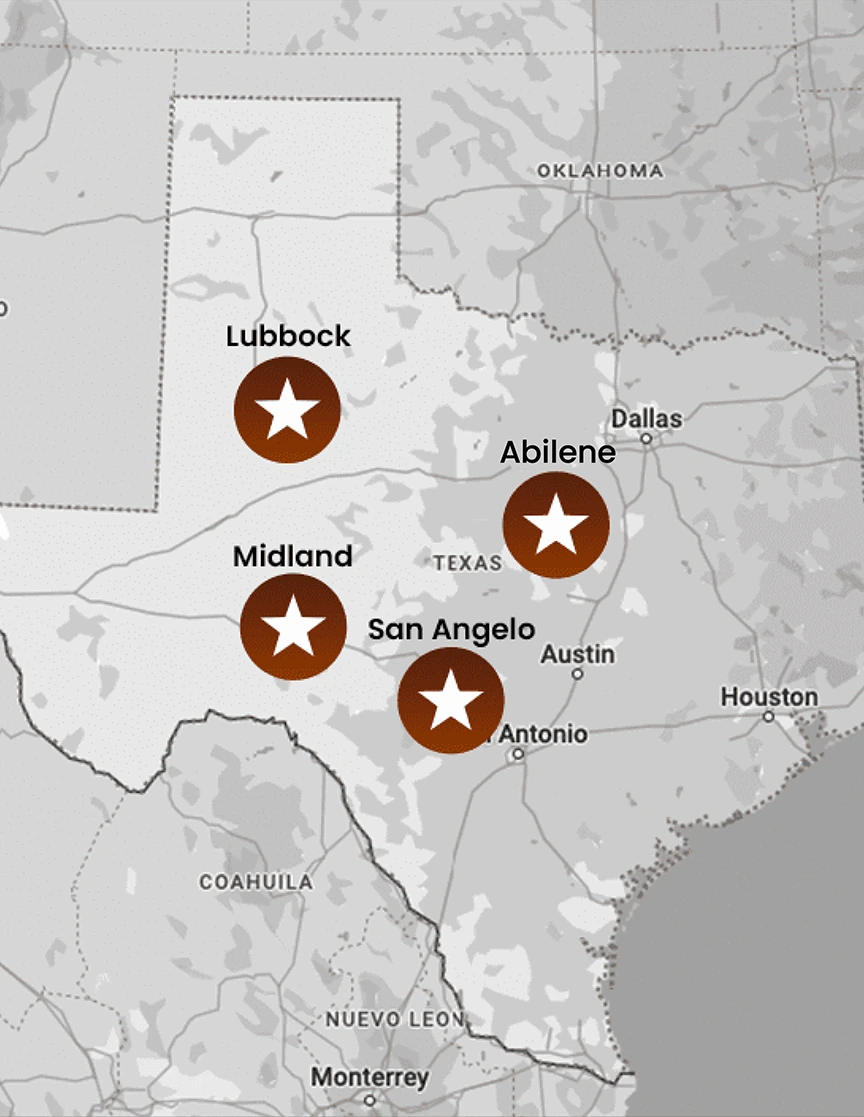
We serve all of West Texas with offices in Abilene, Lubbock, Midland, and San Angelo. We offer free consultations and work on contingency. There’s no risk—you pay only if we win.
Call us today at (325) 480-8100 or contact us online. Let’s discuss your case and how we can help you recover.
FAQs
What happens to a truck driver after an accident in Texas?
A truck driver typically faces drug and alcohol testing, law enforcement investigation, and potentially license suspension. If the accident was serious, federal agencies like the FMCSA may investigate. The driver may face employment termination and, in serious cases, criminal charges.
Can a truck driver go to jail after an accident?
Yes, if criminal charges are filed. A truck driver causing serious injury or death can be charged with negligent homicide, reckless driving, or DUI. Criminal conviction carries jail time. Criminal charges are separate from civil liability, and both can apply to the same accident.
Who investigates truck accidents?
Local law enforcement responds first and documents the scene. The FMCSA investigates serious accidents, especially those involving injury or death. The NTSB may investigate major crashes. Insurance companies conduct their own investigations. We investigate on behalf of accident victims.
How long does a truck accident claim take?
The timeline depends on case complexity. Simple cases with clear liability may settle within months. Complex cases involving multiple parties, serious injuries, or significant damages may take a year or more. If litigation is necessary, cases can take 2-3 years. We keep you informed throughout the process.