Skip to content
Families describe the same moment to us again and again. A nurse finally lets them see, or they pull back the blanket themselves, and there it is. A wound that has been quietly eating into someone they love for days, sometimes for weeks.
Almost always, the first feeling that hits after the shock is guilt. You trusted them. You visited when you could. How did this happen on your watch?
We need to say this plainly, because you deserve to hear it. A deep bed sore is almost never the family’s fault. Far more often, it is the clearest evidence there is that a nursing home stopped doing its job and walked away from someone who could not get up and walk away on their own.
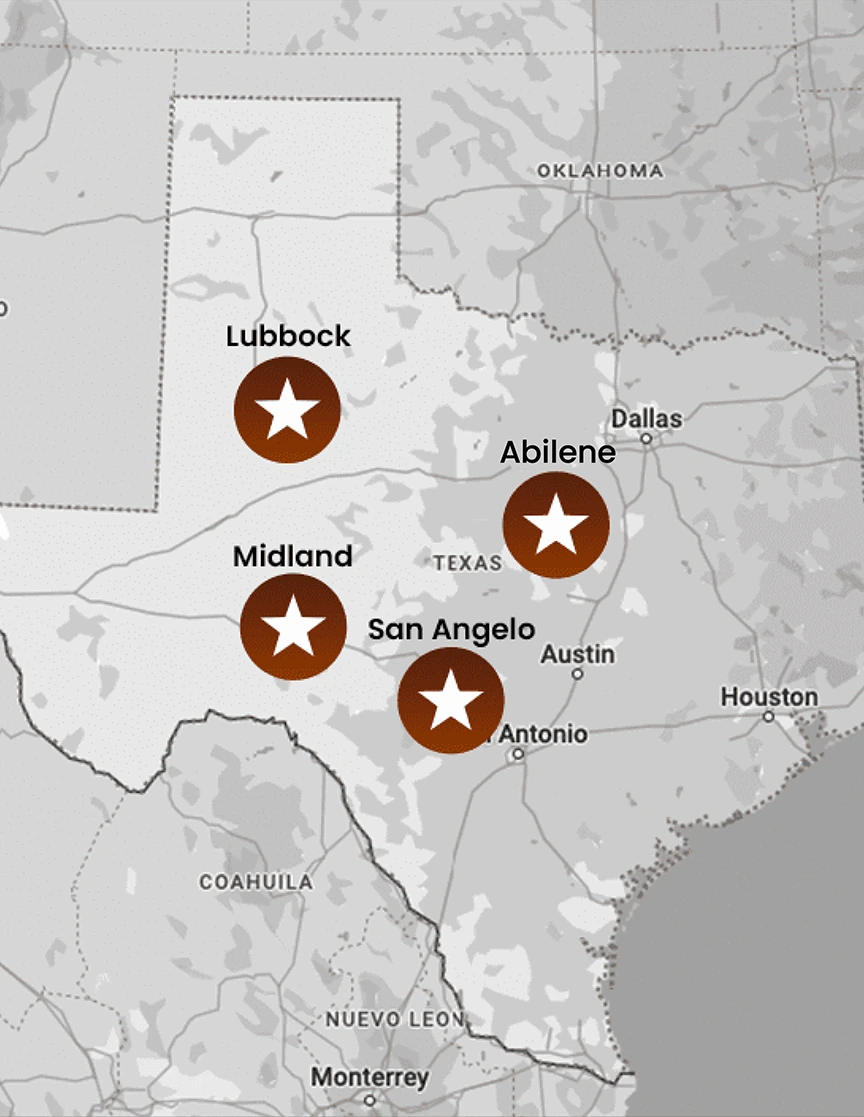
If that is where you are right now, call Russell Lorfing and our team at 325-225-0143. We have offices in Abilene, Lubbock, Midland, and San Angelo, and we take on injury cases of every kind across the region, from nursing home neglect to wrongful death. This is exactly the kind of fight we built this firm for.
A bed sore is a clock
Most people do not realize what a pressure wound actually is, and it changes everything about a case.
A bed sore does not appear overnight. It is a record of time, a clock running on a person’s skin. Skin breaks down when steady pressure cuts off blood flow and no one relieves it. A wound that has reached the bone did not happen in one bad afternoon. It happened because, hour after hour, nobody turned them.
That is why these wounds are graded in stages. Each stage marks how deep the damage runs, and how long the clock was left ticking.
The staging language comes from the National Pressure Injury Advisory Panel, and federal health regulators use the same scale. That matters in a courtroom. When we show a jury a Stage 4 wound, we are showing them time, every shift that came and went while a person lay in one position, in pain, waiting for help that never came.
⚖️ What this means for your case. The wound itself is testimony. Its depth tells a jury roughly how long the neglect went on, and the longer that clock ran, the harder it becomes for a facility to explain away.
When a facility calls the wound unavoidable
When a family asks how this happened, almost every nursing home reaches for the same word. Unavoidable. As if the wound were a tragedy no one could have stopped.
They are counting on you not knowing that unavoidable is not an opinion. Federal regulators define it with a strict, four-part test, and the facility has to prove all four things in writing before it can stand behind that word.
To call a bed sore unavoidable, the home has to prove it did each of the following.
- It assessed the resident’s risk for pressure wounds in the first place.
- It put a real care plan in place, with turning schedules, cushions, and proper nutrition.
- It monitored whether that plan was actually working.
- It changed course when the wound was not healing.
Miss even one of those steps, and under federal rule 42 C.F.R. § 483.25 the wound is no longer unavoidable. It is avoidable, and that is negligence.
These cases often break open in the records themselves. A facility says one thing to the family, then we pull the chart and find turning logs with blank pages, nutrition notes that simply stop, and a wound nurse who was never called. The defense lives or dies on the paperwork, and the paperwork rarely holds up.
Who is responsible when a bed sore develops
When you stand in that room and see what happened to your mother or father, you want a name, someone to hold accountable. The honest answer is that responsibility usually runs deeper than one tired aide on a night shift.
More often, the real story is a building that runs too few people across too many beds, a staffing decision made in a corporate office to protect a margin. The aide who failed to turn your loved one may have had thirty other residents and no help. That does not excuse what happened. It tells us where to look.
So we follow it up the chain. The facility carries most of the responsibility, but the corporate parent that set the budgets often shares it, and so can a management company, an outside wound-care vendor that skipped ordered treatment, or even a prior hospital that sent your loved one back with a wound no one flagged.
Tracking down every responsible party is not busywork. It often decides how much your family can actually recover, because the company that caused the understaffing usually has the deepest pockets.
What these cases are worth in Texas
We will not insult you with a number off a webpage. Any firm that promises you a flat figure for a bed sore case before reading a single record is selling something. Value comes from the specifics, and in these cases the specifics are hard to read.
What moves the number is real human harm. A Stage 4 wound that tunneled to the bone is worth more than an early sore, because the suffering was greater. A wound that turned septic and put your loved one in the hospital fighting for their life is worth more still. So is a wound that festered for months instead of days, because duration is its own kind of cruelty. A jury weighs the medical bills, the pain your loved one endured, and the dignity they lost.
For most personal injury work, we take these cases on contingency. You pay us nothing unless we win, and the first conversation is always free.
📞 Tell us what happened. Call 325-225-0143 or reach our personal injury team. No cost, no pressure, just a straight answer about whether you have a case.
When a bed sore takes a life
Sometimes the wound wins. An infection spreads, sepsis sets in, and a family that placed a loved one in care to keep them safe ends up planning a funeral instead.
If that is your family, we are sorry. Texas law does not treat a death like this as the end of the matter. It gives you two separate claims, and pursued together, they account for the full weight of what was taken.
One detail catches families off guard. Under Texas law (§ 71.004), only a spouse, children, or parents can bring the wrongful death claim. A devoted sibling or grandchild usually cannot, which is one more reason not to wait to ask.
Texas deadlines that can end your case
Grief does not run on a schedule. The law does.
In Texas, you generally have two years to bring one of these cases, and in a death case that clock starts the day your loved one passed (§ 16.003). Let it run out, and it will not matter how strong your evidence is. The case is gone.
A second deadline quietly ends more nursing home cases than almost anything else. Texas requires a qualified medical expert report explaining how the facility failed, and it is due within 120 days after each defendant files its answer in the lawsuit (§ 74.351). Handle it wrong, and the court can dismiss the whole case before a jury ever hears it.
The evidence does not wait either. Records get lost, logs get tidied up, and staff move on as memories fade. The sooner a lawyer can lock the records down with a preservation letter, the safer your case is, which is the real reason we tell families not to sleep on this.
📞 If you are wondering whether you waited too long, ask before you assume. Call 325-225-0143 or contact us. It costs nothing to find out where you stand.
Why this fight needs a West Texas firm
Most law firms chase clients in Dallas, Houston, and Austin and treat the rest of the state like flyover country. We did the opposite. We planted ourselves out here in the Big Country, the Llano Estacado, and the plains down toward Big Bend, because this is home and these are our people.
That matters more than it sounds. We know these facilities and these courthouses. Russell Lorfing built his career as a former federal prosecutor in Lubbock, and our team is stacked with other former federal and state prosecutors.
Together, our attorneys have tried more than 500 jury trials, from Abilene Wrongful Death cases to nursing home neglect. When a corporate defendant’s insurer sizes us up, they do not see a firm angling for a quick settlement. They see trial lawyers who came up making the powerful answer for what they did.
📞 Talk to Russell today at 325-225-0143 or contact our team. Free, confidential, and no fee unless we win.
Frequently Asked Questions
Could we have prevented this ourselves?
Almost never. Preventing pressure wounds is the facility’s job, through turning, skin care, nutrition, and the right mattress. When a home does what it is supposed to do, a resident who arrived with healthy skin rarely develops one. The responsibility was theirs, not yours.
Can a bed sore really cause death?
Yes, and it does. A deep wound can become infected, and that infection can reach the bloodstream and cause sepsis. When a bed sore contributes to a death, the family may have a wrongful death claim alongside a survival action.
Who is allowed to file the lawsuit in Texas?
If your loved one is living, the claim is theirs, though a family member often acts for them. If they have passed, Texas law lets the surviving spouse, children, or parents bring the wrongful death claim, while the estate pursues the survival action.
The home says the wound was unavoidable. Now what?
Make them prove it. Federal rules require the facility to document the full four-part analysis showing it assessed, planned, monitored, and adjusted. In our experience, that paperwork usually falls apart once we read it closely.
How do we even get the medical records?
You have a legal right to them, and the facility has to hand them over within a reasonable time. We can send a formal preservation letter so nothing is altered before it reaches you.