You got a phone call. Or maybe someone showed up at your door. In an instant, your life split into before and after.
Now, on top of everything else, someone is telling you there may be a legal case. That the company, the driver, the facility, whoever caused this, may be held liable. You’re hearing words like “elements of proof” and “statute of limitations” when all you’re trying to do is breathe.
The other side started preparing the moment this happened. The trucking company called their insurer. The insurance company sent an adjuster to the scene. That adjuster’s entire job is to protect their client, not your family. They have been through this hundreds of times. Your family never has.
That gap is exactly where cases are won and lost.
Car and truck accidents are among the most common causes of wrongful death claims in West Texas. If that describes your situation, our guide on wrongful death settlements in car accident cases covers what families typically recover and how those cases tend to resolve.
Under Texas Civil Practice and Remedies Code Chapter 71, your family has the legal right to hold the responsible party accountable. This page explains what that takes, what evidence the other side will try to make disappear, and how our team at Keith & Lorfing fights back.
The law says your family has the right to fight back
Chapter 71 of the Texas Civil Practice and Remedies Code exists for one reason: Texas decided that when a person dies because of someone else’s negligence or carelessness, their family deserves more than grief.
The law creates two separate claims, and most families don’t realize this until it’s too late to protect their interests.
The wrongful death claim belongs to the surviving family. It compensates them for what they lost: the income, the companionship, the presence of that person in their lives.
The survival action is different. It continues the claim the deceased would have brought if they had survived, covering their pain and suffering, their medical bills, and the wages they lost between the injury and the death. This claim belongs to the estate.
Wrongful death proceeds go directly to the eligible family members and cannot be touched by creditors. Survival action proceeds flow into the estate, where creditors can reach them. That difference matters in real, practical ways for your family.
Most pages on this topic gloss over the distinction. We don’t, because where that money flows is a decision that has to be made correctly when we file.
In most cases, we file both claims at the same time to protect every avenue of recovery your family has.
Who has the legal right to file in Texas
Texas law is specific about who can bring a wrongful death action under Chapter 71. It is not everyone who loved the person who died.
If you are a sibling, grandchild, or other family member, even one who was deeply close to the person, Texas law does not give you standing to bring this claim.
Something most families never hear about: the three-month rule. If none of the eligible family members file suit within three months of the death, the executor or administrator of the estate is legally authorized, and in most cases obligated, to file on their behalf. This is not optional. It is a legal duty that kicks in automatically unless all beneficiaries direct otherwise.
If you are not sure whether you qualify to file, call us at 325-225-0143. We will tell you exactly where you stand at no cost to you.
The 4 things you must prove
Every wrongful death case in Texas rests on four legal elements. They are the same four required in any negligence claim, but when someone has died, the stakes and the fight are on a different level entirely.
Miss any one of these four things and the case can fall apart. The defense team knows that. Their strategy, in case after case, is to attack at least one of them hard enough that the rest doesn’t matter.
Element 1: Duty of care
The starting point is whether the person or company responsible owed a legal duty to the person who died. In the vast majority of cases, this is not the hard part.
Duty exists naturally in everyday life:
- A driver owes a duty to everyone else sharing the road
- An employer owes a duty to the workers who show up every day
- A nursing home owes a duty to the residents placed in its care
- A doctor owes a duty to the patient sitting across from them
- A property owner owes a duty to visitors on their premises
Duty is rarely where the real battle happens. The fight begins in the next two elements.
Element 2: Breach of duty
Duty alone means nothing. You have to prove they didn’t meet it.
A breach is not just any mistake. It’s a failure to act the way a reasonably careful person would have acted in the same situation. Out here in West Texas, we see what that looks like:
A trucker pushing through a long stretch of I-20 near Odessa, eyes on a phone instead of the road. An oilfield contractor in the Permian Basin who knew the equipment was compromised and sent workers out anyway. A Lubbock nursing home that cut overnight staffing to save money and left a fall-risk resident unmonitored. A doctor who dismissed symptoms that warranted further testing.
Each of those is a breach, and each one has to be proven through records, testimony, footage, or some combination of all three.
Element 3: Causation
If there is one element where the other side will spend the most money and effort, it is this one. And if there is one element families are least prepared for, it is also this one.
Causation requires proving two things:
Cause in fact: If not for what the defendant did, or failed to do, your family member would still be alive.
Proximate cause: The death was a foreseeable result of the defendant’s conduct, not some unpredictable chain of events, but a direct and natural consequence of the breach.
When the deceased had any prior health condition, a heart issue, high blood pressure, diabetes, a history of injury, the defense will argue that condition caused the death, not their client’s negligence. It happens in case after case. Insurance companies have entire playbooks built around this argument. They are counting on families not knowing how to fight back against it.
This is why expert witnesses are not optional in most wrongful death cases. A medical expert has to get on the stand and say plainly: this person died because of the negligence, not the health condition. Without that testimony, the insurance company’s version may be the only one the jury hears.
Hypothethical Scenario:
A family loses their father in a collision on US-277 near San Angelo. The at-fault driver’s insurance company argues that his pre-existing heart condition, not the crash, was the true cause of death. A medical expert hired by the family’s legal team walks the jury through the autopsy and establishes that the traumatic injuries from the impact were the direct cause. The pre-existing condition was incidental. Without that expert in the room, the family might have walked away with nothing.
Road accident deaths raise this exact causation dispute more often than any other case type. For a closer look at how car accident wrongful death cases are valued and what settlements typically involve, see our guide to wrongful death settlements in car accidents.
Element 4: Damages
Even with duty, breach, and causation proven, the law requires documented losses for the court to compensate. This is not a technicality. It is about making sure the full scope of what your family lost gets put in front of a jury.
For the wrongful death claim, the family’s direct claim, those losses include:
- Lost financial support: The income, the paycheck, the retirement contributions that kept the household running
- Loss of companionship and affection: The relationship itself, what it meant to a spouse, a child, a parent to have that person in their life
- Mental anguish: The grief that has no clean price tag but that the law recognizes as real and compensable
- Loss of care and guidance: Particularly significant when a parent dies and children lose the person who was raising them
- Funeral and burial expenses: The immediate costs your family had to absorb
For the survival action, the estate’s claim, the focus shifts to what the deceased experienced before they died:
- Physical pain and suffering: Between the injury and the death
- Medical expenses: Incurred during that period
- Lost wages: From the date of injury to the date of death
We pursue both sets of damages from the day we take your case.
Evidence: what to protect before it disappears
By the time most families think about calling an attorney, the other side has already been to the scene. They have already talked to witnesses and begun constructing a version of events designed to protect their client.
On their end, this is routine. On yours, it is happening once. That imbalance is the reason the clock on evidence starts running the moment someone dies because of another person’s negligence.
The burden of proof is lower than you think
This is a civil case, not a criminal trial, and that distinction matters more than most people realize.
The legal standard in a Texas wrongful death case is the “preponderance of the evidence” standard. You have to show it is more likely than not, meaning greater than 50%, that the defendant’s wrongful conduct caused the death.
You don’t have to eliminate all doubt. You don’t have to prove it beyond question. You just have to tip the scales past halfway.
A criminal conviction against the responsible party does help the civil case, because it establishes key facts under an even higher standard of proof. A criminal acquittal, though, does not end your civil claim. The state can fail to convict and a jury can still find for your family. The two proceedings operate under different standards and run entirely independent of each other.
What the other side will say about fault
The moment a wrongful death claim is filed, the defense team begins building a second argument alongside the causation fight: the deceased was partly or entirely to blame.
Texas follows a modified comparative negligence system under Texas Civil Practice and Remedies Code Chapter 33. The mechanics are straightforward, but the way insurance companies use this rule is something families rarely see coming.
That last row is what adjusters work toward. If they can get a jury to assign 51% of the fault to the deceased, they pay nothing, not a reduced amount, nothing. They know that number and they build their entire strategy around reaching it.
We have seen it used against an oilfield worker who was allegedly not following a safety protocol that was never enforced. Against a driver who was supposedly speeding in the moments before impact. Against a nursing home resident whose fall was blamed on her own attempt to get up without calling for help.
Fighting those arguments and winning is something we have done across hundreds of West Texas cases.
The two-year window is shorter than it sounds
Texas law gives surviving families two years from the date of death to file a wrongful death claim, per Texas Civil Practice and Remedies Code § 16.003.
Two years sounds like a long time when you are in the middle of grief. It is not.
By the time families process the loss, handle the arrangements, deal with the financial fallout, and begin thinking seriously about legal action, months have already passed. Surveillance footage is gone. Witnesses have moved. Evidence has been altered or destroyed. Cases that should have been strong become difficult or impossible to build.
Some situations can shorten the window further:
- Government entities: If a city vehicle, state employee, or government-operated facility was involved, the Texas Tort Claims Act imposes separate notice requirements and shorter deadlines
- Minors: Cases involving surviving minor children may be subject to different rules
Don’t wait for the right moment to call. There isn’t one. There is only now, and later, and later costs you.
Call 325-225-0143 or contact us here and let us work out the timeline while you focus on your family.
What you actually get when you work with Keith & Lorfing
We want to be honest with you about who we are, because you deserve to know what you’re getting before you sign anything with anyone.
We are trial lawyers, and that changes how this plays out. Insurance companies respond very differently to firms they know will go to a courtroom. With over 500 jury trials between our attorneys, that is not something we say to impress you. It is the reason the other side negotiates differently when they see our name.
Russell Lorfing is a former federal prosecutor. Before founding this firm, managing partner Russell Lorfing prosecuted cases for the federal government in Lubbock. He spent years building cases designed to withstand the most aggressive defense possible. He knows how the other side thinks, how to dismantle their arguments, and what it takes to win in front of a West Texas jury.
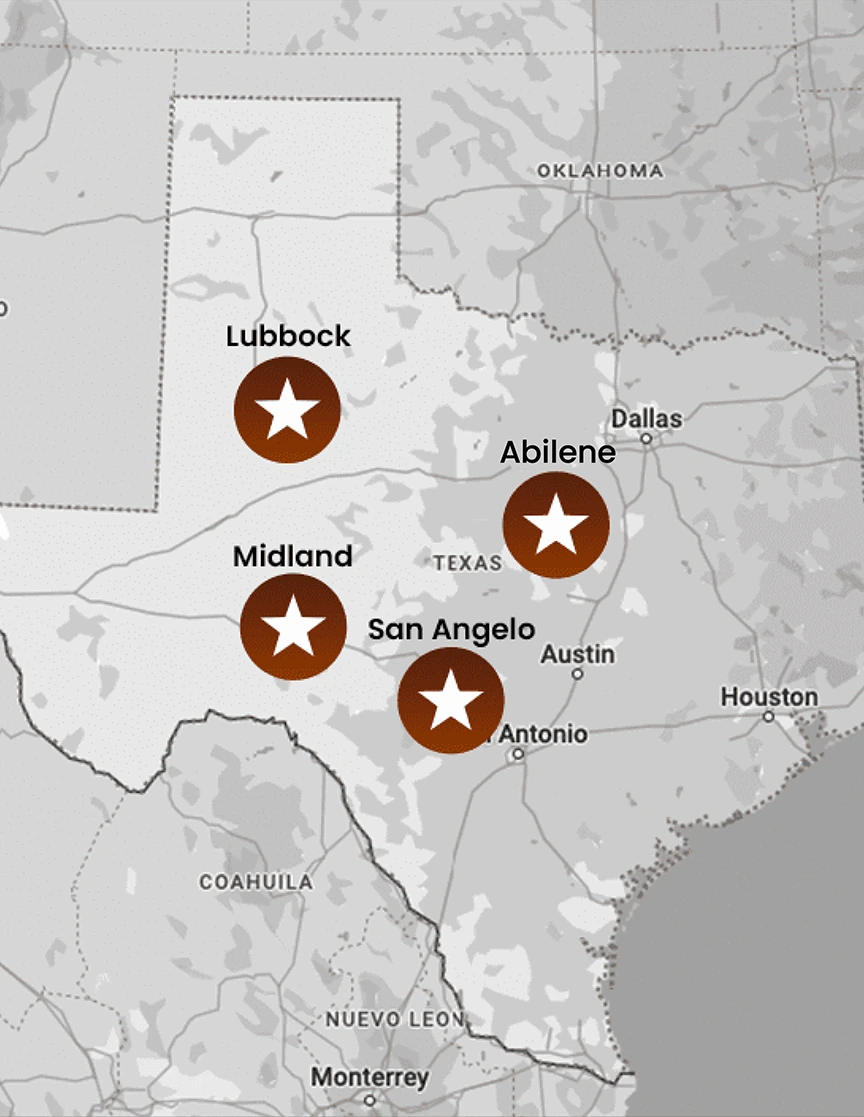
We are from here, and that matters. We have offices in Abilene, Lubbock, Midland, and San Angelo. Our former law partners are judges and district attorneys across West Texas. When we say we know the courts, the prosecutors, and what the courtrooms in this region demand, we are not selling you something. That is just the truth.
You pay nothing unless we win. We take these cases on contingency. There is no upfront cost, no hourly invoice, no bill while you are still trying to bury someone and figure out how the household is going to survive without the person you lost. We only get paid when your family does.
This work is personal to us. Every one of our attorneys came from working-class roots. Our fathers and grandfathers were mechanics, laborers, and enlisted military. We know what it means when a family loses the person who was holding everything together. We fight like it. Learn more about our team.
Tell us what happened
If you have lost someone because of another person’s negligence, you do not have to figure this out alone.
Our team at Keith & Lorfing represents families throughout West Texas, in Abilene, Lubbock, Midland, San Angelo, and across the surrounding communities. We will listen. We will be honest with you about what your case looks like. And if we take it, we will fight for everything your family is owed.
Frequently asked questions
What is the burden of proof in a Texas wrongful death case?
The standard is “preponderance of the evidence.” You must show it is more likely than not that the defendant’s conduct caused the death. This is lower than the criminal standard of “beyond a reasonable doubt.” You don’t need to eliminate all doubt, only tip the scales past 50%.
Can you file a wrongful death claim if the deceased was partly at fault?
Yes, as long as the deceased was 50% or less at fault under Texas’s modified comparative negligence rules. The family’s recovery is reduced proportionally by the deceased’s share of fault. If the deceased is found 51% or more at fault, the claim is barred entirely.
What damages can surviving family members recover?
Eligible family members, a surviving spouse, children, and parents, may recover for lost financial support, loss of companionship and affection, mental anguish, loss of care and guidance, and funeral and burial expenses. A companion survival action may also recover the deceased’s own pain and suffering before death, medical expenses, and lost earnings between the injury and the death.
Does a criminal conviction against the responsible party help the wrongful death case?
Yes. A criminal conviction based on the same conduct establishes key facts and can be used as evidence in the civil case. A criminal acquittal, however, does not prevent a wrongful death claim. The two proceedings operate under different standards and are legally independent of each other.
What if there is no will or estate?
The survival action, the deceased’s own claim, belongs to the estate. If no formal estate exists, one will need to be opened. The wrongful death claim belongs directly to eligible family members and does not depend on the existence of a will or estate. We will help your family work through both.
What if the death happened on an oilfield or at an industrial site?
Oilfield and industrial fatalities are tragically common in West Texas and the Permian Basin. These cases often involve both a workers’ compensation claim and a separate third-party liability claim against a contractor, equipment manufacturer, or property owner. Pursuing both often produces significantly better results than workers’ compensation alone. Learn more about our personal injury practice.
Do I need an attorney?
Yes. Wrongful death cases require specialized evidence, retained expert witnesses, strict procedural deadlines, and the ability to stand up to experienced insurance defense teams that do this for a living. Handling these cases without legal representation puts your family at a serious disadvantage from day one. We take these cases on contingency, meaning you pay nothing unless we recover for your family.