When a nursing home takes your loved one, Texas families have the right to fight back
You trusted them.
You did your homework. You toured the facility. You asked the questions. You chose the place that seemed clean, professional, and staffed by people who seemed to actually care. You made the hardest decision a family can make, handing over the care of someone you love to strangers.
And they let you down.
Now your mom, your dad, your husband or wife is gone. Somewhere in the back of your mind—maybe a nagging feeling, maybe something you saw on your last visit, maybe something a nurse said that didn’t sit right—you can’t shake the thought that things didn’t have to end this way.
If that’s where you are right now, this page is for you.
At Keith & Lorfing, our Abilene Wrongful Death lawyer has spent years fighting for West Texas families who trusted a nursing facility and got betrayal in return. We are trial lawyers. We are not afraid of these cases, and we are not afraid of the large corporations and insurance companies that stand behind these facilities when things go wrong.
Call us at (325) 225-0143. The consultation is free. There is no fee unless we win.
The facility is already protecting itself. Are you?
Most families don’t think about this in the days after a nursing home death, but the facility’s lawyers are already working.
The moment something goes wrong inside that building, their risk management team gets involved. Records get reviewed. Language gets carefully chosen. Incident reports get written in a way that minimizes the facility’s exposure. This is not a conspiracy theory. It is just how these organizations operate.
Meanwhile, grieving families are planning funerals, notifying relatives, and trying to hold themselves together. The last thing on anyone’s mind is calling an attorney.
That gap, the time between when the facility starts protecting itself and when a family starts asking questions, is where cases get weaker. Evidence disappears. Staff members leave. Records get purged or altered.
We are not saying this to scare you. We are saying it because we have seen it, and because the families who reach out early are the ones best positioned to get justice.
If something about your loved one’s death doesn’t sit right, call us at (325) 225-0143 before you do anything else.
What Texas law actually gives you
Texas law gives surviving family members two separate legal claims after a nursing home death. Most attorneys explain this poorly or skip it entirely, so bear with us, because it matters.
The wrongful death claim belongs to the surviving family. It is your claim for your losses: your grief, the loss of your parent’s or spouse’s companionship, the financial support you counted on, the guidance they would have provided. This is personal. It belongs to you.
The survival action belongs to the deceased’s estate. It covers what your loved one suffered before they died, the pain, the medical bills, the fear and confusion they may have experienced as their condition worsened and no one at the facility did anything about it.
These two claims are typically filed together. One important difference worth knowing: survival action proceeds flow into the estate and can be reached by creditors. Wrongful death damages go directly to the eligible family members.
Under Texas Civil Practice and Remedies Code Chapter 71, the right to file belongs to the surviving spouse, children (biological and adopted), and parents of the deceased. Siblings and other relatives do not have standing under Texas law, regardless of how close they were.
One rule most attorneys never mention
If none of the eligible family members file suit within three months of the date of death, the executor of the estate is authorized and generally required to bring the action on the family’s behalf. That does not mean you have three months to decide. It means the clock is already running in a way most families do not realize.
What you have to prove, in plain language
A nursing home wrongful death case is a negligence case. To win, we have to establish four things.
First, the facility had a duty to take care of your loved one. The moment they signed the admission paperwork, they accepted a legal obligation. That duty is defined by their own internal policies, by Texas Health and Human Services regulations, and by the standards that every similarly run facility in Texas is expected to meet.
Second, they broke that duty. This is usually where the real story lives. Understaffing. Ignoring physician orders. Leaving a fall-risk resident unattended. Failing to check on a resident for hours at a time. Missing the early warning signs of a bedsore that was already developing. The specific failure is different in every case, but the pattern, staff stretched too thin, corners cut, residents treated like room numbers instead of people, shows up again and again.
Third, that failure caused the death. Medical records and expert witnesses carry this part of the case. We need to trace a clear, documented line from what the facility did wrong to the reason your loved one died. That work requires someone who knows how to read clinical records, find the gaps, and connect the dots.
Fourth, that death caused real, measurable losses. For the wrongful death claim, that means your losses as a surviving family member. For the survival action, it means the suffering your loved one endured.
The standard of proof is more likely than not, a lower bar than the criminal standard of beyond a reasonable doubt. Civil cases require us to tip the scales past 50 percent. It is a standard we know how to meet.
What actually kills people in Texas nursing homes
Neglect does not always look like the worst-case stories you see on the news. Sometimes it is quiet. Sometimes it is slow. By the time a family realizes what has been happening, it is too late.
A word about arbitration clauses
What your case may be worth
We will not give you a number. Any attorney who quotes you a settlement figure before seeing your records is telling you what you want to hear.
What we can tell you is what actually shapes value in these cases:
There is no cap on economic damages in a nursing home wrongful death case under Chapter 71. Whether the case falls under Chapter 71 (ordinary negligence) or Chapter 74 (medical malpractice) affects whether damage caps come into play and what procedural rules apply. That distinction matters and we determine it from day one.
The deadline you cannot afford to miss
Under Texas Civil Practice and Remedies Code § 16.003, you generally have two years from the date of death to file a wrongful death claim.
Two years sounds like plenty of time. It is not, not when you account for gathering records, hiring experts, and building a case strong enough to take to a West Texas courtroom. Evidence also starts disappearing from the moment something goes wrong.
If you are not sure whether you have a case, call us and let us make that call. A free conversation now is worth far more than a missed deadline later.
Why families across West Texas choose Keith & Lorfing
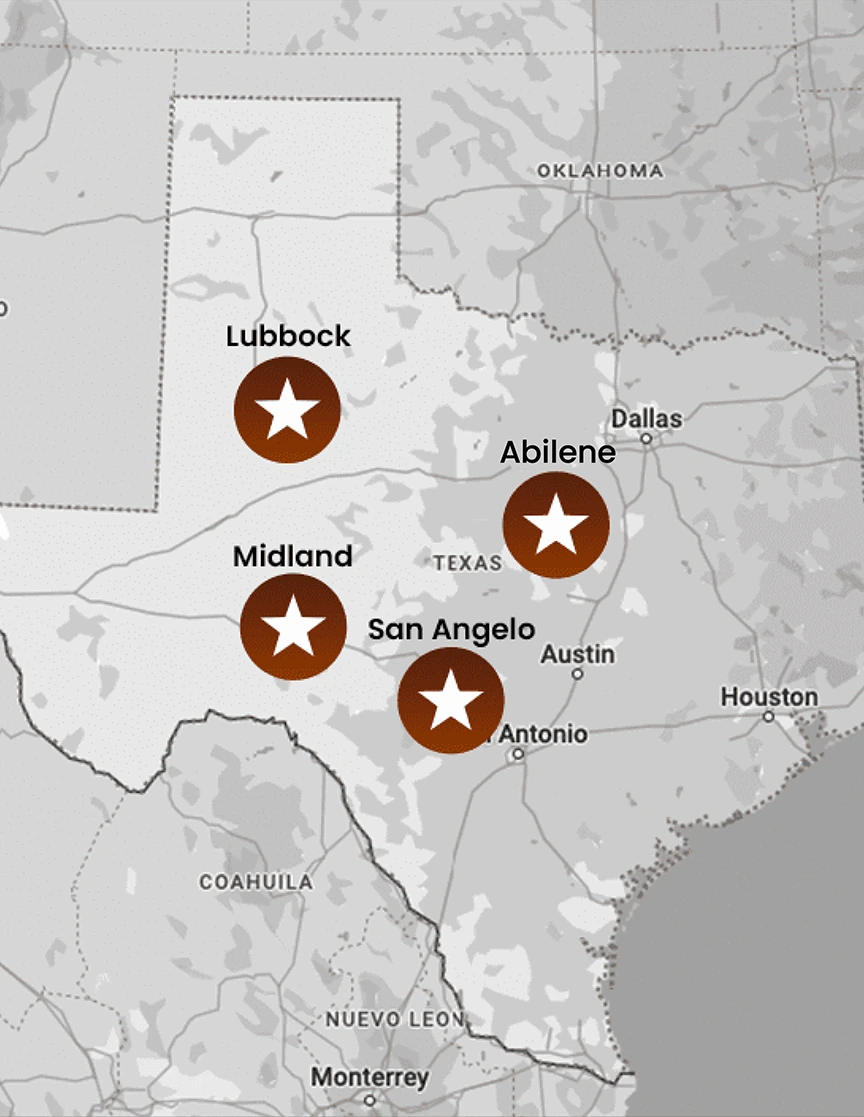
There is no shortage of law firms in Texas that will take a nursing home case. Most of them are in Dallas or Houston. Most of them have never set foot in a Taylor County courtroom or tried a case in communities like Abilene, Lubbock, San Angelo, or Midland.
We do not practice in West Texas because it is convenient. We practice here because this is home.
Managing partner Russell Lorfing was a federal prosecutor in Lubbock. Partner Trey Keith has lived in Sweetwater for 25 years. Our former law partners are now sitting judges and elected district attorneys across this region. When we say we know how these courts work, we mean it in a way that a firm from Dallas simply cannot.
We have tried over 500 jury trials. We know what it takes to win.
We also know that the family sitting across from us is not a case number. They are people who trusted a facility with someone they loved, got betrayed, and now need to figure out what to do next. We take that seriously.
There is no fee unless we win. Call (325) 225-0143 or reach out online to tell us what happened.
They Let You Down. We Won’t.
Frequently asked questions
Is there a cap on wrongful death damages in Texas nursing home cases?
No cap exists on economic damages, including medical bills, lost financial support, and funeral costs, in cases brought under Chapter 71. If the case is treated as medical malpractice under Chapter 74, different rules and caps may apply. We determine which framework applies to your case from the start, because it has direct consequences for your family’s recovery.
The nursing home had my loved one sign an arbitration agreement. Does that end our case?
No, not necessarily. These agreements are common and frequently challenged. Courts look at factors including how the agreement was presented, whether the resident had the mental capacity to sign, and whether the clause itself is enforceable under Texas law. Do not take the facility’s word on this. Let us review it.
What is the difference between a nursing home wrongful death claim and a medical malpractice claim?
Medical malpractice under Chapter 74 applies to licensed healthcare providers and comes with strict procedural requirements, including a mandatory medical expert report within 120 days of filing. Nursing home cases can be brought under Chapter 71, Chapter 74, or both, depending on the facts. The right theory affects what you can recover and how the case proceeds. We identify the correct approach from day one.
How long will the case take?
There is no standard answer. Cases that settle after the evidence is developed can resolve within several months to a couple of years. Cases that go to trial take longer. What we can tell you is that a lawyer, not a paralegal or intake coordinator, will answer your calls and emails and keep you informed at every stage. That is how we work.
The facility passed its last inspection. Can we still sue?
Yes. State inspections are periodic snapshots. They do not capture day-to-day staffing failures, individual incidents of neglect, or systemic problems that developed between inspection dates. A passing grade on a report from six months ago says nothing about what was happening on the floor the week your loved one died.