If a car hit you while you were riding, the crash was only the start of it. Your case has a lot in common with any car accident claim, and the hospital bills, missed paychecks, and pain pile up just as fast.
Then the insurance company calls. The adjuster will sound friendly, but his job is to pay you as little as the law allows and to get you talking so he can use your words later.
We want you to know that before you say anything to them. A Texas bicycle accident claim comes down to who controls the story of what happened, and at Lorfing Law, we make sure that person is you and not the insurer.
The rights they’re hoping you don’t know about
An adjuster wants you to feel like you never belonged on that road. If a bike has no business in traffic, the thinking goes, then the crash must be partly your fault.
Texas law says the opposite. Under Texas Transportation Code §551.101, your bicycle is a vehicle, and you had just as much right to that lane as the driver who hit you.
That one fact changes the whole conversation. The driver owed you the same care they owe any car, and they are the one who pays when they fail to give it.
These are the rules the other side hopes you’ve never read.
The defense will act as if half of those rules don’t exist. Knowing them is the first step toward taking your case back.
Why they’ll try to blame you and how that costs you
The moment your fault is in question, money starts draining from your claim. Texas follows a rule called modified comparative negligence (Civil Practice & Remedies Code Ch. 33), and adjusters know how to use it against riders.
It works like a dial. Each percentage of fault they put on you lowers your payout, and at 51% it cuts you off completely.
A little blame changes a $100,000 case fast.
That math is why they fight so hard to blame you. Expect them to claim you rode too far from the curb, ran a light, or had no lights after dark, since every accusation lowers what they owe.
The helmet trick
The helmet argument is the one that catches riders off guard. You broke no law by riding without a helmet, because Texas has no adult helmet requirement at all.
That won’t stop the insurer from trying. If you hit your head, they’ll argue a helmet would have spared you and try to shift blame onto you for going without one.
We’re trial lawyers, and we take this kind of thing personally. Call Russell and our team at (325) 225-0143 or tell us what happened before you let an adjuster write your story for you.
The roads out here will not forgive a mistake
Most bike-accident advice is written for downtown Houston or a Dallas bike lane. That has almost nothing to do with the ride home on a county road outside San Angelo at dusk.
The dangers out here are different. There’s no shoulder, no bike lane, and often a pickup doing seventy with the sun in the driver’s eyes.
- The speeds are brutal. Farm-to-market roads carry highway-speed traffic, so a glancing hit becomes a life-altering one.
- The trucks are everywhere. Oilfield tankers crowd narrow Permian Basin roads, and a truck against a cyclist is never a fair fight.
- Help is far away. A rural crash can mean a long wait and a long drive before you reach real trauma care.
- You’re sharing one lane. Miles of West Texas road leave a rider nowhere to go but in front of traffic.
The numbers match what we see in our cases. The Texas Department of Transportation counted 78 cyclists killed on Texas roads in 2024, and about 64% of those deaths happened after dark.
When researchers at the Texas A&M Transportation Institute looked at the causes, reckless riders weren’t the problem. The leading factors were distracted drivers and drivers who failed to yield, which puts the blame squarely on them.
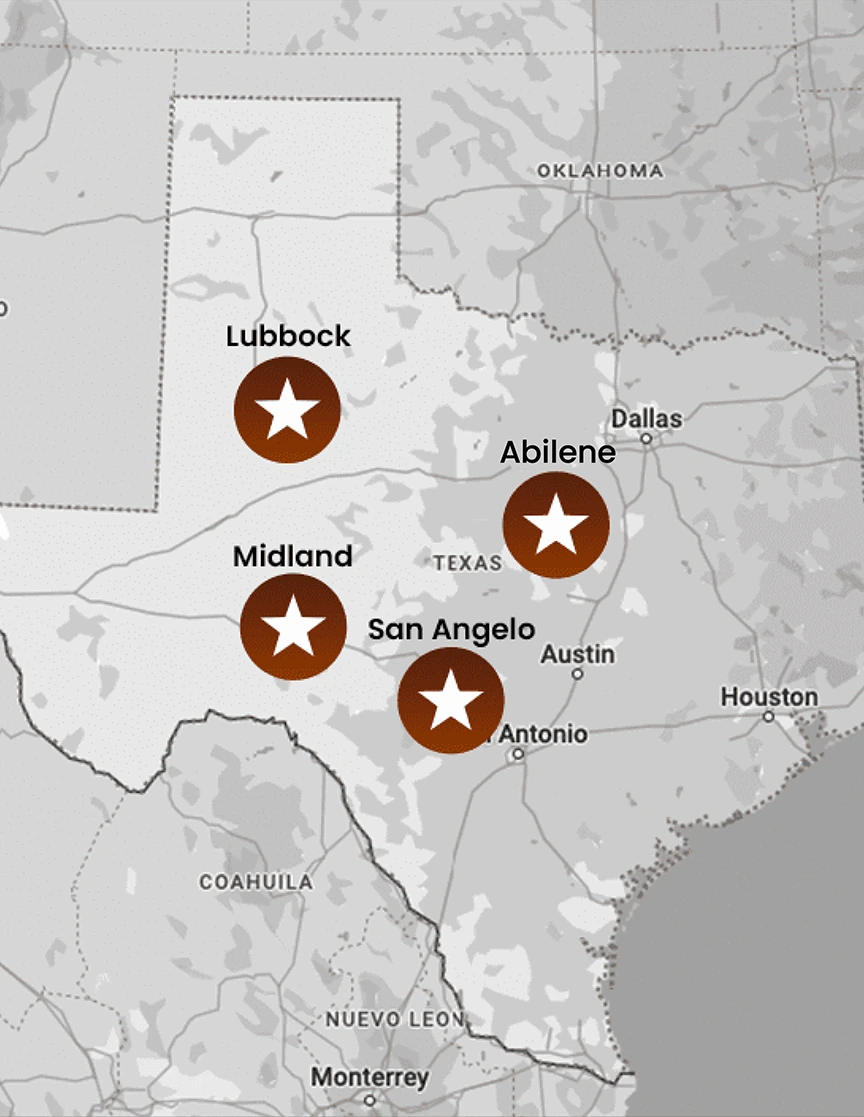
This is our backyard. Russell Lorfing prosecuted federal cases in Lubbock, and our attorneys live and work in Abilene, Lubbock, Midland, and San Angelo.
We know these roads, these juries, and the drivers who cause these crashes, whether you were on a bike or behind the wheel in a Lubbock car accident.
Putting your losses into numbers the insurer can’t ignore
At some point, your suffering has to be written down in dollars, because that’s the only language an insurance company respects. Our job is to make that number tell the truth.
Texas splits your losses into two buckets. One is the stack of bills you can count, and the other is everything the crash took that doesn’t come with a receipt.
| What you can prove on paper | What the crash actually took |
|---|---|
| Hospital and surgery bills | The pain you wake up to |
| Future treatment and therapy | Anxiety, depression, sleepless nights |
| The paychecks you missed | The hobbies and rides you’ve lost |
| A career you can no longer do | Scars you’ll see in the mirror for years |
| The bike and gear they destroyed | Time with family you can’t get back |
The bills are the easy part to fight for. The harder losses are the human ones, like the earning power you may never fully regain and the life you had before the crash.
When a drunk or reckless driver caused the wreck, Texas also allows punitive damages meant to punish, not just repay. And when a family loses someone they love, a wrongful death claim carries its own weight.
What actually moves your claim up or down
There is no calculator for this, no matter what a website promises. Your case is worth what the facts say it is worth, and those facts cut both ways.
| What raises your claim | What the other side uses to shrink it |
|---|---|
| Injuries that change your life | Injuries that fully heal |
| Big medical bills, now and ahead | Gaps where you skipped treatment |
| A driver clearly at fault | A muddy story they can argue about |
| Real lost income | Barely any time off work |
| Photos, witnesses, a police report | A thin file with little proof |
| Insurance money on the table | A bare-minimum policy |
That last point matters more than people expect. Texas only requires $30,000 in bodily injury coverage per person, which rarely covers a serious bike crash, so we look for every other policy that might apply.
Want to know what your facts add up to? That’s a conversation, not a form. Call Russell and our team at (325) 225-0143 and we’ll walk through it with you for free.
What a crash does to a cyclist’s body
A cyclist has no steel cage, no airbag, and no seatbelt. There is only skin and a few pounds of aluminum between a rider and two tons of metal.
The injuries we see most often are severe and lasting.
- Brain injuries: Concussions and worse, even when a helmet was on
- Spinal damage: The kind that can take away your ability to walk
- Shattered bones: Collarbones, wrists, pelvises, and legs
- Road rash: Wounds so deep they need skin grafts
- Internal injuries: Organ damage you can’t see and can’t ignore
The worse the injury, the more your future is at stake. We work to put a clear, documented picture of that future in front of the people writing the check.
What to do right after a bicycle accident
Right after a crash, you’re hurting and scared, and that’s exactly when small mistakes do big damage to a claim. A few simple moves protect both your body and your case.
- Call 911. That police report becomes one of your strongest cards.
- Get checked out now. Some injuries hide for days, and a gap in treatment is ammunition for the insurer.
- Take pictures. Photograph the scene, your bike, the vehicle, and your wounds.
- Grab witness info. A name and number from a stranger can win a case.
- Don’t get recorded. Give no statement to any insurer until you’ve talked to us.
- Call a lawyer fast. The sooner we step in, the more evidence we can lock down.
✅ Five moves that protect you: report it, get treated, photograph it, stay quiet with the insurer, and call us.
If you’re reading this from a hospital bed, or sitting beside someone you love who is, call (325) 225-0143 or reach out here. We’ll handle the insurance company so you can focus on healing.
Why this fight is personal for us
We didn’t open this firm to send polite letters and split the difference. We opened it to win in front of a jury, and the insurance companies in West Texas know that about us.
Our attorneys have stood up in more than 500 jury trials, with over 75 years of experience between us. We count former federal and state prosecutors among us, and Russell Lorfing himself served as a federal prosecutor in Lubbock.
That record is your leverage. When the other side knows we’ll gladly try the case, the insulting offers tend to disappear.
Every client gets the same promises from us.
- A real lawyer answers your calls and emails, not a machine
- You stay informed about your own case at every step
- You’re treated like family, because that’s how we mean it
- You pay us nothing unless we win
We practice only in West Texas, and we’re proud of it. Standing up for working people from the Panhandle to Big Bend is the whole reason we get out of bed.
Let's Even The Odds.
Frequently Asked Questions
Does Texas make cyclists wear a helmet?
No. There’s no statewide helmet law for adults, though some cities require them for kids. Riding bare-headed is legal, but expect the defense to raise it if you hurt your head.
Can I still get paid if I was partly at fault?
Yes, as long as you’re 50% at fault or less. Your payout drops by your share, so 20% of the blame on a $100,000 claim still leaves you $80,000.
What if the driver had no insurance?
Your own uninsured or underinsured motorist coverage may step in, if you carry it. We chase down every policy that could possibly apply to your crash.
What if the driver took off?
A hit-and-run doesn’t kill your claim. Your own coverage may apply, and we work the police evidence and witnesses to help track the driver down.
How long do I have to act?
Two years from the date of the crash, under Civil Practice & Remedies Code §16.003. Miss that deadline and you usually lose your right to recover, so don’t wait.
My crash was way out in the country. Does that matter?
Not to your rights, which are the same anywhere in Texas. We handle cases across Abilene, Lubbock, Midland, San Angelo, and every back road in between.
Do I honestly need a lawyer for this?
You don’t have to hire one. But between disputed fault, trained adjusters, and hard questions about your future, injured riders who hire a lawyer almost always come out ahead.