You weren’t even driving. You handed your safety to a professional whose whole job was getting you there in one piece, whether that was a transit driver, a school bus driver, or a charter company.
They got it wrong. Now you are the one in a hospital bed, doing math on bills you never agreed to.
A lot of bus wrecks also pull in another vehicle, so if you were hurt in the car the bus struck, our Lubbock car accident lawyers handle that side of the crash too.
If the bus that hurt you belonged to a city or a school district, the other side already has a head start that most people never find out about. They cannot be sued unless a specific law allows it, a notice deadline you have probably never heard of is already running, and the law caps what they will ever pay you no matter how badly you were hurt.
Taking that head start away is what we do. Our managing partner, Russell Lorfing, spent years as a federal prosecutor in Lubbock, so he has sat in the same chair the government’s lawyers sit in and knows the moves they make.
Two different fights, not one
One question decides how hard your case will be. Did a government agency run the bus, or did a private company?
A government bus might be a Citibus route in Lubbock, a CityLink bus in Abilene, a public school bus, or a state vehicle. When the government is involved, you run into sovereign immunity, which means the government cannot be sued at all unless a law gives you permission. That law is the Texas Tort Claims Act, and it opens a narrow door while keeping most of it shut with short deadlines and hard caps.
A private bus might be Greyhound, a charter coach, a church van, or a tour shuttle. There is no immunity and no statutory cap with a private operator, but you trade that for a different opponent. You are now facing a company and an insurer who fight bus claims for a living.
Either way, the rules are not built for you. They are built for the other side, and walking in unprepared is how good cases fall apart.
Suing a government bus operator: the Texas Tort Claims Act
What the law actually lets you do
The Tort Claims Act opens the door for one situation that matters to you. It applies when a government employee hurts someone while driving a government vehicle. A transit driver who blows a red light and slams into your bus sits squarely inside that exception.
In most cases you are not chasing the driver personally. You are holding the agency itself responsible, because the agency is the one with the insurance and the budget to make you whole.
The clock you don’t know is running
Most people lose a government bus claim for one reason. They miss a deadline they never knew existed.
Almost everyone believes they have two years to sue over an injury in Texas. So they focus on healing, take the calls from the adjuster, and wait until they are back on their feet. A separate deadline is counting down the entire time.
⏱️ Before you can file anything in court, you have to deliver formal written notice to the government within six months of the crash. Some Texas cities, including Houston and San Antonio, cut that to 90 days through their own charters. Miss it, and your claim is usually finished even if you still had a year and a half left on the two-year clock.
Two clocks run at the same time, and the one almost nobody warns you about (§ 101.101) runs out first.
The notice itself is short. The law only requires it to describe who you are, when and where the crash happened, and what was hurt. Short does not mean optional. Get the contents or the timing wrong and the door closes for good.
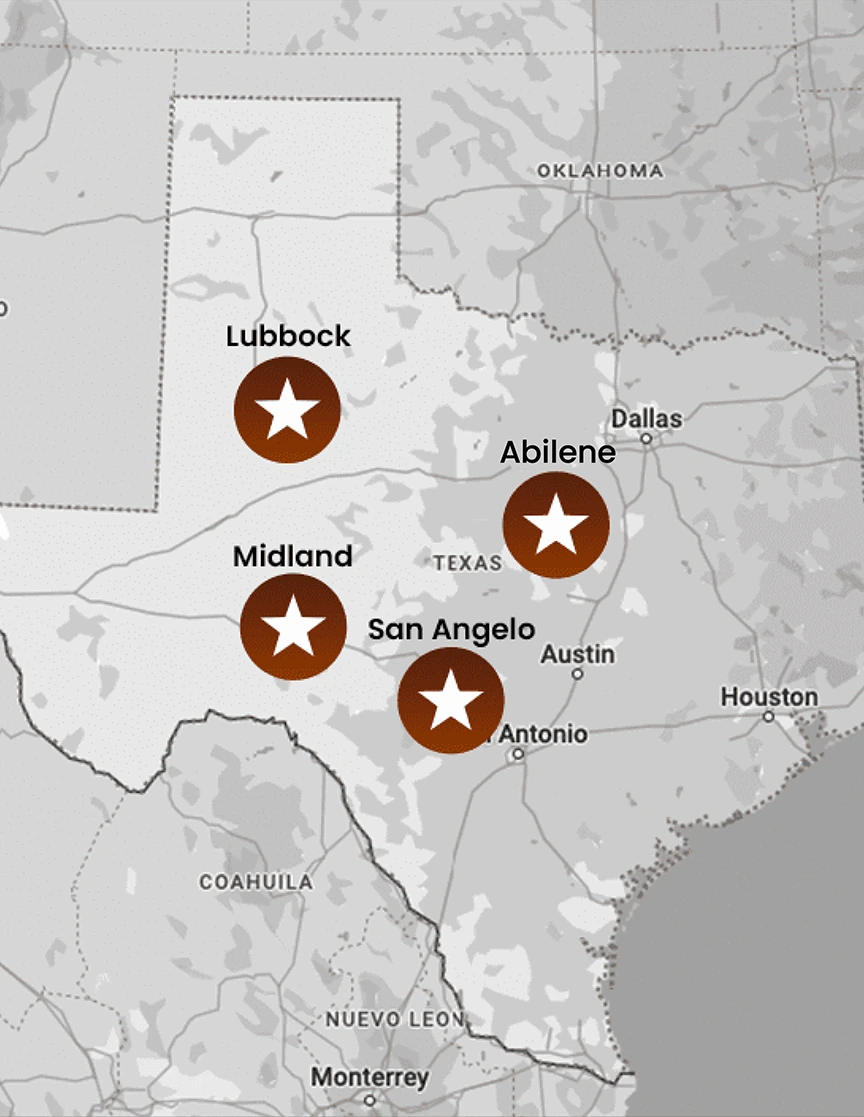
If a city or school bus hurt you, do not wait to see how you heal. Every week that passes is a week off a clock you cannot get back. Call Keith & Lorfing at (325) 480-8100 or tell us what happened online, and we will protect your notice deadline first and ask the slower questions later. We serve Abilene, Lubbock, Midland, and San Angelo.
The ceiling they don’t mention
Say you beat the clock. There is still a wall waiting for you, and it is written into the statute (§ 101.023).
The government caps what it has to pay, and the amount depends on who hit you. A city is on the hook for more than a school district, and that detail quietly decides how a family recovers.
That bottom row is the one that hurts families. A child who suffers a traumatic brain injury on a school bus, with a lifetime of care ahead, still runs into a $100,000 wall against the district. That cap does not change no matter how badly your child was hurt.
We do not accept that wall as the end of the story, and neither should you. The way past it is rarely the government at all. It is usually everyone else who helped cause the crash, which is where the real recovery hides.
The higher bar a bus has to clear
A bus is not held to the same standard as the driver next to you in traffic, and the insurance company will not be the one to tell you that.
Under Texas law, anyone in the business of carrying passengers for hire is a common carrier. A common carrier owes you a high degree of care, which is the caution a “very cautious, competent, and prudent person” would use. A small lapse that might be excused in an ordinary fender-bender can be enough to hold a bus company liable.
The duty covers more than driving. It reaches how the company maintains the bus, who it hires, how it trains them, and whether it keeps you safe while you board and exit. When the bus is a private interstate line, federal regulators at the FMCSA require it to carry serious insurance, and that coverage is often the real source of your recovery. You can even check a private carrier’s federal safety record yourself through the FMCSA’s Look Before You Book bus safety tool.
Who’s really on the hook
The insurance company wants you to believe there is one defendant with one capped policy, so you take their first offer and go away. The truth is usually very different.
A bus crash often has fingerprints from several parties. The driver may have been distracted, while the company skipped the training that would have caught it. The brakes may have failed because a contractor cut a corner on a repair. A parts maker may have shipped a defect, or another driver on the road may have set the whole thing in motion.
When a careless driver triggered the wreck, your claim can also become a Lubbock car accident case, and we go after that driver’s coverage alongside the bus company’s.
This matters most when you are up against the government. The Tort Claims Act caps the agency, but it does not cap a private brake contractor, a parts manufacturer, or a third driver. Each party we add brings its own insurance policy, and those policies sit completely outside the government’s $100,000 or $250,000 ceiling. Adding them is often the difference between a capped check and a full recovery.
Our trial team is built for exactly this kind of fight. With more than 500 jury trials behind us and former state and federal prosecutors on the roster, we take a crash apart piece by piece and make every responsible party answer for its share. If a commercial truck was involved too, our truck accident attorneys know how those rules overlap.
If you are not sure who is to blame, that is our job to work out, not yours. Call us at (325) 480-8100 and we will start pulling the thread.
The injuries that change a life
Many people picture a bus accident as a few bruises and a sore neck. The reality is usually far worse.
Buses are heavy, passengers rarely have a seatbelt, and there is nothing to brace against when several tons stop short. The people inside absorb the full force, and those injuries tend to follow them home.
We regularly represent people with traumatic brain injuries, herniated discs and spinal damage, broken ribs and collarbones, and torn shoulders from grabbing for a rail that was never enough. Glass and metal leave scars, and so does the fear that returns every time a survivor boards a bus again.
A child hurt on a school bus carries an extra weight. The school district is a government agency, with the same short clock and the lower cap. School buses are built to strict federal standards, and NHTSA reports that children face the most danger getting on and off the bus rather than riding it. If that is your family, please do not wait. The deadline does not pause because your child is the one who is hurt.
What your claim is actually worth
Anyone who hands you a number before hearing your story is guessing or selling. The honest answer is that the value of a bus claim depends on several things.
If the government ran the bus, the statutory cap is the ceiling, and the fight becomes about reaching past it to other defendants. If a private company ran it, the ceiling is the company’s insurance and assets, which on a commercial carrier can be substantial.
Inside those limits, the value comes down to how badly you were hurt and for how long, what your care has cost and will cost, the income you have lost and the earning power you may never get back, the pain that never shows up on an X-ray, how clearly the fault lands on the other side, and how many parties we can hold responsible.
Two people with the same injury can walk away with very different outcomes, decided by a detail they would never think to ask about. That is why it helps to have someone in your corner who does ask. Our personal injury attorneys will look at your facts for free and tell you the truth, even when it is not the answer you hoped for.
When you want a real answer instead of a guess, call (325) 225-0143 or reach us online. We only get paid if we win for you, so there is no fee unless we recover.
What to do before the clock beats you
Most injury advice can wait a day. With a government bus, it cannot.
See a doctor the same day, even if you feel fine, because adrenaline hides the injuries that surface tomorrow. If you are able, photograph the bus number, the route, the driver’s badge, the vehicle damage, and the road, and get the names and numbers of any witnesses before they scatter.
Report the crash to the transit agency or company and ask for a copy of any incident report. You can also request the official Texas crash report from TxDOT, which lays out the investigating officer’s account of what happened. Do not sign a release or accept a settlement from an adjuster until a lawyer has read it, because that early and generous sounding offer is usually the lowest the case will ever cost them.
Then call a lawyer quickly. A notice deadline can run out while you still believe you have a full two years to act.
If another vehicle was involved, or someone did not survive, our car accident and wrongful death teams handle those cases under the same roof.
For Any Of This
Talk to a West Texas bus accident lawyer
You did not ask for any of this. You rode the bus, someone else made the mistake, and now a system you never studied is quietly running clocks and setting ceilings against you.
Leveling that field is the work we care about most. We stand up for working West Texans against the cities, districts, and insurers on the other side. We grew up out here, we try our cases out here, and we know how the other side thinks.
If a bus accident hurt you or someone you love anywhere in West Texas, call Keith & Lorfing at (325) 225-0143 or tell us your story. We serve Abilene, Lubbock, Midland, and San Angelo, and you owe us nothing unless we win.
Frequently asked questions
What’s the deadline to file a claim if a city bus injured me in Texas?
You have to give the government written notice within six months of the crash (§ 101.101), and some cities shorten that to 90 days. Miss that deadline and your claim is usually finished, even though the deadline to actually file the lawsuit is two years.
Can I sue a Texas school district over a bus accident?
Yes. A district can be held responsible when its driver causes a crash, because school bus wrecks are one of the few areas where districts are not immune. The six-month notice rule still applies, and the cap is lower, generally $100,000 per person.
Does that higher “common carrier” duty apply to government buses too?
It does. In VIA Metropolitan Transit v. Meck, the Texas Supreme Court held that a public transit agency is a common carrier owing a high degree of care, and that the Tort Claims Act lets a passenger sue when it is breached. The deadlines and caps still apply on top of it.
What if a private charter bus caused my accident?
Then the government’s rules do not box you in. Private charter companies have no immunity and no statutory cap, they owe you a high degree of care as common carriers, and their commercial policy is usually where your recovery comes from.
Can more than one party be on the hook?
Often, yes. The list can include the driver, the company or agency, a maintenance contractor, a parts maker, and even another motorist. Finding those extra parties is especially valuable against the government, since private defendants are not bound by the caps.
Is there any way around the damage caps?
The cap only limits the government entity itself. A private contractor, a parts manufacturer, or another at-fault driver is not capped, which is exactly why we chase down everyone who had a hand in the crash.