You got the call. Your mother fell, walked out a door that should have been locked, or has a bruise nobody can explain. Perhaps another resident struck your father inside the memory care unit where you trusted he would be protected. The facility may call it an accident or an unpredictable act. That is not the end of the analysis.
The question families deserve to have answered is: Could this have been prevented?
Incidents inside nursing homes and memory care facilities happen behind closed doors. Some families stay quiet because they are afraid of retaliation, exhausted by caregiving, or convinced no one will listen. But reporting what happened can protect your loved one, create an independent record, and help reveal whether other residents have been harmed in similar circumstances.
This page explains how Texas law treats injuries in nursing homes and memory care units, why the facility’s license type changes your case, what evidence decides these claims, and the specific steps that protect your family right now.
If your loved one died after an injury in a nursing home or memory care facility, speak with a Texas wrongful death lawyer about whether the facility’s conduct may support a wrongful death or survival claim.
When the Injured Resident Is Your Own Parent
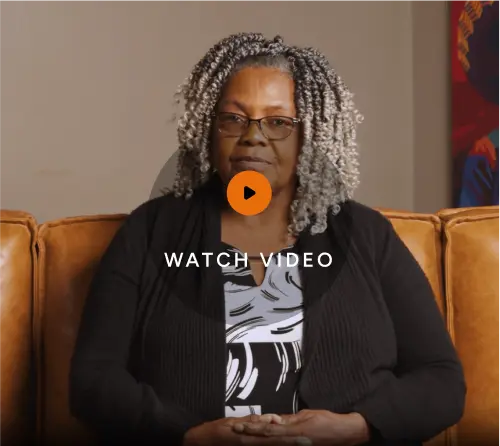
For Russell Lorfing, managing partner of Keith & Lorfing, this issue became personal. In a recent video, he described an assault on his father inside a Houston-area memory care facility on May 6, 2026. According to Lorfing, another resident struck his father with a cane, causing multiple facial fractures.
Lorfing described looking at the injuries first as a son and then asking, as an attorney, whether the facility could have prevented them. His family began investigating the incident and considering legal action. No conclusion about the facility’s legal responsibility should be drawn before that investigation is complete.
He also invited families in Baytown and nearby communities to share similar experiences. One account may look isolated; several independent accounts may point investigators toward a recurring safety problem that deserves closer examination.
That distinction matters in every resident-on-resident assault. The fact that another resident caused the immediate injury does not automatically make the facility liable. It also does not end the inquiry.
The investigation should ask whether staff knew of prior aggression, whether the residents’ care plans identified a risk, whether appropriate separation or supervision was in place, and how the facility responded before and after the assault.
Nursing Home and Memory Care Are Not the Same Thing in Texas
Most families use these terms interchangeably. Texas law does not.
Chapter 242 · Chapter 247 · HHSC certification
A memory care unit may market itself as offering nursing-home-level supervision while operating under assisted living staffing standards. Families rarely learn the difference until someone is hurt. Texas does not have one universal "memory care" license.
Confirm the license before anything else
Health & Safety Code ch. 242
Licensed nursing facility
Skilled nursing care
Health & Safety Code ch. 247
Type B assisted living
Most "memory care" units
Health & Safety Code § 242.202
Nursing facilities that advertise Alzheimer's services must file and post a disclosure statement covering seven items. That document is the closest thing to a written promise you will find — and comparing it to what actually happened is often where these cases are won.
- Philosophy of care. How the facility says it approaches dementia care.
- Admission and discharge process. Who the facility accepts and when it will discharge a resident.
- Assessment and care planning. How the facility evaluates each resident and builds the care plan.
- Staffing patterns. Resident-to-staff ratios and staff training — in writing, filed with the state.
- Physical environment. The building's layout, security, and safety features.
- Resident activities and program costs. What the family was told they were paying for.
- Family involvement. How the facility promises to communicate with you.
The marketing becomes evidence
A facility that sold your family on specialized memory care without holding that certification has a serious problem. The marketing itself becomes evidence of the standard the facility undertook to meet.
Common Injuries and Their Possible Causes
Facilities often describe these events as accidents. The records may show whether the injury was truly unforeseeable or connected to a documented risk the facility failed to manage.
Falls and Fractures
A single fall is not automatically negligence. A fall by a resident whose chart already flagged fall risk, unsteady gait, or a prior fall is a different matter.
Facilities are required to assess fall risk and build interventions into the care plan — bed height, non-skid flooring, toileting schedules, assistive devices, supervision during transfers. The question is never just “did she fall.” It is whether the facility identified the risk and then did what its own care plan said it would do.
Hip fractures and brain injuries can cause serious complications and may increase an older resident’s risk of decline or death. Whether an injury caused or contributed to a later death requires case-specific medical evidence.
Elopement and Wandering
Elopement means a resident with cognitive impairment leaves the building unsupervised. For a memory care resident, this is among the most foreseeable events in long-term care.
Wandering is a recognized risk for people with dementia. In an individual case, nursing notes, care plans, behavior records, or earlier incidents may show that the facility knew about prior exit-seeking behavior.
We then examine what safeguards existed: door alarms, delayed egress, wander-management bracelets, secured courtyards, staffing on the affected shift, and the response timeline after staff noticed the resident was gone. In West Texas, where summer heat and open distances between properties are unforgiving, the time between “noticed missing” and “found” is often the difference between a scare and a death.
Medication Errors and Chemical Restraints
Medication problems in dementia care fall into two categories, and the second is the one families rarely recognize.
The first is ordinary error: wrong drug, wrong dose, missed dose, wrong resident.
The second is sedation used for staff convenience. Texas Health and Safety Code § 242.501(a)(22) gives nursing facility residents the right to be free from physical or chemical restraints imposed for purposes of discipline or convenience.
Psychoactive medication also requires informed consent. Under § 242.505, a facility may not administer psychoactive medication to a resident who has not consented unless there is a medication-related emergency or a person legally authorized to consent has agreed.
Before that consent, the prescribing physician or medical director must disclose the specific condition being treated, the expected benefits, and the probable clinically significant side effects and risks. Consent for antipsychotics must be documented in writing on a state-prescribed form, and the resident must be told in writing that consent can be revoked.
If your father was newly sedated, suddenly declined, or fell shortly after a medication change, the consent documentation is worth examining closely.
Pressure Injuries, Dehydration, and Malnutrition
These develop over days and weeks, which makes them difficult for a facility to explain as an accident.
Resident-on-Resident Aggression
Dementia can produce aggression, and memory care units serve residents who may act unpredictably. When one resident injures another, the legal analysis should not stop with the person who swung the cane, pushed a wheelchair, or entered the wrong room.
The important questions are what the facility knew and what it did. Prior threats, striking incidents, escalating behavior, medication changes, or warnings in the care plan may make another assault foreseeable. If the facility documented that risk but failed to adjust supervision, separate residents, revise the care plan, or obtain appropriate clinical intervention, the evidence may support a supervision claim.
Families should also ask the question Russell Lorfing asked after his own father’s injury: How many other residents has this happened to? Earlier incident reports, complaint findings, behavior logs, and witness accounts may show that what was presented as an isolated event was part of a pattern.
Unexplained Injuries
Bruising in patterns that do not match a fall, fractures with no incident report, or an injury the facility cannot account for should be treated as a possible abuse case from the start. Photograph everything and request the record before anything else happens.
What You Must Prove Under Texas Law
Most of these claims are negligence claims, built on four elements.
Duty. The facility owed your loved one a duty of reasonable care based on its license, its regulations, its admission agreement, and the care plan it wrote.
Breach. The facility failed to meet that standard — inadequate staffing, a care plan not followed, a known risk left unaddressed, a supervision failure.
Causation. The breach caused the injury. This is where cases are contested, because facilities argue that advanced age or existing conditions explain the outcome.
Damages. Your loved one suffered harm with a legal value — medical bills, physical pain, mental anguish, disfigurement, and in the worst cases, death.
Regulatory violations are not automatically the same as legal liability, but a documented violation of a licensing standard is powerful evidence that the facility fell below the standard of care.
Those same core issues—duty, breach, causation, and damages—also appear across many other types of Texas personal injury claims, although the specific rules and evidence differ by case.
Chapter 74: The Procedural Rules That Surprise Most Families
Here is what almost no article on this topic tells you, and it matters more than nearly anything else.
Tex. Civ. Prac. & Rem. Code ch. 74
Texas classifies both nursing homes and assisted living facilities as health care institutions. Under § 74.001(a)(11) the definition expressly includes an assisted living facility licensed under Chapter 247 and a nursing home. When the claim qualifies as a health care liability claim, Chapter 74 applies.
The clocks
120 days
Expert report
The claimant must serve an expert report on each defendant no later than the 120th day after that defendant files its original answer.
The report must address the standard of care, the failure to meet it, and the causal relationship to the injury.
Miss it and the case can be dismissed with the facility's attorney's fees assessed against you. This is not a technicality that gets forgiven.
§ 74.351(a)2 years
Limitations period
The claim must be filed within two years of the breach or the completion of the treatment at issue.
Close to the two-year mark, delay is especially dangerous — the expert report has to be prepared before the deadline pressure arrives.
§ 74.251(a)10 years
Statute of repose
An absolute ten-year outer limit, regardless of when the injury was discovered.
Waiting is still costly well before then — staff turn over, memories fade, and records become harder to get.
§ 74.251(b)The caps
Noneconomic damages — one institution
$250,000
Per claimant, against a single health care institution. Pain, mental anguish, and disfigurement.
§ 74.301(b)Noneconomic damages — multiple institutions
$500,000
Where more than one institution is liable, $250,000 against each, subject to a total of $500,000 per claimant.
§ 74.301(c)Economic damages
Not capped
Section 74.301 does not cap medical expenses, corrective care, or lost earnings where applicable.
§ 74.301Not every claim is a health care liability claim
The substantive nexus test
A safety-standards claim falls under Chapter 74 only when there is a substantive nexus between the safety standards at issue and the provision of health care.
Whether a hallway fall, an elopement through an unsecured door, or an assault by another resident is a health care liability claim or ordinary premises negligence depends on the specific facts — and that characterization drives both the expert report requirement and the caps.
Ross v. St. Luke's Episcopal Hospital (Tex. 2015)A second limit families miss
Wrongful death and survival claims
A wrongful death or survival claim that qualifies as a health care liability claim may also be subject to the separate, inflation-adjusted limit in § 74.303.
That limit generally covers all damages except expenses for necessary medical, hospital, and custodial care. The applicable limits depend on the claims and defendants involved.
§ 74.303Decide this early
Whether Chapter 74 applies deserves attention early rather than after a deadline has passed. The expert report clock starts when the defendant answers — not when you decide the question.
Whether a fall in a hallway, an elopement through an unsecured door, or an assault by another resident is a health care liability claim or ordinary premises negligence depends on the specific facts. That characterization drives the expert report requirement and the caps, which is why it deserves attention early rather than after a deadline has passed.
For broader context on recent Texas legal developments, see our guide to new Texas personal injury and wrongful death laws, including which proposed changes became law and which did not.
Evidence That Decides These Cases
Facility records are created and held by the facility. Entries may also be supplemented or corrected in the ordinary course, which makes obtaining the records and preserving their electronic audit trails early a priority.
The complete medical and nursing chart: Assessments, care plans, nursing notes, wound documentation, and vital signs.
The MAR (medication administration record): Shows what was actually given and when, including gaps.
Incident and accident reports: Including internal investigations, witness statements, and reports of earlier resident-on-resident aggression.
Behavior records and care-plan interventions: Notes about threats, striking, agitation, medication changes, room assignments, separation plans, enhanced monitoring, and whether staff followed those measures.
Staffing schedules and time records: Scheduled hours are not worked hours. Punch records tell the real story.
The admission agreement and disclosure statement: What the facility promised in writing, including staffing ratios.
HHSC survey and complaint investigation reports: State inspection findings and prior citations, which are public records.
License and Alzheimer’s certification status: Whether the facility was authorized to provide the care it advertised.
Training records: Whether the staff caring for a dementia resident had dementia-specific training.
Photographs: Of injuries, the room, the exit involved, and the resident’s condition over time.
An attorney may send an early preservation notice identifying records, video, and electronic data that should not be altered or destroyed.
If you are worried that a facility is closing ranks, do not wait for records to age.
Contact our office or call (325) 480-8100. There is no fee unless we recover for you.
Your Right to Put a Camera in the Room
This is the most useful thing many families can do, and it is almost never mentioned.
Texas Health and Safety Code Chapter 242, Subchapter R gives residents of licensed nursing facilities the right to conduct authorized electronic monitoring in their room.
The framework works like this:
Request form: Under § 242.846, the request must be made on a form prescribed by the state, and monitoring cannot begin until all required forms are completed and returned to the facility.
Roommate consent: A roommate must consent, and may condition that consent — for example by requiring the camera be pointed away from them or that audio be limited.
Who pays: Under § 242.847, the resident or their representative pays all costs of monitoring except the cost of electricity.
Facility cooperation: The facility must make reasonable physical accommodation, including a reasonably secure place to mount the device and access to power.
No retaliation: Under § 242.851, a facility administrator may not refuse to admit someone, or allow a resident’s removal, because of a request to conduct authorized electronic monitoring.
There is one detail that trips families up. Under § 242.848, a person conducting monitoring is deemed to have viewed a recording within 14 days of when it was made, which triggers the duty to report abuse or neglect.
Do not stockpile footage. Review it, and if it shows abuse or clear neglect, report it and call a lawyer.
One more distinction matters: this statutory framework sits in Chapter 242, which governs nursing facilities. Chapter 247, which governs assisted living facilities, contains no equivalent subchapter.
Before installing a camera in an assisted living facility, obtain legal advice and determine what consent is required from the resident or legal representative, any roommate or legal representative, and the facility. Audio recording and later use of the footage may raise additional privacy and recording-law issues.
Reporting the Incident to the State
Reporting and suing are separate tracks, and one does not replace the other.
It is understandable for a family to hesitate. You may fear making life harder for a parent who still lives in the facility, feel too exhausted to challenge the explanation you were given, or assume no one will listen. Tell the ombudsman or HHSC about those concerns when you report the incident; silence should not be the price of keeping a vulnerable resident housed and safe.
HHSC’s Complaint and Incident Intake unit receives complaints about licensed nursing facilities and assisted living facilities, and its regulatory staff can investigate and cite the facility.
The Texas Long-term Care Ombudsman program is a separate, free advocacy resource that can help resolve problems inside a facility without litigation.
A state investigation can produce findings that are useful evidence later and may help regulators identify a pattern that no single family could see. It cannot recover money for your family, and the deadlines that govern a lawsuit keep running while an investigation proceeds.
What to Do in the First Two Weeks
The window when evidence is freshest is short. These steps protect your family’s options.
Get independent medical care. Take your loved one to a hospital or physician outside the facility for evaluation and documentation.
Photograph everything. Injuries, the room, the bed, the floor, the exit involved, and the resident’s overall condition — with dates.
Request the complete record in writing. Ask for the full chart, MAR, incident reports, and care plans. Keep a copy of your request.
Write down what you were told, and by whom. Names, times, and the exact explanation given. Explanations change.
Ask that evidence be preserved. Hallway video, electronic access logs, call-system data, behavior notes, staff messages, and records of earlier incidents may not remain available forever.
Do not sign anything new. Facilities sometimes present amended agreements, releases, or arbitration addenda after an incident.
Report it to HHSC. A complaint creates an independent record.
Talk to a lawyer before the facility’s insurer talks to you. The insurance adjuster’s job is not to help your family.
When an Injury Becomes a Death Case
When a resident dies from a facility injury, two separate claims can exist — a wrongful death claim belonging to the spouse, children, and parents, and a survival claim belonging to the estate.
A Texas wrongful death attorney can help determine who has the right to bring the claim, what belongs to the estate, and how the two actions may proceed together.
West Texas Families, West Texas Courts
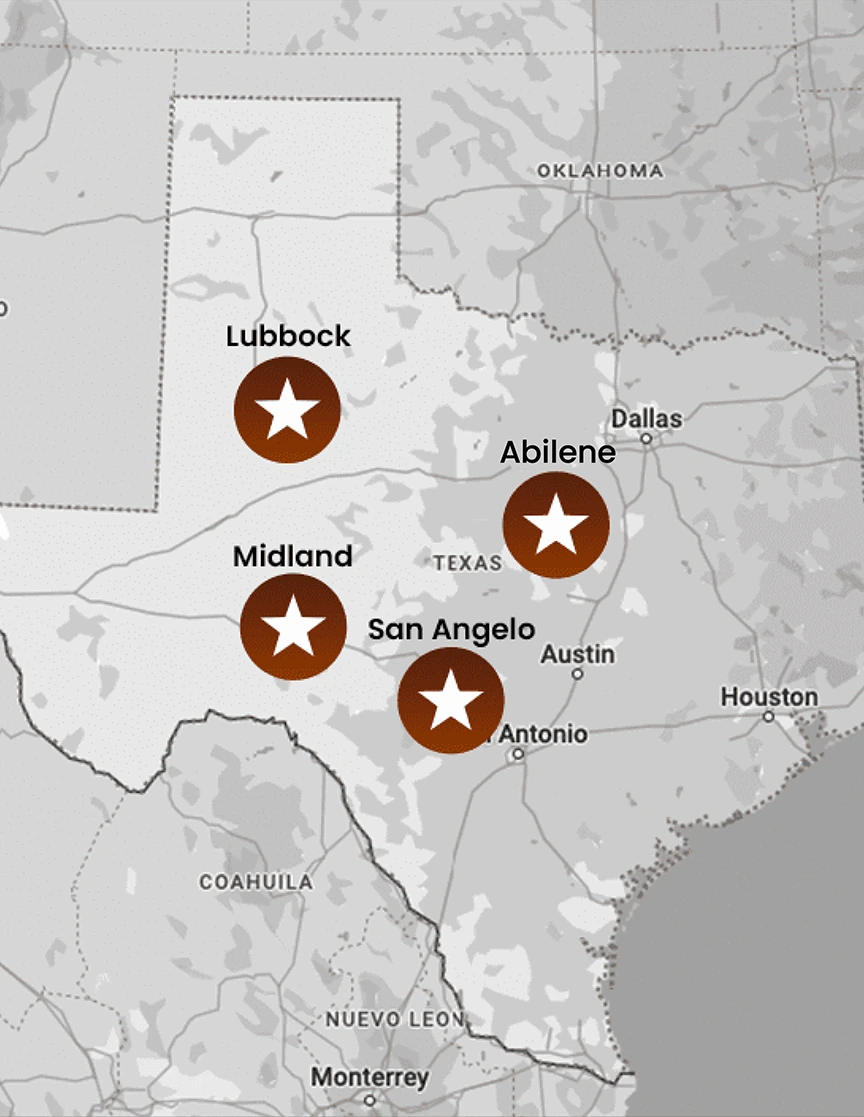
Keith & Lorfing serves clients throughout West Texas, including Abilene, Lubbock, Midland, and San Angelo, as well as communities across the Big Country and the Concho Valley.
Facility ownership, the proper court, and the rules governing a claim must be verified in each case.
Keith & Lorfing serves clients throughout West Texas, including Abilene, Lubbock, Midland, and San Angelo. We handle personal injury and wrongful death matters on contingency, which means no attorney’s fee unless we recover for your family.
If your mother, father, or spouse was hurt in a Texas nursing home or memory care facility, tell us what happened. We will pull the license, request the records, and give you a straight answer about whether you have a case.
Call (325) 480-8100 or visit our contact page for a free consultation.
Frequently Asked Questions
Is a memory care unit held to the same standard as a nursing home in Texas?
Not automatically. Texas does not have one universal memory-care license. An assisted living facility or unit that markets specialized Alzheimer’s care must be licensed as Type B and certified by HHSC, while nursing facilities are licensed under Chapter 242 and follow different staffing and clinical requirements.
For assisted living, what the facility advertised and disclosed may be relevant to the standard it undertook to meet.
Can I install a camera in my mother’s room?
In a licensed nursing facility, yes — Chapter 242, Subchapter R gives residents that right, subject to a state-prescribed request form, roommate consent, and payment of costs other than electricity. The facility cannot refuse admission or remove a resident because of the request.
In an assisted living memory care unit, that Chapter 242 framework does not apply. Before installing a camera, get legal advice and determine what consent is required from the resident or representative, any roommate or representative, and the facility. The 14-day deemed-view rule applies to monitoring conducted under Chapter 242 in nursing facilities.
Does Texas cap what my family can recover?
Noneconomic damages — pain, mental anguish, disfigurement — are capped in health care liability claims at $250,000 per claimant against a single health care institution, with a $500,000 total where multiple institutions are liable.
Section 74.301 does not cap economic damages such as medical expenses and corrective care. However, wrongful death and survival health care liability claims may also be subject to the separate, inflation-adjusted limit in § 74.303, with an exception for necessary medical, hospital, and custodial-care expenses. Which limits apply depends on the claims and defendants involved.
What if we signed an arbitration agreement when my father was admitted?
An arbitration clause may limit where the claim is heard, but it is not automatically the end of the case. For Medicare- and Medicaid-certified nursing facilities, federal rules prohibit requiring an arbitration agreement as a condition of admission, require that it be explained in a way the resident understands, and require that the agreement grant a right to rescind within 30 calendar days of signing.
Who signed the agreement, and whether that person had legal authority to bind the resident, is also frequently contested. Bring us the admission paperwork before you assume you are stuck.
Who files the claim if my parent cannot make decisions?
If your loved one lacks capacity, a guardian or an authorized representative pursues the claim on their behalf. Texas procedure also allows suit through a next friend where no guardian has been appointed.
If your loved one has died, the claim moves to the wrongful death beneficiaries and the estate. Our attorneys will identify the correct claimant before filing, because getting this wrong can cost you time you do not have.
Does a fall automatically mean the facility was negligent?
No. Some falls happen despite reasonable care, and Texas law does not make a facility liable simply because a resident was injured.
The question is whether the facility assessed the risk, wrote appropriate interventions into the care plan, and then actually followed them. That answer lives in the records, which is why we obtain them before evaluating any fall case.
Is the facility responsible if another resident caused the injury?
Not automatically. Another resident’s actions may be genuinely unforeseeable. But the facility may be responsible if it knew or should have known about a risk of aggression and failed to take reasonable protective measures.
The investigation should examine prior incident reports, behavior and medication records, both residents’ care plans, staffing and supervision on the shift, room or seating assignments, available video, and the facility’s response to earlier warnings. The immediate aggressor’s identity is only the beginning of the analysis.
How long do I have to file?
Generally two years, with an absolute ten-year outer limit for health care liability claims. Waiting is still costly — staff turn over, memories fade, and records become harder to get.
If a facility injury is close to the two-year mark, the expert report requirement makes delay especially dangerous, because the report has to be prepared before the deadline pressure arrives.