Texas did not create a general cap on pain and suffering in 2025. It also did not give most injury victims three years to sue or automatically add stepchildren and foster children as wrongful death beneficiaries.
Those claims grew from proposals and online commentary—not enacted law. The changes that do matter involve automated vehicles, summary judgment deadlines, and several Texas Supreme Court decisions about causation, evidence, and responsibility.
This guide separates enacted law from failed bills and explains what the changes mean for an injury or wrongful death claim in West Texas.
If your family is dealing with a fatal accident and you are unsure how the current Texas rules affect the claim, speak with a Texas wrongful death lawyer about your options and the deadlines that may apply.
89th Legislature · Texas law as of September 2026
Circulating online · not enacted law
Texas capped pain and suffering damages in 2025.
SB 30 and HB 4806 ended in conference and did not become law. Texas still has no general cap on pain and suffering in an ordinary personal injury or wrongful death case.
The deadline to sue is now three years.
Most people still have two years from the date the claim accrues; a wrongful death suit generally must be filed within two years of the death.
Tex. Civ. Prac. & Rem. Code § 16.003Stepchildren and foster children are now wrongful death beneficiaries.
The statute still authorizes the action for the surviving spouse, children, and parents. Siblings are expressly excluded.
Tex. Civ. Prac. & Rem. Code § 71.004Senate Bill 2807 · Enacted
A statewide system for authorizing automated motor vehicles designed to operate without a human driver at SAE Level 4 or Level 5. An authorization record may help identify the company behind the automated driving system.
TxDMV final rules Feb 27, 2026
Enforceable May 28, 2026
Senate Bill 293 · Enacted
Added Gov't Code § 23.303: the court generally must consider a covered motion within 45 days after the response and rule in writing within 90 days. The Supreme Court then rewrote Rule 166a.
Motions filed on or after Sept 1, 2025
Rule 166a effective Mar 1, 2026
Unchanged — and still more important for most claims
2 years
Limitations
Most injury claims from accrual; wrongful death from the date of death. Exceptions and tolling apply.
6 months
Government notice
The Texas Tort Claims Act generally requires notice within six months. Some local rules demand it sooner.
51%
The bar · § 33.001
Responsibility greater than 50% bars recovery. At 50%, damages are reduced by that percentage.
$250K / $500K
Health care liability
Noneconomic damages capped per claimant across physicians and providers, with separate and combined institutional limits.
$200K–$750K
Exemplary · § 41.008
Generally the greater of $200,000 or two times economic damages plus noneconomic damages, up to $750,000.
Paid or incurred
Medical expenses · § 41.0105
Recovery is limited to the amount actually paid or incurred — not the amount first listed on a bill.
The 89th Legislature's regular session ended without enacting SB 30 or HB 4806. The 90th Legislature convenes January 12, 2027. A similar proposal could be filed again — but anyone with an active claim should rely on current statutes, court rules, and case law.
The short answer: Texas did not enact a new general damages cap
Senate Bill 30 and its companion, House Bill 4806, proposed major changes to how parties prove and present medical expenses and noneconomic damages. The proposals changed during the legislative process, so summaries based on only one version can be misleading.
Across the versions considered, the bills addressed matters such as:
Proof and presentation of health care expenses
Evidence supporting physical pain and mental anguish damages
Attorney arguments about the amount of noneconomic damages
Jury instructions and judicial review of noneconomic awards
The House and Senate did not agree on a final bill before the regular session ended. The official SB 30 legislative history shows the bill ended in conference proceedings and did not become law.
Texas still has no general cap on pain and suffering in an ordinary personal injury or wrongful death case. Separate statutory limits may apply to health care liability claims, claims against government units, and exemplary damages.
What changed in 2025 and 2026
Automated vehicles now require state authorization
Senate Bill 2807 created a statewide system for authorizing certain automated motor vehicles. The Texas Department of Motor Vehicles adopted final rules on February 27, 2026, and the authorization requirement became enforceable on May 28, 2026.
The program applies to automated vehicles designed to operate without a human driver at SAE Level 4 or Level 5. TxDMV maintains current requirements and authorization information on its Automated Vehicle Program page.
For an injury claim, an authorization record may help identify the company responsible for the automated driving system and whether it complied with state operating requirements. The program does not, by itself, decide who is liable for a crash.
Summary judgment procedure now runs on a defined schedule
Senate Bill 293 added Texas Government Code Section 23.303. For covered motions filed on or after September 1, 2025, a trial court generally must consider the motion within 45 days after the response is filed and issue a written ruling within 90 days after the motion is heard or considered.
The enrolled text of SB 293 also requires court clerks to report compliance data. It was SB 293—not HB 16—that added Section 23.303.
The Texas Supreme Court then rewrote Texas Rule of Civil Procedure 166a, effective March 1, 2026. The main deadlines are:
Tex. R. Civ. P. 166a · effective March 1, 2026
Counted from the day the motion is filed
Motion for summary judgment is filed
The clock starts. Everything below is measured from this date unless the court or an agreement sets another one.
Response due
Due within 21 days after the motion is filed, unless the court or an agreement permits a different date. A party who wants oral argument must place that request in the title of the response.
If essential evidence isn't available yet, Rule 166a allows an affidavit or declaration asking the court for appropriate relief, including more time.Reply due
Within seven days after the response. It cannot add a new, independent ground for summary judgment.
Earliest hearing or submission
No hearing or submission may occur earlier than 35 days after filing.
Setting
Generally set within 60 days after filing, with up to 90 days allowed in specified circumstances.
Ruling due
Within 90 days after the hearing or submission — the same outer limit SB 293 wrote into Government Code § 23.303.
The practical lesson
Why 21 days is the number that matters
All of it may be needed within a short response window. Twenty-one days is not enough time to locate a missing witness or build an expert record from scratch.
Applies to
Covered motions filed on or after September 1, 2025 under SB 293, and the rewritten Rule 166a schedule from March 1, 2026.
Two online claims that are not Texas law
Claim: Texas extended the injury deadline to three years
It did not. Texas Civil Practice and Remedies Code Section 16.003 still gives most people two years from the date a personal injury claim accrues to file suit.
A wrongful death lawsuit generally must be filed within two years of the death. Tolling rules and other exceptions may change the calculation, while a claim against a government unit can require notice much sooner.
Do not wait for the deadline to approach. Video can be overwritten, equipment can be repaired, electronic data can be lost, and witnesses can become harder to find.
Claim: Texas added stepchildren and foster children as wrongful death beneficiaries
It did not. Section 71.004 still authorizes a wrongful death action for the deceased person’s surviving spouse, children, and parents.
Legally adopted children may qualify as children. A stepchild or foster child does not automatically qualify based only on that relationship, and siblings are expressly excluded.
This rule can be painful for a family whose closest relationships do not match the legal categories. A survival claim may belong to the deceased person’s estate, but that is different from an individual wrongful death claim; who may receive estate property depends on the will or Texas inheritance law.
Our Texas wrongful death attorneys can help determine who has the legal right to bring the claim and whether a separate survival action may also be available.
Texas Supreme Court decisions that affect injury claims
The following are published Texas Supreme Court cases, not Keith & Lorfing case results. Each decision is limited by its facts, but each shows why the evidence must support every element of a claim against each defendant.
Werner Enterprises, Inc. v. Blake
In Werner Enterprises, Inc. v. Blake, No. 23-0493 (Tex. June 27, 2025), a pickup lost control on icy Interstate 20 near Odessa, crossed a wide median, and struck a tractor-trailer. One child died, and other occupants suffered severe injuries.
The jury awarded about $89.7 million and assigned 70% responsibility to Werner employees other than the truck driver, 14% to the truck driver, and 16% to the pickup driver. The Texas Supreme Court reversed and rendered judgment for Werner and its driver.
The Court held that the truck driver’s conduct was not a substantial factor in causing the injuries. On the record before it, the pickup driver’s loss of control was the sole proximate cause.
The claims against Werner also failed because they depended on the driver’s conduct being a proximate cause of the crash. The decision does not create a rule that every direct-negligence claim against a motor carrier fails whenever its driver wins; the result depends on the pleaded theories, evidence, and causal link in the particular case.
Practical point: A plaintiff must connect a defendant’s specific act or omission to the injury. Showing only that the defendant was present somewhere in the sequence of events is not enough.
In re East Texas Medical Center Athens
Texas employers may choose not to subscribe to the workers’ compensation system. When an employee sues a nonsubscriber employer for a work injury, Section 406.033 prevents the employer from using certain defenses, including contributory negligence by the employee.
In In re East Texas Medical Center Athens, No. 23-1039 (Tex. Apr. 25, 2025), the Court held that Chapter 33 proportionate responsibility still applies to that negligence action. The employer may seek to designate a responsible third party even though it cannot reduce liability by blaming the injured employee.
A designation does not automatically reduce the employee’s recovery. It allows the factfinder to decide whether the third party bears a percentage of responsibility, which may reduce the share assigned to the employer.
Practical point: This ruling can matter in oilfield, construction, and industrial cases involving several companies. Counsel should identify the worker’s employer, determine whether it carried workers’ compensation coverage, and investigate every company’s role.
JMI Contractors, LLC v. Medellin
In JMI Contractors, LLC v. Medellin, No. 24-0846 (Tex. June 26, 2026), an independent contractor was injured after falling from a roof. The Court treated the claim as premises liability rather than negligent activity.
The Court held that an independent contractor generally cannot recover on a premises-liability theory for an open and obvious condition. It also held that the necessary-use exception did not apply to the independent contractor in that case.
The decision does not erase every claim involving an independent contractor or a dangerous worksite. A different duty, concealed condition, or evidence that the property owner retained control may require a different analysis.
Practical point: How a claim is classified can decide which duties and defenses apply. The facts must show who controlled the work, who controlled the property condition, and what each party knew.
Rules that did not change
For many injured people, these existing rules remain more important than the new developments:
Two-year limitations period: Most personal injury claims must be filed within two years after they accrue, and wrongful death claims generally must be filed within two years after death. Exceptions may apply.
Wrongful death beneficiaries: The surviving spouse, children, and parents may bring the claim. If none of them files within three calendar months after the death, the executor or administrator generally must file unless all beneficiaries ask that no action be brought.
The 51% bar: A claimant whose responsibility is greater than 50% cannot recover under Section 33.001. A claimant at 50% may recover damages reduced by that percentage.
Paid or incurred medical expenses: Recovery of medical expenses is limited to the amount actually paid or incurred under Section 41.0105, not simply the amount first listed on a bill.
Ordinary injury damages: Texas has no general statutory cap on pain and suffering in an ordinary personal injury or wrongful death action.
Health care liability caps: Noneconomic damages are generally capped at $250,000 per claimant for all physicians and health care providers. A separate $250,000 limit applies to each health care institution, with a combined $500,000 institutional limit.
Exemplary damages caps: Section 41.008 generally limits exemplary damages to the greater of $200,000 or two times economic damages plus an amount equal to noneconomic damages, up to $750,000. Statutory exceptions apply to specified criminal conduct.
Government claims: The Texas Tort Claims Act generally requires notice within six months, and some local rules may demand earlier notice. Immunity exceptions and damage limits also apply.
The absence of a general cap does not mean every case has the same value. Our guide to wrongful death settlements after car accidents explains the factors that can affect compensation and why settlement amounts vary from case to case.
What these changes mean for a West Texas claim
A legal update is useful only if it changes what you do. For an injury or wrongful death claim, the most important steps are practical:
Confirm the deadline: Calculate limitations and every notice deadline from the actual facts. Do not rely on a social media post or a general two-year estimate.
Preserve short-lived evidence: Send preservation requests for video, vehicle downloads, phone data, dispatch records, maintenance files, and employment records when relevant.
Identify every responsible party: A commercial crash or worksite injury may involve an employer, contractor, property owner, equipment company, motor carrier, shipper, or automated-driving company. A company’s involvement alone does not prove liability.
Match proof to each legal element: Evidence of unsafe conduct must also show duty, breach, causation, and damages under the legal theory that applies.
Prepare before summary judgment: The new Rule 166a response period leaves little time to locate missing witnesses or build an expert record after a motion is filed.
Those same steps apply across many types of Texas personal injury claims, from vehicle crashes to workplace and premises-related injuries.
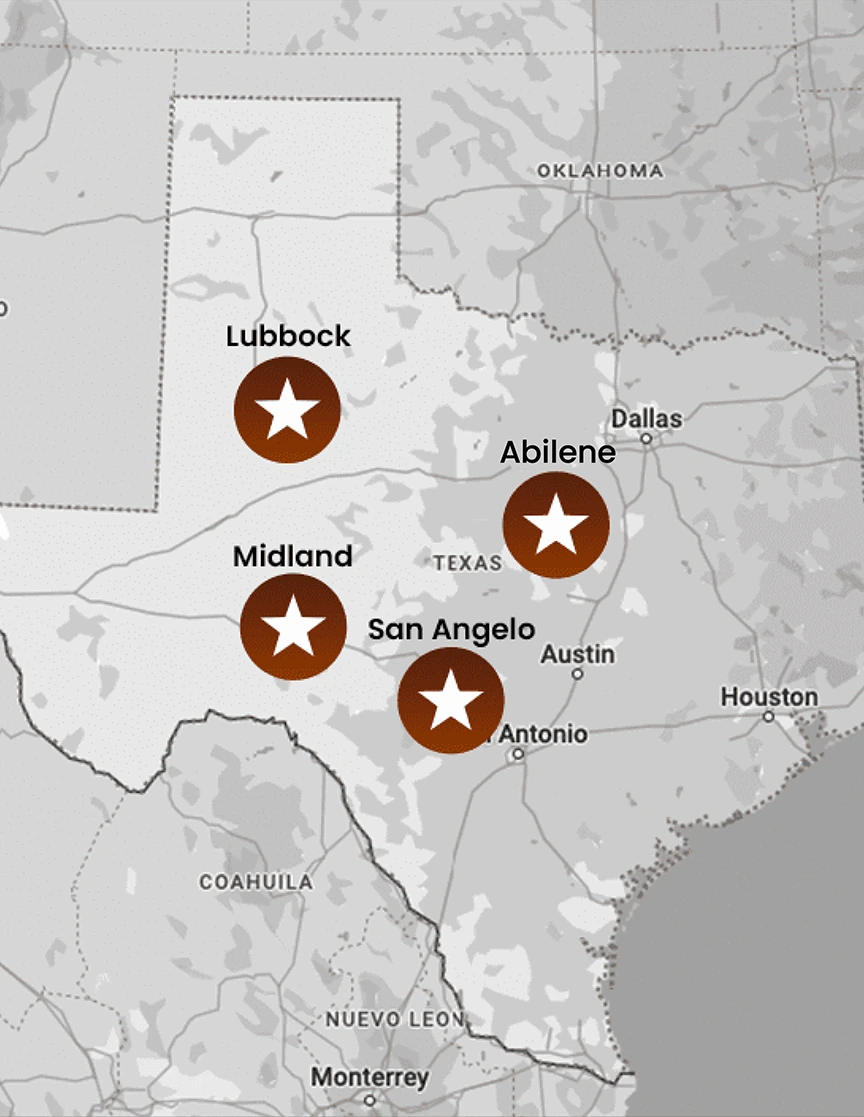
Our firm focuses exclusively on West Texas and has offices in Abilene, Lubbock, Midland, and San Angelo. That local focus helps us investigate the industries, roads, courts, and working conditions involved in a West Texas claim.
What comes next
The 89th Legislature’s regular session ended without enacting SB 30 or HB 4806. The 90th Legislature is scheduled to convene on January 12, 2027, and adjourn on May 31, 2027.
A similar proposal could be filed again, but a proposal is not law unless it completes the legislative process and takes effect. Anyone with an active claim should rely on current statutes, court rules, and case law rather than predictions about the next session.
Which version of a law applies can depend on its effective-date language and whether the change is substantive or procedural. A lawyer should check those questions against the dates and facts of the specific claim.
Keith & Lorfing represents injured people and grieving families across West Texas. With offices in Abilene, Lubbock, Midland, and San Angelo, our team brings more than 75 years of combined experience and more than 500 jury trials to its work for West Texans.
Call Keith & Lorfing at (325) 480-8100 for a free consultation.
Frequently asked questions
Did Texas cap pain and suffering damages in 2025?
No. SB 30 and HB 4806 did not become law, so Texas did not create a new general cap for ordinary personal injury or wrongful death cases.
Separate limits still apply to health care liability claims, claims against government units, and exemplary damages.
Does Werner mean I cannot sue a trucking company?
No. Werner held that the evidence in that case did not show that the truck driver’s conduct was a substantial factor in causing the injuries.
A trucking claim may still proceed when admissible evidence supports duty, breach, proximate cause, and damages against the driver or another defendant.
Did the Texas wrongful death statute change?
No. The statute still identifies the surviving spouse, children, and parents as beneficiaries, and siblings remain excluded.
A separate survival action may preserve a claim the deceased person could have brought, but that claim belongs to the estate and follows different rules.
Is the deadline to file still two years?
For most personal injury and wrongful death suits, yes. Exceptions, tolling rules, and early government-notice requirements can change the actual deadline, so the date should be checked promptly.
What is the biggest procedural change?
The rewritten Rule 166a creates a defined schedule for summary judgment motions. A response is generally due within 21 days after filing, and the evidence needed to defeat the motion should be ready by then.
Did the law change for workers employed by nonsubscribers?
The statute did not newly authorize nonsubscriber suits, but In re East Texas Medical Center Athens clarified that Chapter 33 applies to them. An employer may ask the factfinder to assign responsibility to a properly designated third party, while the employer remains barred from blaming the injured employee through the defenses listed in Section 406.033.