The most important question when an adjuster asks to record you is not “What should I say?” It is “Whose insurance company is on the phone?”
That distinction changes the legal relationship. The other driver’s carrier is investigating a claim against its policyholder, while your own carrier may be relying on policy terms that require prompt notice and cooperation.
After a wreck on I-20, US 285, or a West Texas county road, the request may arrive before your vehicle is out of the tow yard or you know the full extent of your injuries. A recording made at that stage can preserve estimates, partial memories, and early symptoms as though they were your final account.
That does not mean every request should receive the same refusal. It means you should identify the caller, the coverage involved, and any policy requirement before agreeing to be recorded—and then answer accurately without guessing or filling an uncomfortable silence.
If an adjuster has already contacted you, start with our guide to what insurance companies do after a Texas crash so you understand what the insurer may be trying to evaluate before you agree to a recorded statement.
Texas auto claims · before you agree to be recorded
Get the caller's name, company, phone number, claim number, and which policyholder the company represents. Do not give sensitive information during an unexpected call until you have verified the caller through the insurer's published contact information.
It is investigating a claim against its own policyholder — deciding whether its insured caused the crash and whether the policy covers the loss.
- Can it compel a recording?
- It ordinarily cannot use your lack of a contract with it to compel a pre-suit interview.
- What it may ask about
- How the crash happened, what you observed, your physical condition, your financial losses, and anything bearing on fault — phone use, seat belts, distraction, speed.
- What declining does
- It does not prove or disprove the claim. The carrier may still request enough information to investigate — and may delay or deny if the evidence does not establish fault, coverage, or damages.
You can keep it short
“I am not agreeing to a recorded statement today. Please email your request, your contact information, and the claim number. I will respond after I have reviewed it.”
You may confirm basic identifying information — name, crash date, location, vehicle. You do not need to estimate speed or distance, assign fault, or describe injuries you have not yet had evaluated.
Many auto policies require the insured to report a crash promptly, cooperate with the investigation, provide requested documents, and take other reasonable steps.
- Ask it to identify
- The coverage — liability, collision, PIP, medical payments, or UM/UIM. The policy requirement — informal interview or a required condition. The scope — which topics, records, or documents.
- And the mechanics
- The format — recorded call, written response, proof of loss, medical examination, or examination under oath. The deadline — and whether a reasonable extension is available.
- The risk of ignoring it
- A failure to cooperate can create coverage problems. Do not ignore calls or letters from your own company, and do not assume written answers will always satisfy the policy.
A cooperative response
“I want to comply with my policy and give accurate information. Please tell me which coverage and policy provision apply, what topics you need to address, and when the statement is due.”
The exact policy language controls. There is no universal rule that every informal recorded call is either mandatory or optional — and if the insurer makes a formal demand or warns that coverage may be affected, get advice promptly.
However you answer
- Speed and distance. Give an estimate only if you identify it as an estimate and explain its basis. “I do not know” is appropriate when you do not know.
- Sequence of events. Separate what you personally observed from what someone later told you.
- Current symptoms. Describe what you are experiencing now. Do not predict whether an injury will resolve or need future care.
- Prior conditions. Answer truthfully. A prior injury does not automatically defeat a new claim, but a false denial can damage credibility.
- Medical care. Accurate dates and providers. Do not claim a diagnosis a medical professional has not made.
- Sensitive identifiers. Ask why a Social Security number or date of birth is needed and how it will be protected.
An early account may be incomplete because you have not seen all the evidence or received a diagnosis. Listen to the full question, answer only what was asked, and correct a misunderstanding before the interview ends. An estimate should not be presented as a measured fact.
Why the other driver’s insurer may request a statement
The liability carrier must decide whether its insured caused the crash and whether the policy covers the loss. A recorded interview gives the company an early account it can compare with the crash report, witness statements, medical records, and later testimony.
Our guide to how insurance companies handle Texas crash claims explains the other information adjusters commonly collect when evaluating fault, coverage, injuries, and settlement value.
An early account may be incomplete because you have not seen all the evidence or received a medical diagnosis. That does not mean you should exaggerate or hide facts; it means you should not guess.
The adjuster may ask about:
How the crash happened: Direction of travel, signals, traffic, speed, distance, braking, and vehicle positions.
What you observed: What you saw or heard before, during, and after impact.
Your physical condition: Symptoms, medical care, prior injuries, and any change in daily activities.
Your financial losses: Missed work, vehicle damage, transportation costs, and other claimed expenses.
Possible fault: Phone use, seat-belt use, distractions, speed, or anything else that could affect responsibility.
If you do not know or remember an answer, say that. An estimate should not be presented as a measured fact.
When you know the other driver
In a West Texas community, the other driver may be a neighbor, coworker, or family acquaintance. That can make an insurance claim feel personal.
Liability coverage exists to pay covered losses caused by an insured driver. As the Texas Department of Insurance explains, payment remains subject to fault, coverage, and policy limits.
You can be civil without discussing fault or injuries directly with the other driver. Let the claim process address those issues.
Why your own insurer is different
Your relationship with your own insurer is governed by the policy. Many auto policies require the insured to report a crash promptly, cooperate with the investigation, provide requested documents, and take other reasonable steps.
Depending on the policy and coverage involved, the insurer may also request a proof of loss, medical examination, recorded interview, or examination under oath. The exact policy language controls; there is no universal rule that every informal recorded call is either mandatory or optional.
The Texas Department of Insurance recommends telling your carrier about the crash as soon as possible because policies may contain claim-reporting deadlines. A failure to cooperate can create coverage problems, so do not ignore calls or letters from your own company.
If it is your own insurer
A cooperative response could be:
“I want to comply with my policy and give accurate information. Please tell me which coverage and policy provision apply, what topics you need to address, and when the statement is due. I would like reasonable time to review the request and schedule the interview.”
Do not assume that offering written answers will always satisfy the policy. If the insurer makes a formal demand or warns that coverage may be affected, get advice promptly.
How to answer without creating avoidable confusion
The goal is accuracy, not a rehearsed performance. Listen to the full question, answer only what was asked, and correct a misunderstanding before the interview ends.
Speed and distance: Give an estimate only if you can identify it as an estimate and explain its basis. “I do not know” is appropriate when you do not know.
Sequence of events: Separate what you personally observed from what someone later told you.
Current symptoms: Describe what you are experiencing now. Do not predict whether an injury will resolve or require future treatment.
Prior conditions: Answer truthfully. A prior injury does not automatically defeat a new claim, but a false denial can damage credibility.
Medical care: Give accurate dates and providers. Do not claim a diagnosis that a medical professional has not made.
Phone use or distraction: Do not speculate. If the answer could affect fault, consider getting legal advice before agreeing to a recorded interview.
Work loss: Use schedules, pay records, or employer information instead of rough totals where possible.
Sensitive identifiers: Ask why a Social Security number, date of birth, or other private information is needed and how it will be protected.
Recorded statement, examination under oath, and deposition
These are different procedures with different consequences.
Tex. R. Civ. P. 192.3(h) · Tex. Civ. Prac. & Rem. Code § 16.003
01
Insurer-led interview
- What it is
- An interview by telephone or video, led by the insurer.
- Who can request it
- Either carrier may ask. The other driver's insurer ordinarily cannot compel a pre-suit interview — your own insurer's rights depend on the policy.
- If you decline
- Not a breach of the other driver's policy. With your own carrier, a blanket refusal can put coverage at risk.
02
The “EUO”
- What it is
- A formal sworn interview requested under an insurance policy. May involve a court reporter, documents, and detailed questions about the loss.
- When it applies
- Not limited to one particular type of claim — availability depends on the policy and the coverage dispute.
- If you decline
- If your insurer formally requests one, do not ignore or refuse it without legal advice.
03
Part of a lawsuit
- What it is
- Sworn testimony governed by court rules, usually before a court reporter.
- When it applies
- Once litigation is under way. Declining a voluntary pre-suit statement does not eliminate the possibility of a later deposition.
- If you decline
- Failure to comply with a valid notice, subpoena, or court order can have legal consequences.
After the recording exists
Compared against everything else
An adjuster may compare the recording with later evidence when deciding fault, medical causation, and damages. A defense lawyer may use a material difference to question a witness's memory or credibility.
Discoverable in litigation
Certain recordings and substantially verbatim transcripts are treated as discoverable witness statements. A person may request their own statement in writing when it is in a party's possession, custody, or control.
Tex. R. Civ. P. 192.3(h)Discoverable ≠ admissible
A party seeking to use the recording must still address authenticity, relevance, completeness, and other evidence rules — although a party's own statement may fall outside the hearsay rule when offered against that party.
“I feel fine” is not the end
Some mild traumatic brain injury and concussion symptoms may not appear for hours or days. If you told an adjuster you felt fine, that statement does not automatically end the claim — medical records, later symptoms, and the reason for any change still matter.
Centers for Disease Control and PreventionTo file suit · § 16.003
Generally from the date a car-accident claim accrues. Exceptions exist, but they are limited and depend on the facts.
Your policy
Your policy may require notice or proof of loss long before the filing deadline.
Government claims
Claims involving a government vehicle or public entity can have short notice requirements. An open insurer file does not extend anything.
Can you record the adjuster?
Texas Penal Code Section 16.02(c)(4) provides an affirmative defense when a person who is a party to a communication records it, or one party consents, unless the recording is made for an unlawful purpose. This is why Texas is commonly described as a one-party-consent state.
Interstate calls can raise questions because the other participant may be in a state with a stricter consent law. The cautious approach is to announce that you are recording and obtain agreement, or keep dated written notes instead.
Why your symptoms may change after the call
Some symptoms are obvious at the scene, while others appear later. The Centers for Disease Control and Prevention states that some mild traumatic brain injury and concussion symptoms may not appear for hours or days.
Do not assume you are uninjured merely because you feel better during one early phone call. Describe your condition at that time, seek appropriate medical care, and do not use legal concerns as a substitute for medical advice.
If you told an adjuster that you felt “fine,” that statement does not automatically end the claim. Medical records, later symptoms, the reason for any change, and all other evidence still matter.
How comparative responsibility affects the claim
Texas uses modified comparative responsibility. Under Civil Practice and Remedies Code Section 33.001, a claimant who is more than 50% responsible may not recover damages.
When the claimant is 50% responsible or less, recoverable damages are generally reduced by that percentage. For example, $200,000 in damages reduced by 20% responsibility would leave $160,000 before policy limits, liens, fees, costs, or other adjustments.
A casual estimate is not the same as a court’s fault finding. Still, a recorded comment about speed, distraction, or lookout can become one piece of the evidence considered.
What to do if you already gave a statement
Giving an early statement does not automatically destroy a valid claim. Do not panic, invent a new account, or rush into a second interview to make the first one sound better.
If another driver caused the crash, our guide on what to do after a car accident that was not your fault covers the other practical steps you can take to preserve evidence and protect the claim.
Write down what happened: Record the date, adjuster’s name, company, claim number, topics discussed, and anything you believe was misunderstood.
Ask for a copy: The insurer may provide the recording or transcript voluntarily. If a lawsuit is pending, Rule 192.3(h) provides a process for requesting your own statement from a party that controls it.
Preserve supporting evidence: Keep photographs, video, witness details, medical records, bills, work records, and insurer correspondence.
Correct objective errors carefully: A necessary correction should be truthful, specific, and supported where possible. Consider getting advice before sending another detailed account.
Continue appropriate care: Tell medical providers when symptoms began and how they changed; do not shape treatment around the insurance claim.
Review deadlines: An insurer’s open file or continuing negotiations do not automatically extend the time to file a lawsuit.
Talk to a West Texas trial lawyer
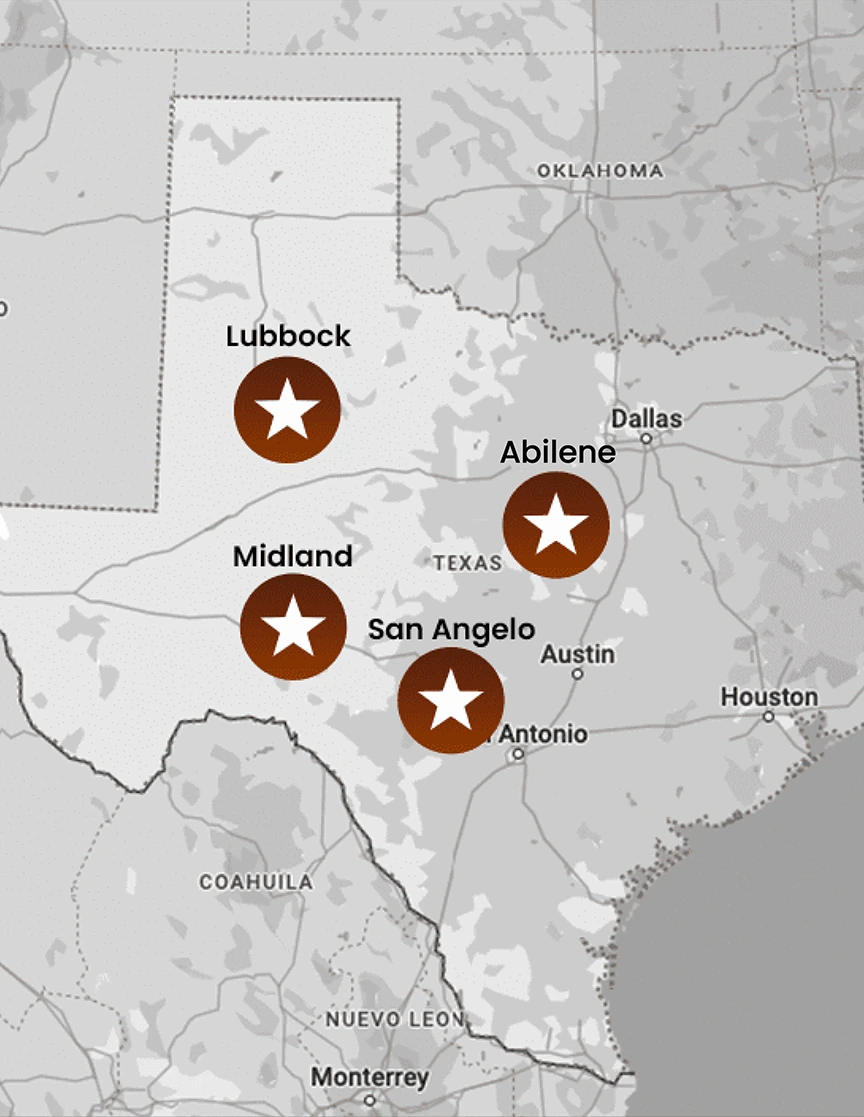
Keith & Lorfing represents injured people throughout West Texas from offices in Abilene, Lubbock, Midland, and San Angelo. Our attorneys have more than 75 years of combined experience and more than 500 jury trials, and our team includes former state and federal prosecutors.
For a free consultation about a recorded-statement request or another personal injury claim, call Keith & Lorfing at (325) 480-8100.
Frequently asked questions
Can the other driver’s insurer deny my claim if I decline a recording?
Your refusal ordinarily is not a breach of the other driver’s policy because you are not its insured. However, the insurer can deny a claim when it believes the evidence does not establish its insured’s liability, coverage, or your damages.
Provide reasonable supporting information in a format that protects your interests. Do not assume the company must accept the claim without enough evidence to investigate it.
Do I have to give my own insurer a recorded statement?
It depends on the language of your policy and the coverage involved. Your policy likely requires notice and cooperation, and it may authorize particular forms of examination or proof.
Ask the insurer to identify the applicable provision and do not ignore a formal request. A blanket refusal can put coverage at risk.
Am I entitled to a copy of my statement?
Ask for it in writing. Texas Rule of Civil Procedure 192.3(h) gives a person a right to request their own statement when it concerns a pending lawsuit and is controlled by a party; the rule does not necessarily create the same pre-suit right against every insurer.
Can the statement be played at trial?
Possibly, but not automatically. The recording may be discoverable, and a party’s own statement may avoid a hearsay objection, but the court still applies the other rules of evidence.
What if the adjuster says the recording is routine?
The request may be a normal part of the insurer’s process. That does not answer whether your policy requires it or whether giving it immediately is in your best interest.
Identify the insurer, ask for the request in writing, and respond according to the policy and facts.
Should I accept an early settlement offer?
Review what the payment and release cover before deciding. Consider known medical expenses, expected care, wage loss, property damage, liens, disputed fault, and every available policy.
If the amount seems too low, our guide to lowball insurance offers in Texas explains what may be behind an early offer and what to review before accepting it.
A signed release usually ends the claims it covers, even if the loss later proves more serious than expected.