The first five minutes after a crash can have a major impact on how your claim unfolds. We’ve seen strong cases fall apart because of what someone said, didn’t photograph, or walked away from at the scene.
This guide covers what to do and what not to do. Follow it. Share it. You might need it.

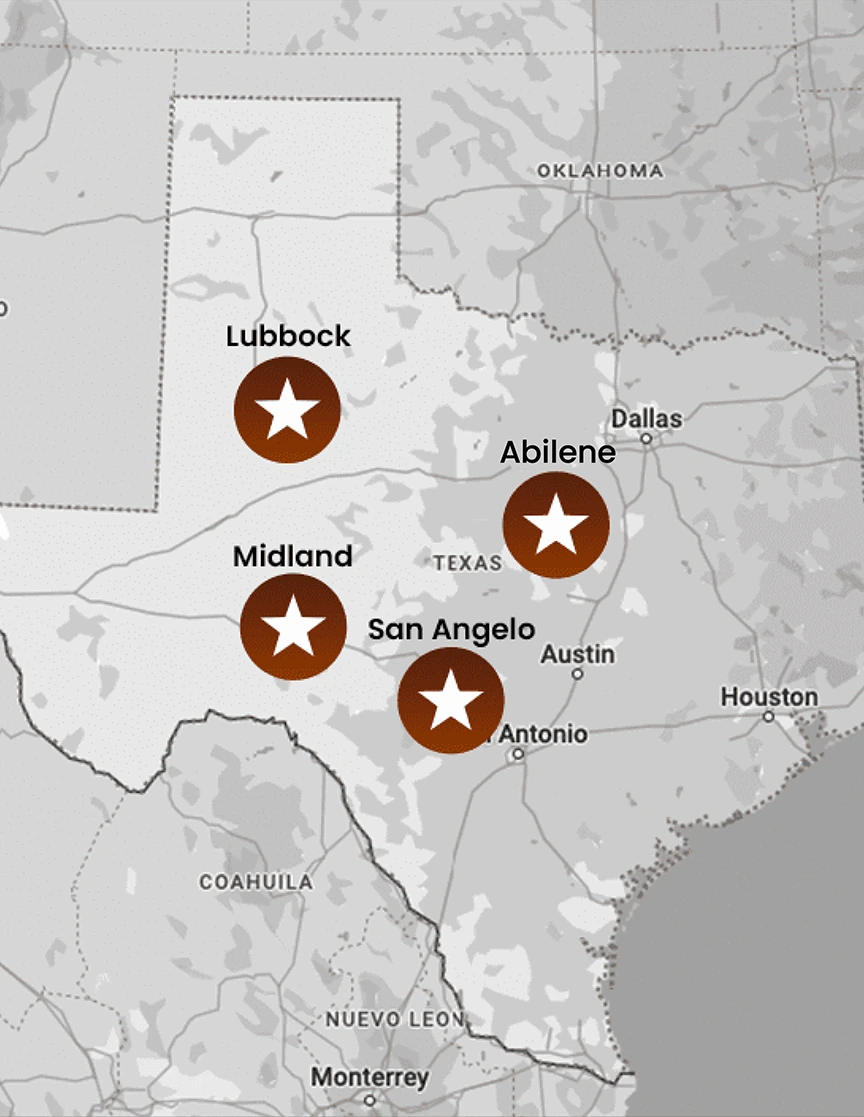
Injured in a car accident that wasn’t your fault? You’re not alone. Contact our experienced Abilene car accident lawyer today to get the justice you deserve!
Car accident not my fault: what to do in detail
Being involved in a car accident that wasn’t your fault can be stressful and overwhelming. However, taking the right steps immediately after a car accident is key to ensuring your safety, protecting your rights, and building a strong personal injury claim.
Here’s what to do if you’re involved in a car accident in Texas:
1. Ensure safety first
Turn on your hazard lights to alert other drivers and move to the side of the road if possible. Assess the extent of your injuries and check on other accident victims at the scene of the accident.
Avoid staying in high-traffic areas to prevent further collisions or harm. Safety is critical for everyone involved in the accident, and taking these steps reduces additional risks.
2. Call 911 to report the accident
Under Texas law, you must report any motor vehicle crash that involves injuries, fatalities, or significant property damage. Calling 911 ensures that emergency responders arrive quickly.
The responding officer will create an accident report containing details like the crash’s date, the party involved, and any possible at-fault drivers. This report is a key piece of evidence for your personal injury claim and any future insurance claim.
3. Seek medical attention
Even if your injuries seem minor, seek medical care immediately after a car accident. Some injuries, such as whiplash or internal trauma, may not show symptoms until later.
Medical treatment ensures that you address any hidden issues and document the extent of your injuries. Medical records and receipts from your care will play a large role in proving your personal injury claim and calculating damages.
4. Exchange information with involved parties
At the scene of the accident, collect insurance information from all parties involved in the collision. Write down their names, phone numbers, auto insurance policy numbers, and license plate numbers.
This information is best for filing an insurance claim with your insurer and for any legal proceedings that may follow. Refrain from discussing fault or making unnecessary comments that could be misinterpreted.
Here’s the one most people miss: if it’s a company vehicle, get the company name and the DOT number. That detail can be the difference between holding one driver accountable and holding an entire employer accountable for what happened to you.
5. Document the scene with photos and notes
Before you take a single photo, hit record on your phone and do a 10–15 second walk-around of both cars — where they’re sitting in the lanes, the traffic light, the signs, and the street names. That video tells a story that still photos alone can’t.
Then take photos in this order. This is the sequence investigators use. If your crash turns into a he said, she said, these shots can save you.
Hit record and walk around both cars for 10–15 seconds — lane positions, the traffic light, the signs, the street names. That video tells a story still photos alone can't.
The time, the weather, and your first symptoms — even if it's just "I'm shaky" or "my neck feels stiff." Written right now, at the scene, that note becomes evidence.
Expert witnesses sometimes use VIN data to reconstruct exactly how a collision happened. It takes five seconds to photograph.
- Wide shots — lane positions and where both vehicles ended up
- Medium shots — each side of both vehicles
- Close-ups — damage, paint transfer, broken parts
- Skid marks, debris, and the road surface
- Traffic lights, signs, and street names
- License plates of every vehicle involved
- VIN numbers — if you can safely reach them
Then write down the time, the weather, and your first symptoms — even if it’s just “I’m shaky” or “my neck feels stiff.” Written right now, at the scene, that note becomes evidence.
Expert witnesses sometimes use VIN data to reconstruct exactly how a collision happened. It takes five seconds to photograph. Don’t skip it.
6. Notify your insurance company
Call your insurer. Tell them the date, the location, and the other driver’s information. Then stop talking.
No recorded statement. No discussion of fault.
Give them the date, the location, and the other driver's information. Then stop talking. No recorded statement. No discussion of fault. What you say gets documented.
7. Gather witness contact information
If someone saw the crash, walk up and ask: “Can I get your name and number, and what you saw?” That’s it. Most people will say yes.
Go one step further: ask if they’d be willing to record a 10-second voice memo right there at the scene. A recorded account captured while everything is fresh is worth ten times what that same person might remember over the phone a month later.
8. Request a copy of the police report
Get the report. Then actually read it.
Officers can get things wrong — names, facts, details. If there’s an error, correcting it early, before the insurance company builds its defense around it, can protect your entire case. Request it from the responding agency or through the Texas Department of Transportation’s crash records portal.
9. Refrain from admitting fault
After a crash, most people panic and say too much without realizing the consequences. It happens every time. Here’s the safest script to use at the scene — calm, clean, and factual:
- "Are you okay?"
- "Let's exchange information."
- "If we need police or medical, let's call them."
- Nothing else.
- "I'm sorry."
- "It's my fault."
- "I didn't see you."
- "I'm fine."
- Or anything else that sounds like an apology, a guess, or an admission.
Under Texas law, fault is determined by evidence — the crash report, the photos, the witnesses. "I'm sorry" feels natural, it feels polite, and it can cost you. Those exact words get written down, and they come up in negotiations.
You're not there to debate. You're there to check on safety and document. That's it.
You’re not there to debate. You’re there to check on safety and document. That’s it.
Here’s the thing about “I’m sorry” — it feels natural, it feels polite, and it can cost you. Those exact words get written down. They come up in negotiations. Under Texas law, fault is determined by evidence — the crash report, the photos, the witnesses. Let the evidence speak. Don’t hand the other side your case.
10. Track expenses and damages
Medical bills, prescriptions, physical therapy, rental cars, car repairs — if it happened because of this crash, document it.
And keep a journal. Write down what hurts, what you couldn’t do that day, how this accident has changed your routine. Pain and suffering are real damages with real dollar value. But if you can’t describe what you’ve been through, we can’t fight for it.
Additional reading: Headache after car accident? Here’s what you can do legally
11. Consult an attorney from Keith & Lorfing
This is what we do. Every day. Across all of West Texas.
Russell Lorfing spent years as a federal prosecutor. He knows how the other side builds its case, because he used to build cases just like it. When an insurance company tries to minimize what happened to you, we know every move they’re going to make before they make it.
We’re trial lawyers. We’re not afraid to go to court, and the other side knows it. That matters at the negotiating table.
Call us at (325) 225-0143. Free consultation. You don’t pay a dime unless we win.
Take the first step toward justice after your car accident. Reach out to our Midland car accident lawyer today and let us fight for the compensation you deserve!

What to do after a minor car accident in Texas
Soft tissue injuries and whiplash don’t always show at the scene. We’ve watched people decide it’s not worth the hassle, skip the doctor, skip the police report and call us three days later in real pain with no documentation and an insurance company that’s already closed the file.
Don’t let that be you. Follow every step, regardless of how it feels in the moment:
- Hazards on, check for injuries, get out of traffic if you can
- Call 911 and get it on the record: you’ll want that report whether you file a claim or not
- See a doctor the same day: delayed symptoms are common and a same-day visit ties your injury to the crash
- Exchange information: name, insurance, license plate, and the DOT number if it’s a work vehicle
- Video first, then photos: walk around both cars on video for 10–15 seconds before taking any still shots
- Call your insurer — facts only: no recorded statements without an attorney
- Get witness details: name, number, and a 10-second voice memo if they’re willing
- Request the police report
- Stay quiet about fault: use the script from step 9
- Track every expense from day one
- Call Keith & Lorfing: (325) 225-0143 — we’ll tell you whether you have a case at no cost to you
Additional reading: Unauthorized Use of a Vehicle in Texas
The legal process after your accident
Here’s the honest version of what the legal process looks like after a crash. These cases don’t always move fast on the surface — but underneath, they’re moving the entire time.
Step | What Happens | Typical Timeframe |
|---|---|---|
1. File an insurance claim | Notify both insurers and begin the claims process | Within days of the accident |
2. Investigation begins | Insurers review the crash report, medical records, and scene evidence | 2–4 weeks |
3. Ongoing medical treatment | Continue treatment; preserve every bill and record | Weeks to months, depending on injuries |
4. Settlement negotiation | Your attorney negotiates with the at-fault insurer for fair compensation | Several weeks to a few months |
5. File a lawsuit if needed | If no fair settlement, we file to protect your rights | Typically 6–12 months after the crash |
6. Discovery | Both sides exchange evidence, take depositions, and build their cases | 6 months to over a year |
7. Mediation or arbitration | A neutral party works to facilitate resolution before trial | A few weeks |
8. Trial | If no resolution, the case goes before a judge or jury | 1–2 years total from the crash date |
9. Payment | Settlement or judgment paid out once the case is resolved | A few weeks to months after resolution |
In Texas, you have two years from the date of the accident to file a personal injury claim. That deadline is set by Texas Civil Practice & Remedies Code § 16.003. Miss it and the claim is gone — no matter how strong your case is. By the time it feels real to you, time may already be working against you.
The sooner you talk to an attorney, the more options you have.
Two years from the date of the accident. Miss it and the claim is gone, no matter how strong your case is. The sooner you talk to an attorney, the more options you have.
I was hurt in a car accident, can you help?
Yes. And here’s what working with us actually means.
Our fathers and grandfathers were mechanics, laborers, firefighters, and enlisted military. We come from working-class West Texas. We haven’t forgotten where we came from, and we fight for people who remind us of home.
Russell Lorfing spent years as a federal prosecutor. He’s seen how the other side builds its case — because he built cases just like it. When an insurance company decides your injuries aren’t their problem, we make it their problem.
We’re trial lawyers. We don’t just settle — we go to court when we have to, and we’re not scared of it. When the other side works hard, we work harder. When they file five motions, we file ten. That’s not a slogan. That’s how we operate.
Whether that means standing up to a billion-dollar insurance company or fighting for just compensation after a serious crash the mission is the same. To level the playing field for people like you.
Call us at (325) 225-0143. Free consultation. You don’t pay unless we win.
After a car accident, take control of your recovery. Contact our San Angelo car accident lawyer today to protect your rights and pursue compensation you deserve.
FAQs
How does car insurance work when you are not at fault in Texas?
If you’re not at fault in a Texas car accident, the at-fault driver’s insurance is typically responsible for covering your damages. You can file a claim with their insurer or your own auto insurance company, which may seek reimbursement from the at-fault driver’s insurance company.
Texas follows a fault-based system, meaning the person responsible for the accident pays for damages through their insurance policy. It’s important to collect the other driver’s insurance information at the scene of the accident and report the car accident to the police for an official record.
How long does it take to settle a car accident claim in Texas?
Settling a car accident claim in Texas typically takes a few months to over a year, depending on the specifics of the case. Straightforward claims involving minimal injuries and cooperation from the insurer may be resolved faster, while disputes or severe injuries can significantly prolong the process.
Factors like the severity of injuries, the time needed for medical treatment, and negotiations with the at-fault driver’s insurance company play a role in how long it takes. If a lawsuit is required, the timeline can extend to two years or more, depending on court schedules and case details.
What is the average settlement for a car accident claim in Texas?
The average settlement for a car accident claim in Texas is approximately $23,000. However, some settlement amounts can vary greatly— ranging from $2,500 for minor incidents to over $23 million in cases involving catastrophic injuries—based on injury severity, insurance coverage, and specific details of the accident.