
The average car accident settlement in Texas is $23,000. That number means nothing for your case.
Here’s why. Settlements in Texas range from $2,500 to over $23 million. That gap isn’t random. It comes down to one thing: how seriously you were hurt — and how well you can prove it.
Insurance companies have entire departments dedicated to paying you as little as possible. They start building a case against yours the moment you call to report the accident. They’re not on your side. They’ve never been on your side.
The average settlement number doesn't apply to you. What applies to you is the extent of your injury, the quality of your documentation, and who's standing next to you when you walk into those negotiations.
At Lorfing Law, we fight back. Our managing partner Russell Lorfing is a former federal and state prosecutor. He’s spent his career building cases that hold up under real pressure — and taking apart the ones that don’t. Call us at 325-480-8100 for free consulation.
Types of Auto Accident Settlements
A T-bone looks bad. A head-on looks worse. But settlement value has almost nothing to do with how dramatic the accident looked.
What drives your number is how hurt you were — and how thoroughly your injuries are documented. We’ve seen minor fender benders produce herniated discs, surgery, and years of treatment. We’ve also seen high-impact crashes settle for modest amounts because the injuries weren’t documented properly. Don’t let the other side use the look of your car to minimize what happened to your body.
Collision type | Low end | Typical average | High end |
|---|---|---|---|
Side-impact (T-bone) | $2,500 | ~$23,500 | $23 million+ |
Rear-end collision | $2,226 | ~$10,222 | $10 million+ |
Head-on collision | $7,000 | ~$136,422 | $3 million+ |
Vehicle damage matters for one reason: it helps establish the mechanism of injury. But a bent bumper is not the same thing as a broken body. A commercial vehicle accident in East Texas settled for $500,000. A rideshare crash settled for $184,000. Both driven by injury severity and the strength of the evidence. Not how scary the wreck looked.
Since every car accident is unique, the best thing to do is to contact an Abilene car accident lawyer to discuss your car accident claim in more detail.
Factors that Affect Settlement Amounts
Severity matters. But severity without proof is just a story your attorney can’t use in a courtroom.
Here’s what actually shapes your settlement: how long your symptoms lasted, what treatment was required, whether your imaging shows objective findings, and how consistently your medical records document your complaints from the first appointment to the last.
Gaps in treatment. Canceled appointments. Inconsistent records. Insurance adjusters are trained to find all of it — and use it to argue your injuries weren’t as serious as you say. Your records aren’t just paperwork. They’re the foundation of your claim.
The type of care you received factors in too:
- Emergency transport and hospital admission
- Diagnostic imaging (MRI, CT scans, X-rays)
- Surgeries and specialist consultations
- Long-term rehabilitation and physical therapy
Commercial vehicle crashes and accidents involving an intoxicated driver tend to carry higher settlements — partly because injuries are more severe, partly because the at-fault party carries greater legal exposure.
Available insurance coverage can cap what you recover. We identify every possible source of compensation including your own policy so nothing gets left behind.
Checklist to Identify Your Settlement Factors
Use the following questions to assess your situation and the factors that might influence your car accident settlement:
☑ Was emergency medical transport required?
☑ Were there hospital stays, surgeries, or specialist referrals?
☑ Did the accident involve a commercial vehicle or an intoxicated driver?
☑ Do you know the at-fault driver’s insurance policy limits?
☑ Did your injuries require long-term rehabilitation or result in permanent disability?
☑ Did you miss work, resulting in lost wages or reduced earning capacity?
☑ Was your vehicle significantly damaged or totaled?
☑ Have you reached Maximum Medical Improvement (MMI)? If not, settling now means you’re guessing at future care costs. And the insurance company knows it.
That last question matters more than most people realize. MMI is the point where your doctor says your condition has stabilized — either you’ve healed, or you’ve improved as much as medicine expects. Settle before you reach it, and you may spend years paying out of pocket for care your settlement should have covered. Once you sign a release, your case is over.
Step-by-Step Guidance to Prepare for Your Settlement
Follow these steps before you enter any settlement discussion. Skip one and you may not realize what you lost until it’s too late.
Step 1 — Reach Maximum Medical Improvement (MMI) first
This is the step most people skip. And it’s the one that costs them the most.
MMI is the point where your doctor says your condition has stabilized. Either you’ve healed, or you’ve improved as much as medicine expects. Until you reach MMI, nobody — not your attorney, not the insurance company, not you — knows the full cost of your injury. If you settle before that milestone, you’re guessing. And if you later need surgery, injections, or continued care, you may be paying for it yourself. Once you sign a release, your case is over.
Save this. If anyone is pushing you to close your case quickly, stop. Ask your doctor first: have I reached MMI?
Step 2 — Gather all medical bills and records
Every emergency room visit. Every specialist appointment. Every prescription, therapy session, and follow-up. Collect everything. Gaps in your records give the insurance company exactly what it needs to argue you weren’t as hurt as you say.
Step 3 — Calculate lost wages
Document every day you missed work. If your injury affects your long-term earning capacity, that gets calculated separately — and it’s often the number people forget to include.
Step 4 — Document your vehicle damage
Photos, repair estimates, replacement invoices. This establishes the mechanism of injury — even though the damage to your car alone doesn’t determine how hurt you were.
Step 5 — Consult an attorney before you calculate your final number
This is where people consistently get it wrong. Economic damages — medical bills, lost income, out-of-pocket costs — are not extra money in your pocket. Bills, liens, and reimbursement claims often come out of the case proceeds. A good attorney accounts for all of it — current costs, future costs, and what gets deducted — before you agree to anything.
Additional reading: average settlement hit by a drunk driver in Texas
Types of Damages in Car Accident Settlements
Most people think their settlement is a windfall. It’s not.
Here’s a point that trips a lot of people up. When there’s a recovery in a Texas injury case, it typically covers both economic and non-economic damages. But if part of that recovery is allocated to medical expenses, it’s not extra money. It’s reimbursement for costs the injury created. Bills, liens, and reimbursement claims often have to be addressed out of the case proceeds. You don’t automatically keep all of it.
Understanding how your settlement gets divided — and what comes out before you see a dollar — is part of what a good attorney does. Don’t sign anything until you know exactly what you’re walking away with.
Economic damages cover the measurables:
- Medical bills (past and future)
- Lost wages and reduced earning capacity
- Out-of-pocket expenses (transportation, medications, equipment)
Non-economic damages cover the human losses:
- Pain and suffering
- Physical impairment or disfigurement
- Loss of enjoyment of life
- Emotional distress
In cases involving extreme negligence — a drunk driver, a reckless commercial carrier punitive damages may also be available. These exist to punish the at-fault party’s conduct and send a message.
Additional reading:
Average settlement for a broken bone in a car accident in Texas
Pain and suffering settlement amounts in Texas
Car Accident Settlements Examples
Here are some real-life examples from Texas:
- In one case a client was awarded $1,900,000 for severe injuries including disc herniations and rib fractures from a company vehicle accident.
- In another case, a $4,500,000 settlement for multiple surgeries was required due to head, neck, back and shoulder injuries from a rear-end collision with a commercial vehicle.
- 2A more extreme case was a client who had multiple bone fractures and needed hip surgery after a crash caused by an intoxicated driver running a stop sign. This was a $2,300,001 settlement.
Typical Car Accident Settlement Amounts Texas Are as Follows:
- Average settlement hit by a drunk driver in Texas: $30,000 and $100,000
- Average settlement for a car accident back and neck injury in Texas: $5,000 to $500,000
- Average settlement for a broken bone in a car accident in Texas: $15,000 to $250,000
- Average settlement for nerve damage in Texas: $20,000 to over $350,000
- Average whiplash settlement in Texas: $2,500 to $300,000
- Average payout for a car accident death in Texas: $500,000 and $1 million
- Average settlement for a rear-end collision in Texas: $2,000 to $1,000,000
- Average payout for a pedestrian hit by a car in Texas: $15,000 to $150,000
- Average payout for t-bone accident in Texas: $3,000 to several million
Understanding Insurance Coverage
Before you know what your case is worth, you need to know who’s actually going to pay.
In Texas, the at-fault driver is responsible for your damages. But their policy limits are the ceiling. If their coverage doesn’t cover the full extent of your injuries and in serious cases, it often doesn’t you need to know where else compensation can come from.
Under the Texas Transportation Code § 601, every driver is required to carry minimum liability insurance:
- $30,000 per person for bodily injury
- $60,000 per accident for bodily injury
- $25,000 for property damage
That’s the floor. In any serious injury case, it’s rarely enough. A commercial vehicle carrier or an employer may carry far more — and identifying every available source of coverage is part of what we do before anything gets signed.
Additional reading: average settlement for a car accident back and neck injury in Texas
Uninsured/Underinsured Motorist Coverage
What happens if the driver who hit you has no insurance?
In West Texas, it happens more than people think. And when it does, your options come down to your own policy.
Uninsured motorist (UM) coverage kicks in when the at-fault driver has no insurance at all. Underinsured motorist (UIM) coverage steps in when they have a policy but it doesn’t cover everything you’re owed. Both are protections you purchase on your own policy — and both are frequently overlooked until the moment they’re needed.
The Texas Department of Insurance recommends that all drivers carry UM/UIM coverage. Most people do. Most people also don’t know how to use it — or whether their limits are actually adequate for a serious injury.
We review your full coverage picture as part of every consultation. So you know exactly where your recovery is coming from before we start negotiating.
Additional reading: should I get a lawyer for a minor car accident in Texas
How to Calculate Car Accident Settlement
Here’s something most people don’t know: you cannot accurately calculate your settlement until you’ve reached Maximum Medical Improvement.
That’s not a technicality. It’s the practical reality of how these cases work.
MMI is the point where your doctor says your condition has stabilized. Until then, nobody knows what future care will cost. If you settle before that milestone and later need surgery, more therapy, or continued treatment, you may be stuck paying for it yourself. Once you sign a release, your case is over. Even if your condition gets worse next month.
Insurance companies know this. Some of them will push you to settle fast — before your condition is fully understood — because early settlement saves them money. Don’t let them.
Once you sign a release, your case is over — even if your condition gets worse next month.
The general calculation for economic damages is straightforward: add up medical bills, lost wages, and out-of-pocket costs. For non-economic damages — pain and suffering, impairment, loss of enjoyment of life — attorneys apply a multiplier, generally between 1.5 and 5, based on how severe and lasting your injuries are.
But the real work is accounting for everything: future care, reduced earning capacity, outstanding liens, and how Texas’s modified comparative fault rules might affect your share.
Use the calculator below as a starting point, then call 325-480-8100 for a real assessment.
Selected Value: 0%
We have a Midland car accident lawyer on hand to guide you further. Get in touch today for a free consultation!
Why Legal Representation Matters
From the moment you report your accident, the insurance company’s adjuster is building a file. Not to help you. To find reasons to pay less.
By the time it feels serious to you, they’re often already well ahead.
An experienced car accident attorney levels that playing field. We investigate before evidence disappears. We work with medical experts to document your injuries properly. We calculate the full value of your claim — including future costs most people never think to include. And when they make a lowball offer, we know exactly what it means.
Here’s what separates Lorfing Law from most firms. Our managing partner Russell Lorfing is a former federal and state prosecutor. He knows how to build a case that holds up under real pressure. And he knows how to take apart the other side’s. Insurance carriers pay more attention when they know your attorney has serious trial experience and isn’t afraid to use it.
Never accept the first offer without talking to us. It’s almost never the best you can get. When negotiations don’t reach a fair number, we take it to court. We’ve tried over 500 cases. That’s not a number on a website. That’s what happens when the other side won’t play fair.
Additional Reading : Is it worth getting an attorney for a car accident in Texas?
Lorfing Law’s Approach to Car Accident Cases
We’re not a big-city firm with a satellite office in West Texas. We live here. We practice here. We fight here.
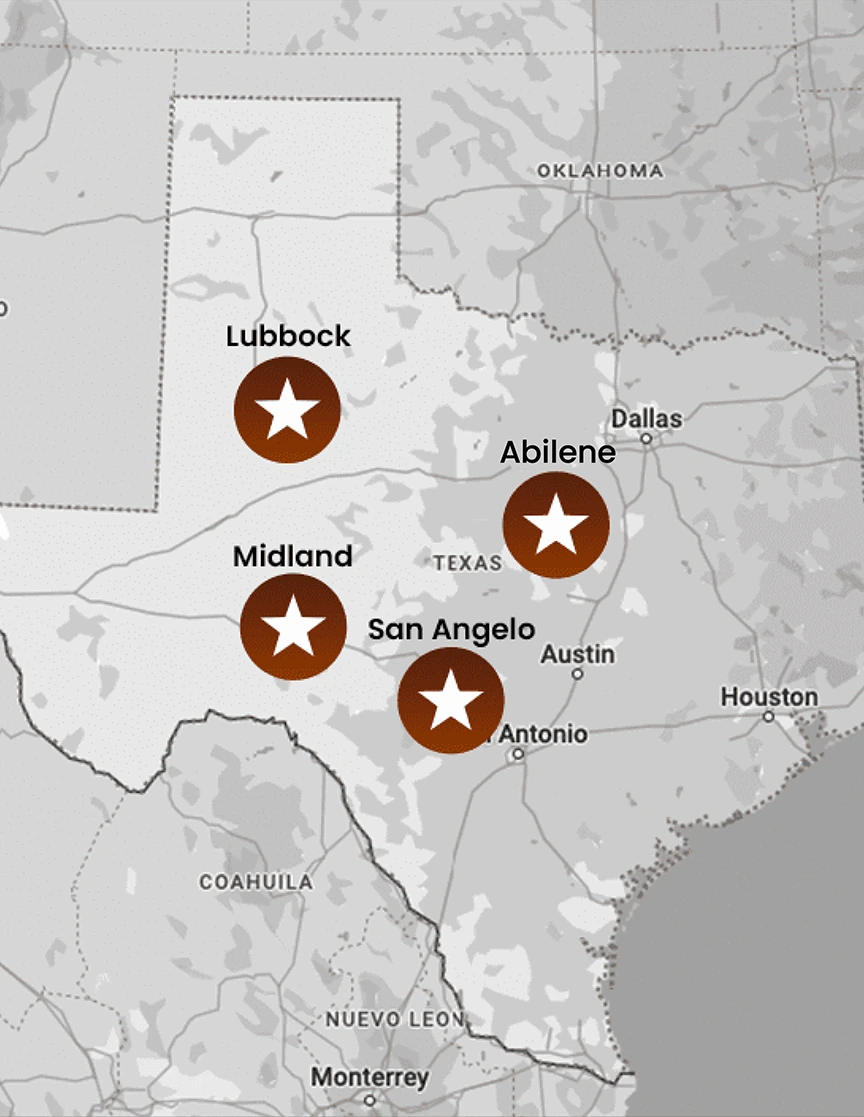
Our attorneys grew up in this part of the state. Our offices are in Abilene, Midland, San Angelo, and Lubbock — not because it looks good on a website, but because that’s where our clients are, where the courts are, and where we’ve spent our careers building our reputations. Our former law partners are now judges and elected district attorneys in these courts. When we say we know these courts, we’re not just talking.
Our managing partner Russell Lorfing is a former federal and state prosecutor. That’s not a marketing point — it’s a genuine advantage in the courtroom. He knows how to build a case that holds up, how to read the other side’s playbook, and what it takes to beat a billion-dollar insurance company when they decide to dig in.
When the other side works hard, we work harder. When they file five motions, we file ten. That’s not a slogan. That’s how we work every single day.
We take cases on a no-win, no-fee basis. You owe us nothing unless we win your case. Call 325-480-8100 today.
Additional reading: post concussion syndrome settlement value (from a car accident in Texas)
What to Expect in the Settlement Process
Most car accident claims settle before trial. But fair settlements don’t happen because the insurance company decides to do the right thing. They happen because you and your attorney are prepared to walk into a courtroom if you have to.
Here’s what the process actually looks like:
Report the accident and get medical attention immediately. Don’t wait to see if the pain goes away. Gaps between the accident and your first medical visit are one of the first things insurers use to question whether you were actually hurt.
Do not give a recorded statement to the other driver’s insurer. They will ask. Say no. Anything you say will be used to find inconsistencies and reduce your payout. Let us handle that conversation.
Gather everything from the scene. Police reports, photographs, dashcam footage, witness contact information. An insurance adjuster will investigate — gaps in the record become gaps in your case.
Complete your treatment and reach MMI. The insurance company may push you to settle before your condition has stabilized. Resist that pressure. Until you’ve reached Maximum Medical Improvement, you don’t know what your future care will cost — and neither do they. Settling before MMI means you may never recover those costs.
Wait for a fair number before signing anything. Once you sign a release, your case is closed. Even if your condition worsens next month. Our job is to make sure the number is right before that happens.
When negotiations don’t reach a fair result, we file suit. With over 500 jury trials behind this team, we are not afraid of a courtroom.
Additional reading: How long does a personal injury case take to settle
What to Avoid
Common Mistakes to Avoid After a Car Accident
The decisions you make in the first 48 hours can determine your entire outcome. These are the mistakes that hurt people the most.
Leaving the scene or not calling law enforcement. A police report creates an official record of what happened, who was involved, and what was observed. Without it, the other driver’s insurer can dispute the facts entirely. Don’t give them that opening.
Failing to get the other driver’s insurance information. Before you leave the scene, confirm their name, insurance carrier, and policy number. Tracking it down later is harder than you’d think — and sometimes you can’t.
Not photographing the scene. Vehicles get repaired. Roads get cleared. Skid marks fade. The only thing that preserves the scene is photographs taken right then. Take them.
Settling before reaching MMI. If the insurance company is pushing you to close your case, stop. Ask your doctor: have I reached Maximum Medical Improvement? Sign nothing until you have that answer. Once you do, you may be personally responsible for every medical cost that comes after.
Steps to Protect Your Settlement Claim
Protecting your claim starts at the scene and doesn’t stop until the case is closed.
- Don’t admit fault or apologize. Texas follows modified comparative fault rules under Texas Civil Practice and Remedies Code § 33.001. Even a partial admission at the scene can reduce what you recover — sometimes significantly.
- Get medical treatment right away. Even if you feel okay. Soft tissue injuries, whiplash, and concussions often don’t show up immediately. Waiting gives the insurer grounds to argue the accident wasn’t the cause.
- Don’t accept the first offer. That number is designed to close your case fast, not to make you whole. Call 325-480-8100 before you sign anything.
- Stay off social media. A check-in, a photo, a comment about your weekend — all of it can be used to challenge the severity of your injuries. All of it.
- Get witness information at the scene. Names and phone numbers from anyone who saw the crash. They can matter more than you expect.
- Don’t skip follow-up appointments. Gaps in treatment are the most common tool insurers use to argue your injuries weren’t serious. Show up to every appointment.
- Report the accident to your own insurer promptly. Delays can complicate your coverage under your own policy.
- Don’t negotiate directly with the other insurer. Their adjuster works for them. Not you. Let us handle that conversation.
Final Thoughts
Insurance companies bet that most people don’t understand how these cases work. They bet that you’ll take the first offer. Settle before you’re ready. Forget to document something that matters. Move on.
They’re often right. Because nobody teaches you this.
Here’s what we’ve learned after 500 trials and 75 years of combined experience in West Texas courts: the cases that get the best results are the ones where the injured person waited for MMI, built a strong medical record, and had attorneys who weren’t afraid to fight.
The average settlement number doesn’t apply to you. What applies to you is the specific nature and extent of your injury, the quality of your documentation, and who’s standing next to you when you walk into those negotiations.
At Lorfing Law, that’s us. And we don’t back down.
Contact us today for a free initial case evaluation, and let us guide you on your next steps.
FAQs
What is the fee policy of Lorfing Law?
We work on a no-win, no-fee basis. If we don’t win, you pay us nothing. No upfront costs. No hourly bills. No risk.
What is Lorfing Law’s approach?
We investigate fast, document thoroughly, and fight hard — in settlement negotiations and in court if that’s what it takes. We’re not here to get you the first offer the insurance company makes. We’re here to get you what the case is actually worth.
Who is Russell Lorfing?
Russell Lorfing is the managing partner of Lorfing Law and a former state and federal prosecutor. He built his career on cases that had to hold up under real pressure — civil and criminal.
His prosecution background gives him a genuine advantage in personal injury litigation: he knows how the other side builds its case, and he knows how to take it apart. He’s been nationally recognized for white-collar investigations and acknowledged by the FBI, IRS, and Customs & Border Protection. He could have worked anywhere. He chose West Texas — because this is home.
What is MMI, and why does it matter to my settlement?
MMI stands for Maximum Medical Improvement — the point where your doctor determines your condition has stabilized. You should not settle your car accident case before reaching MMI. If you do, you’re estimating future medical costs without knowing what they’ll actually be. Once you sign a release, your case is generally closed — even if your condition worsens next week or next year. Save this. If anyone is pushing you to settle before you’ve reached MMI, call us first.
Why is legal representation important in car accident settlements?
Legal representation is important in car accident settlements because it gets you fair compensation, navigates the legal process and protects you from lowball offers from insurance companies.