You usually hear it before you feel it. The slap of your body hitting concrete, tools skidding across the floor, the shift going quiet around you. Out here that fall might come on a rig floor, a warehouse aisle, or a customer’s job site, and the question afterward is always the same.
What happens next has almost nothing to do with how badly you’re hurt. In Texas, whether you can make your employer pay for that fall depends on one decision they made about insurance long before you ever clocked in, and most workers have no idea the decision was theirs to make.
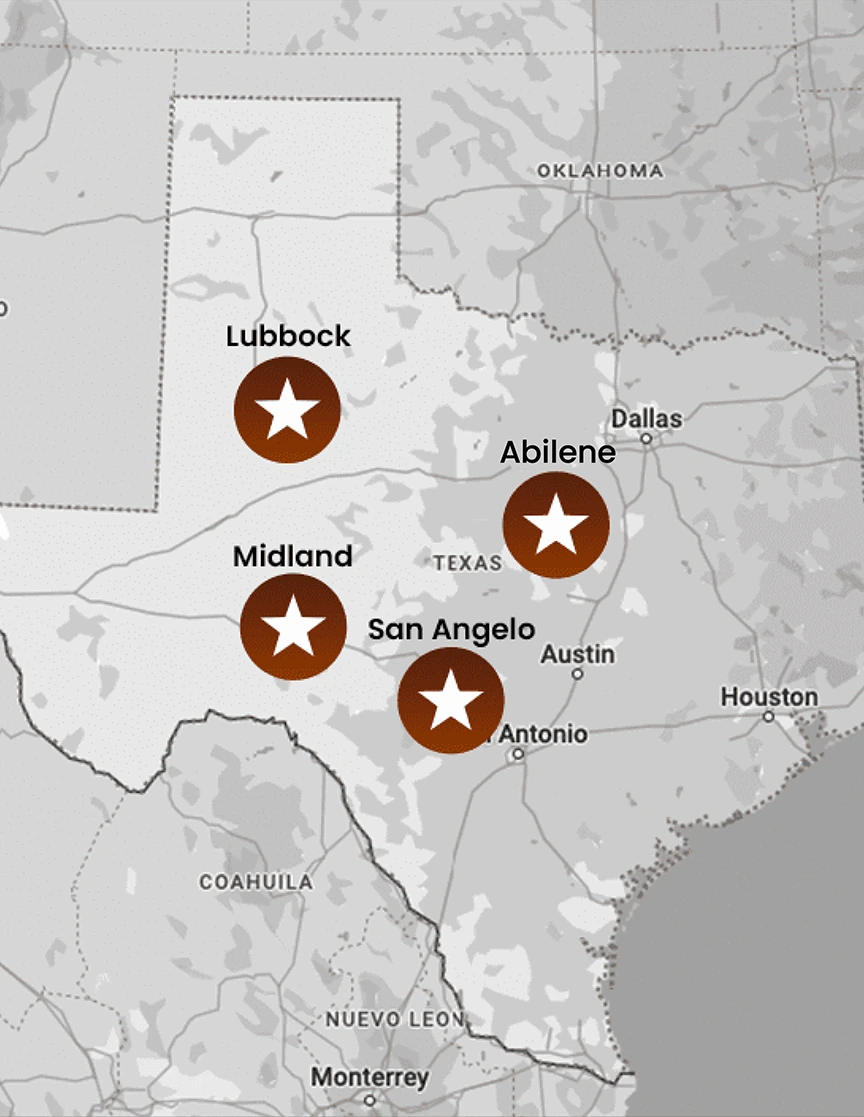
We’re Keith & Lorfing. We’ve spent our careers in the courtrooms of Abilene, Lubbock, Midland, and San Angelo, and we’ll tell you plainly what that decision means for you. If you were hurt in the oil patch, an Abilene Oil Rig & Field Accident Lawyer on our team can walk you through where you stand.
How one insurance choice decides your whole case
Forty-nine states make employers carry workers’ compensation. Texas is the one that doesn’t. Most private companies here can skip the system entirely if they choose to.
Companies that buy coverage are called subscribers. Companies that go without are called nonsubscribers, and which kind signs your paycheck sends your case down one of two very different roads.
You can find out which kind your employer is three ways. Ask them, read the notice they’re required to post at the workplace, or check with the Texas Department of Insurance, Division of Workers’ Compensation. Everything below is general information to help you get your bearings, not legal advice, and your situation turns on the facts of your own fall.
When your employer carried workers’ comp
If your employer subscribed, they made a trade you never got a say in. You receive benefits no matter who caused the fall, and in return they get protection from most injury lawsuits.
That protection is called the exclusive remedy rule, written into Texas Labor Code § 408.001. It means workers’ comp is almost always the only thing you can collect from a subscribing employer, even when a manager you could name by name left the hazard that put you on the floor.
Workers’ comp covers four basic things. It pays for medical treatment the system considers reasonable and necessary, replaces a portion of the wages you lose while you can’t work, provides impairment income if a doctor finds the damage permanent, and pays death benefits to your family if a worker is killed on the job.
The gaps are what hurt working families the most. Comp pays nothing for your pain and suffering, only a fraction of your lost wages, and not a dollar for the carelessness that caused the fall. If your employer is a subscriber, suing them over the injury is almost always off the table. There is one exception, and it exists only in the worst cases.
When a worker dies from gross negligence
The law leaves one door open, and it opens only when a family is already grieving. Under Texas Labor Code § 408.001(b), when a subscribing employer’s gross negligence or intentional act kills a worker, that worker’s spouse or heirs can sue for exemplary damages, the kind of money a court orders to punish the company.
Gross negligence is not an ordinary mistake. It describes a company that knew about a serious danger, looked straight at it, and did nothing, like leaving a documented structural defect unrepaired until it gave way under someone’s feet.
This door stays closed for injuries a worker survives. It was written for the families left behind.
When your employer skipped workers’ comp
If your employer is a nonsubscriber, the protection is gone. You don’t file a claim and wait on an adjuster. You take the company to court directly, for the full extent of what the fall cost you.
And the company walks into that courtroom without its three favorite defenses, because Texas Labor Code § 406.033 strips them away. It can no longer argue that your own carelessness should shrink your recovery. It can’t claim you assumed the risk just by taking a hard job. And it can’t blame a coworker to climb off the hook.
The protections go one step further. Any waiver you signed before you got hurt, the fine print swearing you accepted the risk or gave up your right to sue, is automatically void. A company that gambled on going without coverage doesn’t get to hide behind a form it made you sign on your first day.
That’s why a nonsubscriber lawsuit can be worth far more than anything an adjuster will offer. The two compare like this.
What you still have to prove against a nonsubscriber
We’ll be straight with you, because that’s worth more than a sales pitch. Suing a nonsubscriber is your right, but the company doesn’t pay simply because you fell. You have to show that the employer owed you a safe workplace, failed to provide one, caused your fall through that failure, and left you with real injuries and losses.
Picture a Lubbock warehouse hand who rounds an aisle and goes down on a forklift leak that’s been spreading across the floor for hours, with no cone or warning anywhere near it. A known hazard left unmarked is the kind of failure that wins a nonsubscriber case.
Now turn it around. If you trip over your own loose boot lace in a clean, well-lit aisle where the company did everything right, the claim gets thin in a hurry. The fall has to trace back to their carelessness, not just a rough day.
When a third party shares the blame
Even if your employer is a subscriber and that protection is standing, someone else may still owe you. A third party is anyone besides your employer whose carelessness helped cause the fall, and a claim against them sits completely outside the exclusive remedy rule.
That means you might draw workers’ comp from your employer and sue the third party at the same time. Oil rig falls are a perfect example, because several companies share one site and any of them might have created the hazard. An Abilene Oil Rig & Field Accident Lawyer will track down every contractor, operator, and equipment maker involved. In West Texas, those third parties tend to fall into a few familiar categories.
Take a San Angelo delivery driver who slips on an icy loading dock at a customer’s warehouse. Her own employer carries comp, so those benefits begin, but the owner who never salted that dock may owe her far more than comp ever will.
Running down every party who shares the blame is patient, stubborn work, and it’s the heart of our personal injury practice across Abilene, Lubbock, Midland, and San Angelo. Call 325-225-0143 and we’ll find all of them.
How the 2025 Texas Supreme Court ruling changed these cases
Most articles on this topic haven’t caught up to a decision that’s already reshaping nonsubscriber lawsuits, though you can be sure the defense lawyers have. On April 25, 2025, the Texas Supreme Court decided In re East Texas Medical Center Athens, and it changed how a nonsubscriber fights back.
The Court held that a negligence suit against a nonsubscriber is an ordinary injury case, not a claim for workers’ comp benefits. Because of that, the company can now name responsible third parties and ask a jury to shift part of the fault, and part of the payout, onto them.
For an injured worker, two things follow from that ruling. The company still can’t blame you, because your § 406.033 protections didn’t change. But it can now blame other companies and try to lower what it owes you by spreading the fault around.
Why the two-year deadline matters
Time works against you, and the other side counts on it. Texas gives you two years from the date of injury to file suit under Texas Civil Practice & Remedies Code § 16.003. Let that window close and even the strongest case in West Texas becomes worth nothing. Our Texas statute of limitations page covers the details.
If you lost a loved one, the two-year clock usually starts on the date of death. One trap shows up on nonsubscriber jobs, where some companies bury a shorter deadline in an arbitration agreement, so never assume you have the full two years until a lawyer reviews your paperwork.
Waiting costs you either way. Footage gets recorded over, witnesses move on, and reports go missing, so the longer you sit on a claim, the harder it becomes to win.
Injury Attorney
Talk to a West Texas injury attorney
A fall at work can take your health and your paycheck in a single afternoon. You deserve to know which road you’re on before anyone from the company gets you on the phone.
We built Keith & Lorfing around West Texas because it’s home, not a market. Our managing partner, Russell Lorfing, prosecuted federal cases in Lubbock, and together our attorneys have tried more than 500 cases to a jury over 75 years of practice, against the same employers and insurers betting you’ll take the first lowball offer and disappear.
We work on contingency, so you don’t pay us anything unless we win. Tell us what happened or call 325-225-0143, and let us level the field.
Questions West Texans ask us
What if my employer says the fall was my fault?
If they’re a nonsubscriber, that argument fails, because your own fault can’t reduce your recovery under § 406.033. If they’re a subscriber, fault doesn’t matter at all, since comp pays regardless. On a third-party claim, Texas follows a 51% rule, so you can recover as long as you’re 50% or less to blame, with your award reduced by your share.
Can I get anything if my employer has workers’ comp?
Yes. Comp covers your medical care and part of your lost wages no matter who caused the fall. What it won’t pay is your pain and suffering, and outside the death and gross negligence exception, you usually can’t sue a subscribing employer for that extra money.
What if a coworker caused my slip and fall?
If your employer subscribed, the exclusive remedy rule usually shields the company even when a coworker created the hazard. If your employer is a nonsubscriber, the coworker defense disappears, and the company still answers for it.
What if I fell at a customer’s property?
That property owner may owe you a duty of their own. You could have a claim against both your employer, if it’s a nonsubscriber, and the property owner, and the two are judged separately, so it pays to have someone map out every party.
Can a nonsubscriber use any defense at all?
A couple. Under § 406.033(c), the company can still argue your injury came from your own intentional act or from intoxication. And after the 2025 ruling above, it can try to shift fault onto third parties.
How do I find out if my employer has comp?
Ask, look for the notice posted at your workplace, or contact the Texas Department of Insurance, Division of Workers’ Compensation. Nonsubscribers are required to report their status to the state.