Picture two wrecks at the same Lubbock intersection. Same speed, same broken collarbone, same totaled truck.
One claim is worth up to $1 million. The other tops out at $50,000.
The difference comes down to what a phone was doing in the Uber driver’s cup holder the second the cars met. Rideshare crashes in Texas turn on details like that, and most injured people never learn them until it’s too late.
You did the responsible thing. You called a ride instead of driving, or you were just heading home in your own lane when an Uber blew through.
Now you’re hurt, the adjusters won’t stop calling, and a multibillion-dollar company has lawyers on the clock figuring out how to pay you as little as the law allows. We built our firm for that exact fight.
⚡ Bottom line. Passengers, pedestrians, and other drivers can usually recover after an Uber crash in Texas. The fight is over which insurance pays, and that depends on what the driver’s app was doing when you were hit.
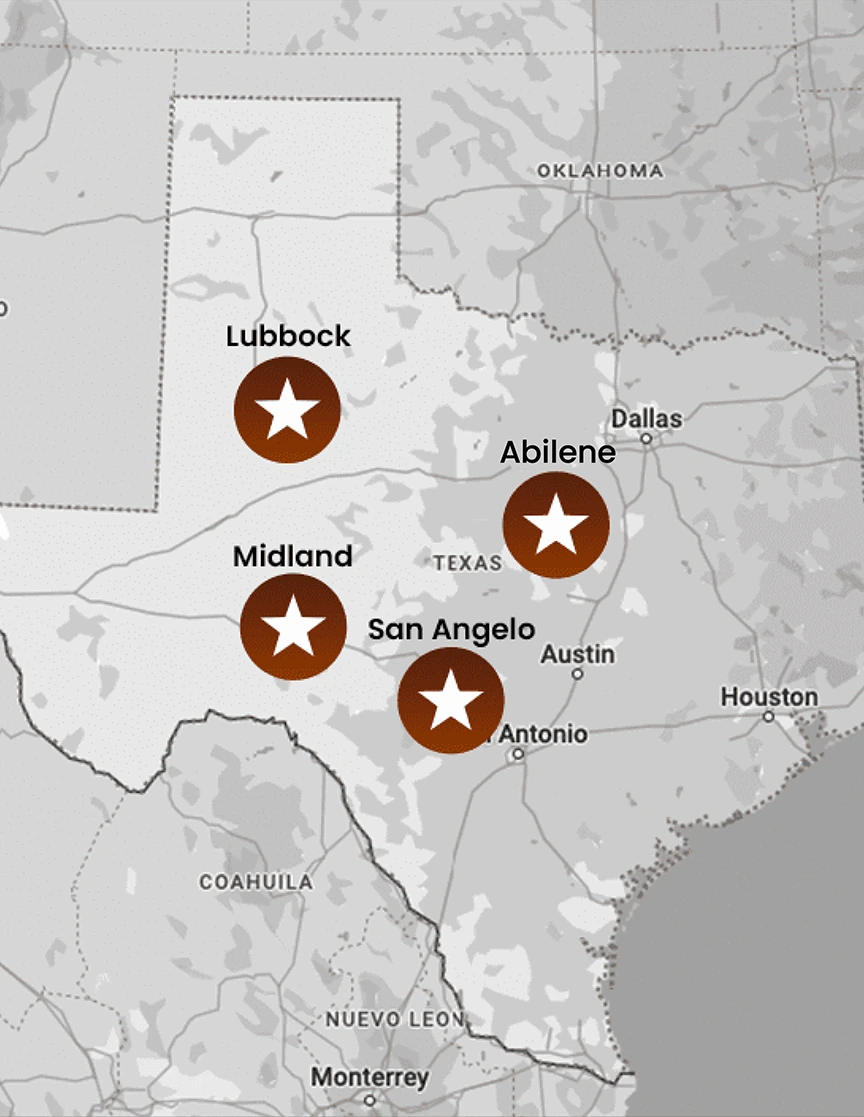
We’re Lorfing Law, and we try cases against companies like Uber. We work only out here in West Texas, so whether you need a Lubbock car accident lawyer or help anywhere from Midland to San Angelo to Abilene, call us at 325-225-0143 for a free consultation.
The 30 seconds that decide what your claim is worth
A normal wreck is simple. There are two drivers and two insurance policies, and everyone knows where they stand.
An Uber crash doesn’t work like that. With Uber, the coverage switches on and off depending on what the driver is doing, sometimes mid-shift and sometimes mid-block.
The same driver can carry three different levels of insurance over a single afternoon. Everything depends on one fact: what was the driver doing the moment of impact?
Texas answers that with three coverage “phases,” defined in its Transportation Network Company law (Texas Occupations Code Chapter 2402) and overseen by the Texas Department of Insurance.
The jump between Phase 2 and Phase 3 is enormous. A driver who taps “accept” goes from $50,000 in coverage to a full million in the time it takes to swipe a screen.
You can’t read the phase off the bumper at the scene. The proof lives on Uber’s servers, in the trip logs, GPS pings, and the timestamp showing the exact second the driver accepted your ride.
A hypothetical scenario:
A driver drops a fare in Midland, switches the app off, and clips someone on Loop 250 on the way home. Because the app was off, this is Phase 1, so Uber’s million-dollar policy never activates and only the driver’s personal insurance is left. Ten minutes earlier with a passenger in the back, the same crash could be worth many times more.
The two arguments Uber uses to say it owes you nothing
Uber didn’t grow this big by writing easy checks. When you make a claim, you’ll hit two walls, and both look sturdier than they are.
The contractor wall
Uber labels every driver an independent contractor, not an employee. That word does a lot of heavy lifting, because companies are usually responsible for what employees do on the job and almost never for contractors.
So Uber’s first move is to point at the driver and step back, claiming the driver isn’t its employee and isn’t its responsibility. It’s a tidy story, and it works often enough that Uber repeats it in nearly every case.
That argument has real weaknesses, though. Courts have allowed claims against rideshare companies to move forward when the company’s own conduct helped cause the harm, which we cover further down.
The fine-print wall
Remember setting up your Uber account? Tucked inside the terms you tapped past was an arbitration clause, a promise to handle disputes in private arbitration instead of in open court.
Arbitration tends to favor the company that wrote the rules, and it keeps your case away from a West Texas jury. Keeping your case from that jury is exactly what Uber wants.
The clause doesn’t apply to everyone the same way.
If you were in another car or on foot, you never signed anything with Uber, so its fine print has no hold on you at all. Even passengers can fight the clause when it was buried or unfair, which is worth asking about instead of assuming.
When a company this size stacks walls like these, you want someone who has knocked them down before. Call 325-225-0143 or tell us what happened. We don’t flinch at the word “Uber.”
Who do you actually sue, the driver or Uber?
Often the answer is both. They’re separate claims, and in the right case we bring them together.
The driver is always responsible for their own driving. A driver who runs a red light, stares at the app, or speeds through a caliche-slick rain caused that harm, no matter whose logo is in the windshield.
Suing Uber itself is the harder swing because of that contractor wall. The wall has gaps, though, and courts have allowed claims against rideshare companies to move forward on theories like these:
- Negligent hiring: Uber waved a dangerous driver onto the road without a real background check
- Negligent retention: Uber kept a driver on the app after the warning signs piled up
- Negligent app design: the app itself baited the driver into looking away from the road
None of these claims are easy. They take subpoenas, server records, and a firm willing to do the digging, which is the part Uber hopes you can’t handle alone.
Where the money actually comes from
Knowing who’s at fault is only half the job. The other half is finding the policy that pays, and that depends on who you were when the cars hit.
If you were the passenger on a live ride (Phase 3), that $1 million policy is in play whether your driver caused the crash or somebody else did. You did nothing but sit in the back seat, and Texas law treats you that way.
If another driver caused it, their insurance pays first, and Uber’s underinsured-motorist coverage can step in when their limits run dry. The table below shows where recovery usually starts.
If an Uber hit you in your own car
You don’t have to be inside the Uber to pay for one’s mistake. Get rear-ended by a rideshare driver, and three things decide your case.
The phase still controls the coverage. Phase 3 opens the million, Phase 2 shrinks it, and Phase 1 leaves only the driver’s personal policy.
The arbitration clause can’t touch you, because you never agreed to it. Texas fault rules do apply, though.
Under the state’s proportionate responsibility law (§33.001), your recovery drops by your share of the blame, and if they pin more than 50% on you, you recover nothing. That 50% line is the first thing the insurer will try to push onto you, so fault gets decided with hard evidence rather than argument.
The first hour belongs to you
You couldn’t control the crash. You can control what happens next, and the first hour is worth more to your case than the two years that follow it.
If you can move and think clearly, do these things at the scene:
- Call 911: get the police report, and write down the Uber driver’s name, car, and plate
- Screenshot the app: capture the trip status and driver details before that screen closes
- Photograph everything: every vehicle, the road, your injuries, and the damage
- Grab witness numbers: people drive off and memories fade by morning
- See a doctor today: adrenaline is a liar, and “I felt fine” wrecks good cases
- Stay quiet with adjusters: politely decline recorded statements until you’ve got a lawyer
That app screenshot looks like nothing. It can be the one piece of proof that locks the driver into Phase 3, the difference between a $50,000 ceiling and a $1 million floor.
The clock you can’t see
Texas gives you two years from the date of the crash to file most injury lawsuits (Texas Civil Practice & Remedies Code §16.003). That deadline is the same whether you sue the driver, Uber, or both. Our guide to the Texas personal injury statute of limitations covers the details.
Two years sounds like plenty, but it usually isn’t. Uber’s defense team started working the day after your wreck, and the evidence you need is sitting on a server with a deletion date.
Why a West Texas firm and a West Texas jury change everything
Most injury firms cluster in Dallas, Houston, and Austin and treat everything west of I-35 like flyover country. We went the other direction. We practice only in West Texas, with offices in Lubbock, Midland, San Angelo, and Abilene.
Out here, a rideshare crash isn’t the city’s version of one. Help can be a long farm-road drive away, the highways often run two lanes with no shoulder, and your case will be heard by people who actually drive these roads instead of a downtown arbitrator Uber would prefer.
This is our home court. Managing partner Russell Lorfing is a former federal prosecutor in Lubbock, and our team includes other former state and federal prosecutors with over 500 jury trials and more than 75 years of combined experience.
If your wreck happened in or near Lubbock, our Lubbock car accident attorneys handle these claims close to home.
Uber’s adjusters know something they won’t say out loud. A firm that actually takes cases to trial is worth far more at the negotiating table than one that only settles, and we’d rather stand in front of a West Texas jury than anywhere on earth.
📌 Note for Lorfing Law: this is the place to drop in a real, verified case result, such as a rideshare or commercial-vehicle settlement or verdict. We left it blank on purpose instead of inventing a number, since fabricated results would break Texas attorney-advertising rules. It’s the single biggest trust-builder you can add to this page.
You did the right thing. Let us handle the hard part, because the fight over a rideshare or other car accident claim is one we know cold.
Call 325-225-0143 or tell us what happened. The consultation is free, and you owe us nothing unless we win.
At The Word "Uber"
Frequently asked questions
Does Uber’s $1 million coverage apply to every crash?
No, and this trips a lot of people up. The million-dollar policy only switches on in Phase 3, once the driver has accepted a trip or has a passenger aboard. Phase 2 drops coverage sharply, and in Phase 1, with the app off, Uber’s commercial policy stays out of it entirely.
An Uber ran a red light and hit me while I was in another car. Now what?
You’re a third party, so Uber’s arbitration clause never reaches you. If the driver was in Phase 3, the $1 million policy applies, and you can pursue the driver and Uber’s insurer while keeping your right to a Texas courtroom.
Can Uber’s arbitration clause really stop me from suing?
It depends on who you are. Third parties generally aren’t bound by it at all, and even passengers with accounts can sometimes challenge it based on how it was buried or presented. A lawyer should make that call, not the adjuster who raises it.
What if the Uber driver had a bad record and Uber knew?
That’s the foundation of a negligent hiring or retention claim straight against Uber. If the company skipped a real background check or kept a driver with known safety problems on the road, then Uber’s own conduct is on trial alongside the driver’s.
How is an Uber crash different from a regular car wreck?
Layered insurance policies at wildly different limits, a corporate legal team protecting Uber, the independent-contractor defense, and the arbitration clause. Stack those together and it’s a different animal, which is why a lawyer who handles rideshare cases specifically matters here.
How long do I have to file against Uber in Texas?
Two years from the date of the crash. Don’t ride it to the deadline, because trip data gets deleted, witnesses scatter, and every month that passes makes the case harder to prove.