If you were hurt riding in an Uber, the crash almost certainly was not your fault. You were in the back seat, trusting someone else to drive, with no control over what happened on the road.
Now you are dealing with medical bills, missed work, and an insurance adjuster who seems eager to wrap things up fast. Before you agree to anything, it helps to understand the position you are actually in.
As an Uber passenger in Texas, you are in one of the strongest legal positions an injured person can be in. A $1 million insurance policy applies during your ride, the law rarely assigns any fault to passengers, and what you recover depends largely on whether you know your rights before you settle.
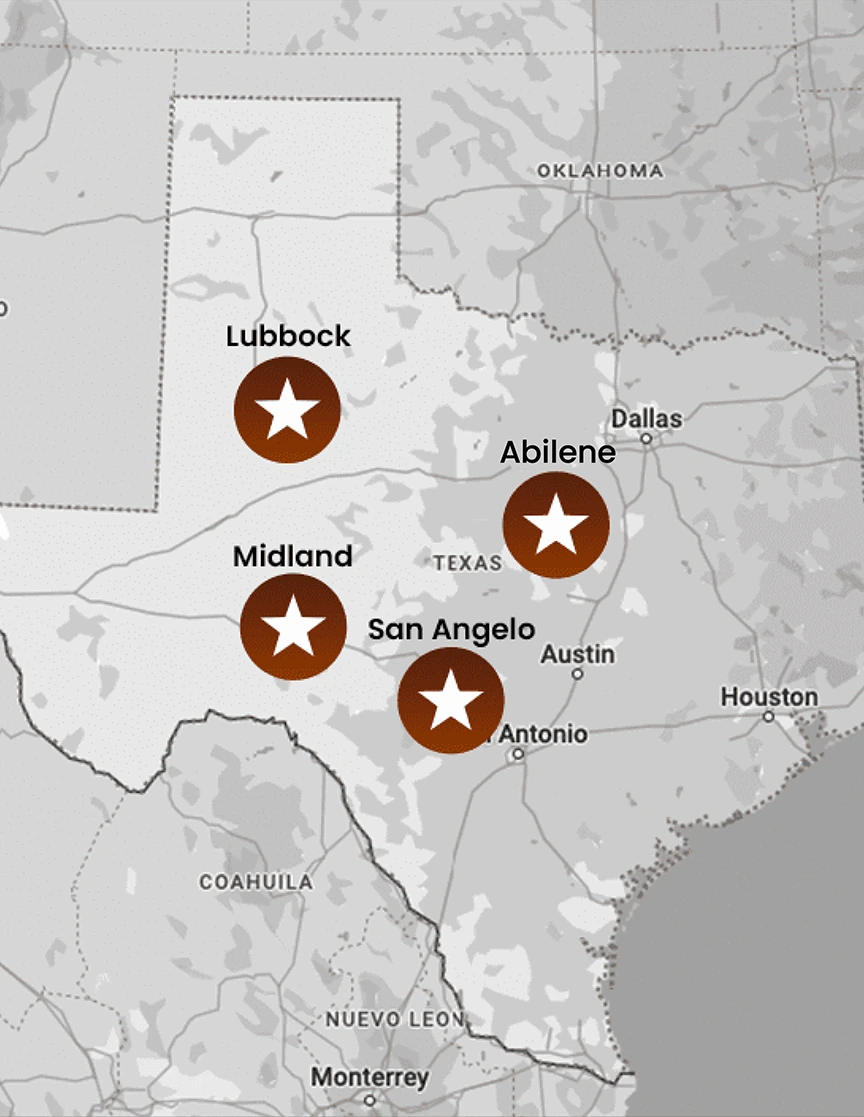
We are Keith & Lorfing, and we represent injured riders across West Texas, from a Lubbock car accident to crashes in Abilene, Midland, and San Angelo. Several of our attorneys are former prosecutors, so we know how the other side builds a case and how insurance companies try to pay less than a claim is worth. What follows is the same explanation we would give you sitting across our desk.
During an active Uber trip, Texas law requires a $1 million policy that covers you as a passenger. You are almost never blamed for the wreck, and you pay nothing unless we win. Call 325-225-0143.
Why fault almost never lands on a passenger
Most car accident claims come down to a fight over who was responsible. Adjusters push hard on that question, because every share of blame they assign to you is money they do not have to pay.
That argument rarely works against a passenger. You were not driving, braking, or making any of the decisions that led to the crash, so there is very little for anyone to pin on you.
Texas divides fault only among the people who actually caused a wreck, under a rule called modified comparative negligence in Chapter 33 of the Civil Practice and Remedies Code. The state’s 51% bar rule lets you recover as long as you are 50% or less at fault, and a passenger almost always clears that line with room to spare.
That gives you real leverage. Few injured Texans get to start a claim from a position this secure, and it is the first thing the insurance company would rather you not think about.
The $1 million policy that covers Uber passengers
Many people assume a back-seat passenger has little protection, as if the rider is an afterthought once the drivers sort out their insurance. The reality is the opposite.
The moment your driver accepts the ride, Texas Insurance Code § 1954.053 requires a $1 million policy that covers you from pickup to drop-off. Which coverage applies depends on what the driver was doing when the crash happened, and Uber describes these same tiers on its official insurance page.
During your trip, that $1 million policy is primary, which means it pays before anyone looks at the driver’s personal insurance. The same law also requires uninsured and underinsured motorist (UM/UIM) coverage in most cases, which protects you when the driver who caused the crash has little or no insurance of their own.
Before you are picked up
If the app is off, the driver is treated like any other private motorist, and only their personal policy applies. If the app is on but no ride has been accepted, Uber carries a smaller backup policy, though you are not on board during that stage anyway.
While you are on the trip
From the time your driver accepts the request until you step out at your destination, you are covered by the $1 million policy. That window covers nearly every passenger injury claim, which is why these cases are worth handling carefully.
Who pays for your injuries, and how they try to pay less
There are two common situations, and they involve different opponents. In both, the insurance company wants the same thing, which is to settle for as little as the law allows.
When your Uber driver caused the crash
Sometimes the Uber driver is the one at fault, whether from looking at the app, speeding, or running a stop sign. When that happens, Uber’s $1 million policy is responsible for your injuries.
Uber classifies its drivers as independent contractors, which usually prevents a direct lawsuit against the company itself. That rarely affects your recovery, because the policy was designed to cover exactly this kind of crash.
When another driver caused the crash
Other times a third driver runs a red light and hits your Uber. In that case you start with that driver’s insurance, and Texas only requires drivers to carry $30,000 per person in coverage.
For a serious injury, $30,000 does not go far. Uber’s UM/UIM coverage matters most in this situation, because it can pay the difference the at-fault driver cannot. It is also where many passengers lose out, simply because no one told them the second policy existed.
The Texas Department of Insurance explains in plain terms how uninsured and underinsured coverage works and why it matters.
Identifying which policy applies, and pursuing them in the right order, often decides whether you recover full value or settle for a fraction of it. Tell us what happened or call 325-225-0143, and we will help you figure out which coverage is yours.
What an Uber passenger claim is worth in Texas
Most people want a number, and that is understandable. But any attorney who promises a figure before reviewing your medical records is guessing, not representing you honestly.
A claim is built from two kinds of losses. Some you can add up with receipts and pay stubs, and others are harder to measure but just as real.
The losses you can document include the following.
- Medical bills for the emergency room, surgery, and months of physical therapy
- Future medical care your injuries will require later on
- Lost wages for every shift you missed while recovering
- Reduced earning power when an injury limits the work you can do
Other losses are harder to put a price on but matter just as much.
- Physical pain during recovery and beyond
- Emotional strain, including anxiety and the fear of riding again
- A narrower daily life, when activities you enjoyed are no longer possible
- Permanent scarring or disfigurement
To an insurance adjuster, each of these is a number to shrink. To us, they are the reason we do not settle early. What raises the value of a claim is solid evidence, and the factors below tend to carry the most weight.
| What drives the value | Why it matters |
|---|---|
| How badly you were hurt | A spinal or brain injury is worth far more than a strain |
| Total medical costs | Past bills plus future care set the floor |
| Time off work | More missed income means a larger wage claim |
| How clear the fault is | Undisputed blame settles faster and higher |
| Coverage available | The $1M policy sets a real ceiling for most cases |
| Your documentation | Strong records, photos, and reports build a strong case |
Examples of how these claims unfold
The examples below are hypothetical. They are not our clients, but they reflect the kinds of crashes we see on West Texas roads. For the results we have actually won, visit our case results.
In Lubbock, a rider takes an Uber home from dinner, and the driver hits the back of a stopped truck while looking at the app. Because the Uber driver caused the crash during an active trip, his $1 million policy is the first source we look to for the rider’s neck injury and lost income.
In Midland, another driver runs a red light and strikes the Uber, then turns out to carry only the $30,000 state minimum. After that coverage runs out, Uber’s UM/UIM coverage helps pay for the rider’s surgery and rehabilitation.
On a highway outside San Angelo, a car sideswipes the Uber and drives off without stopping. With no at-fault driver to pursue, the rider’s claim runs through Uber’s uninsured motorist coverage.
In each of these, the outcome depended on identifying which policy applied. Getting that answer right early can be worth tens of thousands of dollars. Tell us your side of the story and we will give you a straight assessment of what it is worth.
What to do in the first days after an Uber crash
What you do in the hours and days after a crash can affect your claim more than almost anything else. Adrenaline can hide serious pain, so you may feel fine even while a neck or back injury is getting worse. The CDC notes that concussion symptoms can take hours or days to appear, which is one more reason to get checked right away.
The steps below protect both your health and your case, and they are the ones insurance companies quietly hope you will skip.
- ✓ Call 911 so a police report records the facts at the scene
- ✓ See a doctor the same day, since head, neck, and back injuries often show up later
- ✓ Screenshot your trip in the app to prove the ride was active and identify your driver
- ✓ Photograph everything, including both vehicles, the road, and your injuries
- ✓ Get witness names and numbers before memories fade
- ✓ Report the crash through the app so Uber creates a record
- ✓ Avoid recorded statements to any adjuster until you have spoken with a lawyer
These are not just risks in theory. According to the Texas Department of Transportation, a crash serious enough to require a police report happened every 57 seconds in 2024, and 4,150 people died on Texas roads that year.
You generally have two years from the date of the crash to file a lawsuit under Section 16.003. That can feel like plenty of time, but Uber’s trip records may not be kept that long and witnesses forget details, so it is better to start early. Our Texas statute of limitations guide explains the deadlines in plain language.
Why injured West Texans choose Keith & Lorfing
Many firms advertise out of Dallas or Houston and treat West Texas as an afterthought. We made the opposite choice, with offices in Abilene, Lubbock, Midland, and San Angelo.
Our location does not limit our experience. Our attorneys have tried more than 500 jury trials, have over 75 years of combined experience, and several of us are former federal and state prosecutors who know how insurance companies and defense lawyers operate.
Managing partner Russell Lorfing served as a federal prosecutor in Lubbock before returning home to represent the people he grew up around. We could have taken corporate work somewhere else, and we chose West Texas instead.
When you hire us, you can count on three things.
- A lawyer answers your calls, not a call center
- You stay informed about your case at every stage
- You are treated like family, because that is how we see our clients
We handle personal injury cases on contingency, so there is no fee unless we win. Whether your injury came from a car accident, an 18-wheeler crash, or a collision that took someone you love, we are ready to help. Call 325-225-0143 to talk it through.
Frequently asked questions
Can I be blamed for the crash as a passenger?
Almost never. You did not control either vehicle, so fault falls on the drivers who caused the wreck. Short of something extreme like grabbing the wheel, no fault is assigned to you, which is one of the strongest positions Texas law offers an injured person.
Does Uber’s $1 million policy cover me if another driver caused the crash?
Partly. You pursue the at-fault driver’s insurance first, and when that falls short, Uber’s UM/UIM coverage during your trip can cover the gap. We pursue both so you are not left paying the difference.
What if I was hurt getting into or out of the Uber?
That depends on exactly when you were injured. Once you are inside the vehicle the active-trip coverage clearly applies, but getting in or out can fall into a gray area. We review the timing closely to determine which coverage applies and what other claims may exist.
Can I sue Uber directly?
In most cases you file against Uber’s insurance rather than the company, since Uber treats its drivers as independent contractors. The $1 million policy exists to cover passengers, so you can reach it through the claim or through litigation against the driver and the insurer.
How long do I have to file?
Two years from the date of the crash, under Section 16.003. Evidence disappears and memories fade over time, so the sooner you begin, the stronger your case will be.
What if my Uber driver was drunk?
A DWI by your driver is a serious factor, and the National Highway Traffic Safety Administration treats impaired driving as one of the most dangerous choices a driver can make. It may support additional claims such as negligent entrustment and, in extreme cases, punitive damages on top of your other losses. These cases need a lawyer’s attention quickly.