A car accident doesn’t have to leave visible injuries to cause lasting damage. Many people walk away from a crash only to deal with months—or even years—of nightmares, anxiety, intrusive thoughts, and sleep problems. That condition has a name: post-traumatic stress disorder (PTSD).
Texas law allows compensation for PTSD caused by a car accident, but these claims can be harder to prove. Settlement values often depend on clear medical documentation, the severity of symptoms, and how strongly the condition is tied to the crash.
If you’re living with PTSD after an accident, understanding your rights is the first step toward recovery—both financially and emotionally.
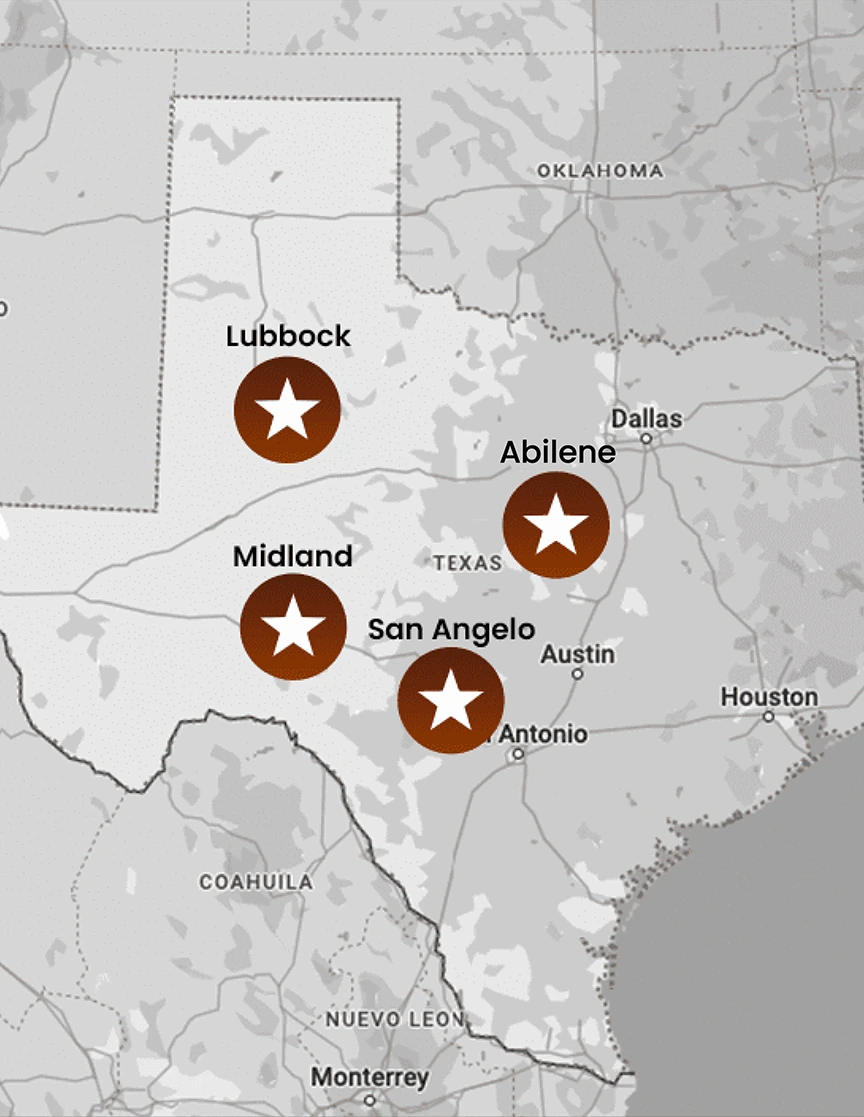
At Keith & Lorfing, our West Texas attorneys handle psychological injury claims as part of serious crash cases across the region. If you’re unsure what your case might be worth or how to move forward, speaking with an Abilene car accident lawyer can help you navigate the process with clarity.
This guide breaks down how PTSD claims work in Texas, what affects their value, and what to expect.
What PTSD After a Car Accident Looks Like
PTSD is a clinical diagnosis defined in the DSM-5. The general criteria include:
- Exposure to actual or threatened death or serious injury
- Intrusive symptoms (flashbacks, nightmares, distressing memories)
- Avoidance behaviors (avoiding driving, the crash location, or talking about the event)
- Negative changes in mood and thinking
- Changes in arousal and reactivity (irritability, hypervigilance, sleep problems)
- Symptoms lasting more than one month
- Significant distress or impairment
Acute stress disorder is a similar but shorter-term diagnosis used when symptoms last less than one month. PTSD is diagnosed when symptoms continue beyond that.
Common symptoms after a car accident include avoiding driving or riding as a passenger, panic when approaching the crash location, intrusive memories of the impact, sleep problems, exaggerated startle response, and trouble concentrating. Many people also experience secondary depression and anxiety.
Yes, You Can Recover for PTSD in Texas
Texas allows recovery for both economic and non-economic damages caused by a motor vehicle accident, including damages for psychological injuries.
To recover, you generally need to show:
- A diagnosis of PTSD by a qualified mental health professional
- A causal link between the crash and the diagnosis
- Documented symptoms and treatment
- Impact on daily life, work, and relationships
Texas does not require physical injury for a PTSD claim arising from being involved in a serious crash. The “impact rule” that limited some emotional distress claims in the past does not block recovery for PTSD when the plaintiff was directly involved in a traumatic event such as a serious accident.
What PTSD Damages Cover
Compensable damages in a Texas PTSD case generally include:
Economic damages:
- Mental health treatment costs (past and future)
- Psychiatric medication costs
- Inpatient or partial hospitalization when needed
- Lost wages from missed work
- Lost earning capacity when symptoms limit work ability
- Travel and out-of-pocket expenses
Non-economic damages:
- Mental anguish (past and future)
- Pain and suffering
- Loss of enjoyment of life
- Loss of consortium for spouses
- Disfigurement and physical impairment when symptoms have a physical component
Exemplary (punitive) damages. Available when the at-fault driver acted with gross negligence, such as drunk driving or street racing.
What PTSD Cases Are Worth in Texas
PTSD claim values vary widely. There is no single “average” PTSD settlement that applies to your case. The major drivers are severity, duration, treatment intensity, and the nature of the underlying crash.
Mild and short-duration PTSD with full recovery. Symptoms resolve within 6-12 months with therapy. Typical settlement contribution from PTSD often falls in the low five-figure to mid five-figure range above the physical injury baseline.
Moderate PTSD requiring extended therapy and medication. Symptoms last more than a year. Therapy and medication required. Settlement contribution often lands in the mid five-figures to low six-figures.
Severe PTSD with significant impairment. Inability to drive, ongoing therapy, medication, work limitations, possible inpatient care. Settlement contribution often reaches mid to high six-figures.
PTSD with permanent disability. Inability to return to prior work, ongoing care indefinitely, severe impact on family life. Settlement contribution can reach seven figures, especially when paired with serious physical injuries.
Wrongful-death PTSD claims. Surviving family members may have PTSD claims tied to the loss. Texas law allows surviving spouses, children, and parents to recover their own mental anguish damages in wrongful death cases.
These ranges are illustrative. The same diagnosis can produce very different settlement contributions depending on documentation, treatment, and the strength of the underlying injury claim.
Factors That Increase PTSD Case Value
A few factors consistently push PTSD case values higher.
- Formal DSM-5 diagnosis. From a psychiatrist, psychologist, or LCSW. A self-described “anxiety after the crash” is far weaker than a documented diagnosis.
- Early and consistent treatment. Therapy and medication starting soon after the crash and continuing without large gaps.
- Use of evidence-based treatment. Trauma-focused CBT, prolonged exposure therapy, EMDR, and other recognized modalities.
- Severity of the underlying crash. Rollovers, fatalities, fires, ejection, or being trapped in the vehicle increase credibility.
- Loss of a loved one in the crash. Particularly powerful for non-economic damages.
- Concurrent physical injury. PTSD attached to a credible physical injury is rarely contested as malingering.
- Documented work impact. Letters from employers and missed work logs.
- Family testimony. Spouses, children, and friends who can describe the “before and after” change.
- Severity testing. Standardized tests such as the PCL-5 or CAPS-5 documenting symptom severity.
Factors That Reduce PTSD Case Value
Some factors push values down.
- No formal diagnosis. Self-reported symptoms without a clinician’s diagnosis are weak.
- Gaps in treatment. Long unexplained gaps invite arguments that symptoms resolved or were never as severe as claimed.
- Pre-existing PTSD or mental health conditions. Without proper documentation showing the crash made things worse, defense lawyers blame everything on prior issues.
- Inconsistent reporting. Telling one provider one version and another provider a different version.
- Social media missteps. Photos of normal driving, vacations, or social activities used out of context.
- Limited insurance coverage. Small policy limits cap recovery regardless of severity.
How PTSD Cases Are Proven
A strong Texas PTSD case is built on layered evidence.
Treating provider records. Therapy notes, psychiatric evaluations, medication records, and treatment plans.
Diagnostic testing. Standardized PTSD measures such as the PCL-5 (PTSD Checklist for DSM-5) or CAPS-5 (Clinician-Administered PTSD Scale).
Expert testimony. A treating psychologist or psychiatrist explaining the diagnosis, causation, and prognosis. In contested cases, an independent expert may also be retained.
Medical records cross-referencing PTSD symptoms. Primary care, urgent care, and ER records often capture early reports of nightmares, panic, and avoidance.
Personal journal. A daily log of sleep, panic episodes, and triggers can be powerful evidence.
Family and employer testimony. Witnesses who can describe daily life before and after the crash.
Crash documentation. Photos, video, and police reports establishing the severity of the underlying event.
Common Defenses and How We Defeat Them
Insurers and defense lawyers respond to PTSD claims with predictable arguments.
“There’s no real diagnosis, just stress.” We respond with formal DSM-5 diagnoses, validated testing, and continuous treatment records.
“It’s pre-existing.” We use prior medical records to show baseline functioning before the crash and clear post-crash deterioration.
“They’re exaggerating for the case.” Standardized testing, consistent reporting across providers, and family/employer testimony defeat malingering claims.
“There’s no physical injury, so PTSD isn’t real.” Texas law allows PTSD recovery without physical injury when the plaintiff was directly involved in a traumatic event.
“Treatment was unnecessary or excessive.” Treating providers explain medical necessity. Evidence-based treatment guidelines help establish appropriateness.
What You Can Do to Strengthen a PTSD Claim
A few habits help PTSD cases reach full value.
- Get screened by a mental health professional early. Self-diagnosis is rarely persuasive.
- Stick with treatment. Even when sessions feel hard or expensive, gaps hurt the case.
- Use evidence-based therapies. Trauma-focused therapy carries weight. Avoid alternative or unverified approaches as primary care.
- Tell every provider the same story. Inconsistencies are a defense lawyer’s gift.
- Keep a symptom journal. Sleep, panic, triggers, and impact on daily life.
- Save communications. Texts, emails, and journal entries that document daily struggles.
- Avoid social media posts. They will be used out of context.
- Accept help from family. Their testimony about the change in you is powerful evidence.
How a PTSD Claim Fits Into a Texas Car Accident Case
PTSD damages are part of an overall personal injury claim, not a separate lawsuit. The case generally proceeds through these phases:
- Investigation and crash documentation. Police reports, vehicle data, witness statements.
- Medical and mental health treatment. Both physical injuries and psychological care begin.
- Damages workup. Past and future medical and mental health costs, lost wages, and impact on daily life.
- Demand and pre-suit negotiation. A demand package presents both physical and psychological damages.
- Lawsuit if needed. Cases that do not settle move into discovery.
- Mediation. Most cases settle here.
- Trial. A small percentage of cases go to a jury.
Texas’s two-year statute of limitations for personal injury claims applies. PTSD claims do not extend that deadline.
A documented PTSD diagnosis can substantially increase your settlement. If you are struggling after a car accident, call our West Texas attorneys at (325) 480-8100 or contact our Abilene Car Accident lawyer for a free consultation. We work on contingency, so you pay nothing unless we recover for you.
Frequently Asked Questions
Do I have to have physical injuries to recover for PTSD?
No, not in Texas, when you were directly involved in a traumatic event such as a serious crash.
How long do I have to file a PTSD claim in Texas?
Generally two years from the date of the crash. PTSD diagnosis does not extend that deadline.
Will the at-fault driver’s insurance pay for my therapy?
Eventually, yes, as part of a settlement. While the case is pending, treatment is typically paid by your own health insurance, MedPay coverage, or treatment liens.
Can I recover for PTSD if I was not the driver?
Yes. Passengers, pedestrians, and family members in the vehicle can all recover when the criteria are met.
Can my child recover for PTSD after a crash?
Yes. Children who develop PTSD after a serious crash can recover, with statute of limitations generally tolled until age 18.
What if I had anxiety or depression before the crash?
Pre-existing conditions do not bar recovery. Texas allows recovery for the worsening of a pre-existing condition. Documentation showing your baseline before the crash and clear deterioration after is essential.