Fatigued truck drivers are behind some of the most devastating crashes on Texas highways. That’s why federal law limits how many hours a commercial driver can be on the road—but when those limits are ignored, the consequences can be deadly. These rules are known as Hours of Service (HOS), and they exist to prevent exactly these kinds of accidents.
If a fatigued driver caused your crash, the trucking company’s HOS records can become some of the most important evidence in your case. But knowing how to find violations—and prove them—is where most cases are won or lost.
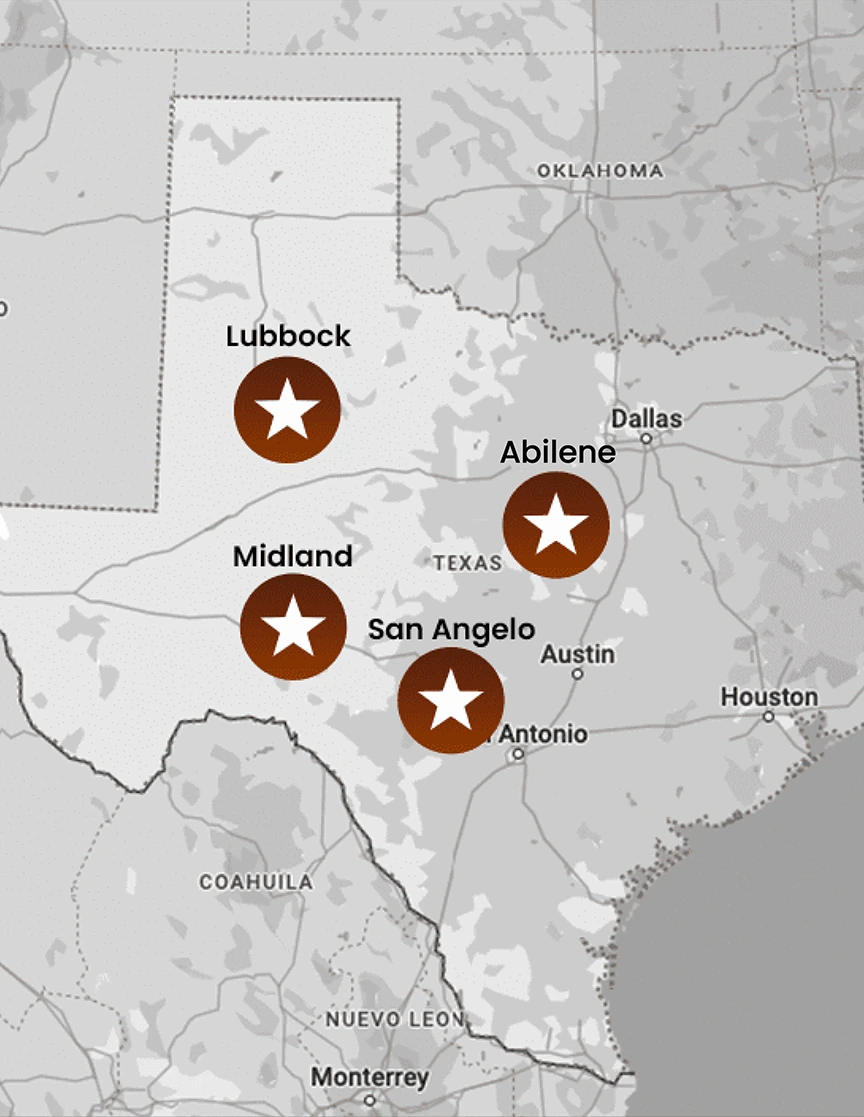
At Keith & Lorfing, our West Texas attorneys regularly use HOS violations to uncover how companies push drivers beyond safe limits. If you’re trying to understand whether fatigue played a role in your accident, speaking with an Abilene Truck Accident Lawyer can help you connect the dots and build a stronger case.
This guide explains how the rules work, how to spot violations, and why they matter to your claim.
What Are Hours of Service Rules?
The Federal Motor Carrier Safety Administration (FMCSA) created the Hours of Service rules to limit driver fatigue. The rules apply to most commercial motor vehicle drivers operating in interstate commerce, including drivers of tractor-trailers, oilfield trucks, and many other vocational trucks.
The core idea is simple. The longer a person drives without rest, the slower their reactions get. Federal research has long compared severe sleep deprivation to alcohol impairment. HOS rules cap on-duty time, force regular breaks, and require a minimum off-duty period each day and week.
These rules are not optional. A violation by a driver or carrier can be cited as negligence per se in Texas civil court when it causes a crash.
The Federal HOS Limits for Property-Carrying Drivers
The FMCSA’s main rules for property-carrying drivers (49 CFR Part 395) include the following limits:
11-hour driving limit. A driver may drive a maximum of 11 hours after 10 consecutive hours off-duty.
14-hour on-duty window. A driver may not drive after the 14th consecutive hour of coming on duty, even with breaks. The 14-hour clock starts as soon as the driver begins any work-related activity.
30-minute break requirement. After 8 cumulative hours of driving without at least a 30-minute interruption, the driver must take a 30-minute break.
60/70-hour limit. A driver may not drive after 60 hours on duty in 7 consecutive days, or 70 hours in 8 consecutive days, depending on the carrier’s schedule.
34-hour restart. A driver may “restart” the 7- or 8-day clock by taking 34 or more consecutive hours off duty.
Sleeper berth provision. Drivers using a sleeper berth may split required off-duty time in approved combinations (such as 8/2 or 7/3 splits).
Adverse driving conditions. Drivers may extend the 11-hour and 14-hour limits by up to 2 hours due to unforeseen weather or traffic.
Short-haul exception. Drivers operating within a 150 air-mile radius and returning to the work-reporting location each day may have modified rules.
These rules are technical, but the takeaway is straightforward. A typical interstate driver who has been driving more than 11 hours, working past 14 hours without a 10-hour break, or running over 60-70 hours in a week is in violation.
Passenger-Carrying HOS Rules Are Different
Drivers of buses and other passenger-carrying commercial vehicles operate under separate HOS rules:
- 10-hour driving limit after 8 hours off duty
- 15-hour on-duty window
- 60/70-hour limit on 7/8-day cycles
These rules are similar in structure but stricter on some points. They apply to motorcoaches, charter buses, and most large passenger commercial vehicles.
How HOS Rules Are Tracked
Since December 2017, most commercial drivers must use an Electronic Logging Device (ELD) to record duty status. The ELD connects to the truck’s engine and automatically records driving time. It produces tamper-resistant records of:
- Driving time
- On-duty (not driving) time
- Off-duty time
- Sleeper berth time
- Engine on/off events
- Vehicle motion
- Location data
- Driver identification
Before ELDs, drivers used paper logs. Paper logs were notorious for being falsified, which is one reason they were nicknamed “comic books” in the industry. ELDs reduced obvious falsification but did not eliminate it. Drivers and carriers can still log non-driving work time as off-duty, share login credentials, or use unassigned driving time creatively.
Carriers must keep the supporting documents, including dispatch logs, fuel receipts, toll receipts, GPS records, bills of lading, and on-duty inspection reports. Inconsistencies between the ELD and these supporting documents are often where cheating shows up.
Common Hours of Service Violations
In our caseload and FMCSA enforcement data, the most common HOS violations include:
- Driving beyond the 11-hour limit. Often shown when ELD or GPS data continues recording motion after 11 hours of drive time.
- Driving beyond the 14-hour window. Drivers and dispatchers stretch the day to make a delivery.
- Skipping the 30-minute break. Drivers push through a long stretch without taking the required break.
- Falsifying on-duty time as off-duty. Drivers log loading, unloading, paperwork, or fueling as off-duty to hide hours.
- Operating without a working ELD. Drivers run on paper logs or claim malfunctions to mask hours.
- Personal conveyance abuse. Personal conveyance is meant for personal driving, not for advancing a load. Misuse is a common dodge.
- 70-hour rule violations. Drivers exceed the weekly cap and run a full schedule the following week.
- Driver coercion. Carriers, brokers, or shippers pressuring drivers to violate HOS rules. This is itself a federal violation.
Each of these has a paper trail when properly investigated.
Why HOS Violations Matter in a Truck Accident Case
In Texas, a violation of a federal safety regulation can be evidence of negligence per se. That means if the violation contributed to your crash, the jury can be instructed that the violation establishes negligence as a matter of law.
HOS violations matter for several reasons:
- They provide a clear breach of a safety standard.
- They link the carrier’s business pressures (dispatch, scheduling, pay structure) to the crash.
- They open the door to direct claims against the carrier, not just the driver—especially when determining who is liable in a truck accident.
- They can support exemplary (punitive) damages when violations are willful or systemic.
- They neutralize the defense argument that the driver “did nothing wrong.”
Fatigue is also one of the few causes that produces clear pre-crash patterns. ELD and GPS data often show declining lane discipline, late braking, or speed creep in the minutes before impact.
Evidence That Proves an HOS Violation
Building a fatigue case requires more than the ELD record itself. It requires cross-checking the ELD against everything else.
Key evidence includes:
- ELD records and edits. Original logs and any edits or annotations.
- Supporting documents. Bills of lading, fuel receipts, toll records, dispatch logs.
- GPS and telematics data. Independent record of when and where the truck moved.
- Cellphone records. Show the driver actively working when logged off-duty.
- Dashcam and forward-facing video. Often used to show fatigue indicators in the cab.
- Carrier’s payroll and pay structure. Mileage-based pay and aggressive bonus structures encourage HOS violations.
- Dispatch communications. Texts, emails, and load assignments showing impossible schedules.
- Carrier’s CSA scores and FMCSA inspection history. Patterns of prior HOS citations are highly persuasive.
A spoliation letter from your attorney sent within days of the crash is essential. ELD data, dashcam video, and supporting documents have short retention windows. Without preservation, the proof can vanish.
What HOS Violations Mean for Your Compensation
When HOS violations are part of your case, you may be able to recover:
- Past and future medical expenses
- Lost wages and lost earning capacity
- Pain and suffering
- Mental anguish
- Disfigurement and physical impairment
- Loss of consortium for spouses
- Wrongful death damages for surviving family members
- Exemplary (punitive) damages when violations were grossly negligent or systemic
Texas allows exemplary damages when a defendant’s conduct shows conscious disregard for the safety of others. Knowingly running drivers over the legal limit, falsifying logs, or punishing drivers who refuse to violate the rules can meet that standard. Punitive damages can dramatically increase a case’s value.
Common Defenses and How We Defeat Them
Defense lawyers tend to respond to HOS claims with predictable arguments.
“The driver was within HOS at the time of the crash.” We use the supporting documents and GPS data to show the ELD record is unreliable.
“The driver took a 30-minute break.” We compare the ELD entry to fuel receipts, dispatch logs, and inspection reports to confirm or disprove the break actually happened.
“There was no policy of pressuring drivers.” Internal emails, dispatch messages, and pay structures often tell a different story.
“The HOS violation didn’t cause the crash.” We use ECM data, lane drift evidence, and expert testimony to tie fatigue patterns to the actual collision.
How Carriers Pressure Drivers Past Legal Limits
Most truck drivers want to follow the rules. Most also operate under economic pressure that makes following the rules expensive. Common forms of pressure include:
- Mileage-based pay. Drivers paid per mile, not per hour, lose money during legally required rest.
- Tight delivery windows. Schedules built on the assumption of perfect traffic and zero delays.
- Detention without pay. Drivers held for hours at shippers without compensation, then expected to make up time.
- Performance bonuses tied to on-time delivery. Rewards for behavior that requires HOS violations.
- Implicit threats. Drivers told their next load depends on completing the current one on time.
Driver coercion is itself prohibited under federal regulations (49 CFR 390.6). When we find this pattern, the case shifts from “the driver was tired” to “the company manufactured a tired driver.”
Hours-of-service evidence has a short shelf life. If you were hit by a commercial truck, call our West Texas truck accident attorneys at (325) 480-8100 or contact our Abilene Truck Accident Lawyer for a free consultation. We send preservation letters fast so the records are still available when we need them.
Frequently Asked Questions
How long do I have to file a truck accident case in Texas?
The general personal injury deadline is two years from the crash. Wrongful death claims have a similar two-year deadline. Government claims often have shorter notice deadlines.
What if the driver claims his ELD was malfunctioning?
Federal rules require carriers to repair or replace malfunctioning ELDs within 8 days. Persistent claims of malfunction often indicate concealment, not coincidence.
Are oilfield truck drivers exempt from HOS rules?
Some oilfield operations are subject to a special rule that allows certain waiting time at well sites to be logged differently. The rule does not abolish HOS limits, and abuse is common.
Can a driver be sued personally for HOS violations?
Yes. The driver is responsible for compliance even when the carrier pressures violations. In most cases, the carrier is also liable under vicarious liability and direct negligence theories.
Can ELDs be edited after the fact?
Edits are allowed but must be tracked. Each edit creates a record of who made it, when, and what was changed. Edit history is often where cheating shows up.