 Skip to content
Abilene Motorcycle Accident Lawyer
When a car and a motorcycle collide, the rider almost always absorbs the greater physical impact—even when the rider did nothing wrong. That imbalance shapes everything that follows, from the medical consequences to the way the insurance company approaches fault.
Adjusters may try to flip the story by claiming the motorcycle was speeding, difficult to see, or “came out of nowhere.” Those arguments can lean on assumptions about riders rather than the physical evidence. A strong motorcycle claim must address that bias directly with scene photographs, lane positions, sightlines, vehicle damage, electronic data, video, witnesses, and medical evidence that fits the mechanics of the collision.
Motorcycle cases should not be treated like larger versions of fender-bender claims. The injuries are often far more severe, and the evidence must explain both how the crash occurred and why its consequences are so serious.
If you are trying to understand what your motorcycle accident claim may be worth, start with our guide to the average motorcycle accident settlement in Texas and the factors that can raise or lower the value of a claim.
Do You Have a Potential Motorcycle Accident Claim?
To pursue a motorcycle accident claim, four key elements must be established:
Duty of Care: The responsible party had an obligation to operate their vehicle safely and avoid causing harm.
Breach of Duty: This duty was violated through negligent actions or reckless behavior.
Causation: The breach directly caused the accident and your resulting injuries.
Damages: You suffered tangible damages, such as medical expenses, lost wages, or pain and suffering.
Damages You Can Recover As Motorcycle Riders
You may be entitled to various types of damages if you’re involved in an accident.
Economic Damages: These are the measurable costs created by the crash, including past medical bills, reasonably necessary future care, lost income, reduced earning capacity, property damage, and other out-of-pocket expenses.
Non-Economic Damages: These address the human consequences that do not arrive with an invoice, including physical pain, mental anguish, physical impairment, disfigurement, and the effect the injuries have on daily life.
Punitive Damages: Punitive damages may be available when clear and convincing evidence shows that the harm resulted from fraud, malice, or gross negligence. These damages are intended to punish and deter especially serious misconduct and are subject to Texas statutory limits.
A recovery allocated to medical expenses is not simply extra money in the rider’s pocket. It reimburses costs the injury created. Outstanding medical bills, hospital liens, health-insurance reimbursement claims, or other valid liens may need to be resolved from the case proceeds. That is why the gross settlement and the amount the injured person ultimately receives are not always the same.
Our guide to motorcycle accident settlement amounts in Texas explains how injury severity, medical costs, lost income, fault, insurance limits, and other factors can affect the value of a claim.
Who Can You Hold Liable in Motorcycle Accident Cases?
When you’re injured in a motorcycle accident, figuring out who is responsible is important for seeking compensation. Here’s a breakdown of who you might be able to hold accountable:
Car Drivers: If a car driver’s negligence or reckless behavior caused the accident, they can be held liable.
City Transportation Authorities: A city or local transportation authority may sometimes be liable for a dangerous road condition or maintenance failure. However, governmental immunity, exceptions for discretionary decisions, and special notice deadlines can limit or bar these claims.
Bus Drivers: When a bus driver’s actions lead to an accident, such as improper lane changes or speeding, they can be held accountable.
Truck Drivers: If a truck driver was negligent—like driving too long without rest, speeding, or not securing cargo properly—they can be held liable for the crash.
Property Owners: If a property owner has an obstruction or hazard on their property that extends into the roadway and causes an accident, they could be held responsible. Examples include overgrown vegetation or a poorly placed sign that blocks a driver’s view.
Vehicle Component Manufacturers: If a defect in a motorcycle or vehicle part caused the accident, the manufacturer of that component might be liable, including faulty brakes, tires, or any other critical part that failed and led to the crash.
Government Agencies: A government agency may sometimes be liable when a dangerous road condition or maintenance failure contributes to a crash. These cases are subject to the Texas Tort Claims Act, including governmental-immunity rules and formal notice requirements that may apply long before the ordinary filing deadline.
Our attorneys handle motorcycle crashes as part of our broader West Texas personal injury practice, including claims involving negligent drivers, commercial vehicles, dangerous property conditions, and defective products.
How to Contact Us
Here are the best ways to reach out to us:
Telephone: Call us at (325) 480-8100 for immediate assistance and to discuss your case.
Contact Form: Fill out our contact form for a quick and easy way to get in touch.
We offer a free consultation to discuss your situation and explore your options. Don’t hesitate to reach out—we’re here to help you every step of the way.
Keith & Lorfing: Abilene Motorcycle Accident Lawyers
What distinguishes our firm is the unity and dedication of our team, all focused on leveling the playing field for hard-working West Texans.
At Keith & Lorfing, our attorneys and legal professionals share a deep commitment to justice, knowing that each case we handle is a fight for something greater than ourselves.
For more on why geography, local courts, juries, and actual regional experience can matter, read our guide to choosing a local West Texas injury lawyer.
We work together seamlessly, drawing on our collective experience—over 150 years and more than 500 trials—to support and advocate for our clients. Here, you’re not just a case; you’re embraced as family by a team that truly values every member.
How Our Abilene Motorcycle Accident Law Firm Can Help
At our Abilene motorcycle accident law firm, everything we do is driven by a deep commitment to championing the rights of working-class Texans. Here’s how our team can support you throughout your claim:
Types of Cases: We handle all kinds of motorcycle accident cases, from collisions and single-vehicle crashes to accidents caused by road hazards or defective parts.
Recovering Lost Wages: We work to get you compensation for lost wages so you can focus on recovery without financial stress.
Medical Bills: We fight to cover your medical expenses, relieving the financial burden of necessary care.
Property Damage: We help recover costs for repairing or replacing your damaged motorcycle and personal property.
Emotional Recovery: We support claims for emotional distress and psychological trauma caused by the accident.
Insurance Negotiations: We negotiate with insurance companies to secure a fair settlement that covers all your losses.
Legal Guidance: We provide clear, compassionate guidance to make the legal process as smooth and stress-free as possible.
At our core, our commitment is to advocate for working-class Texans with the same dedication and care we bring to every case. Our attorneys come from backgrounds of hard work and modest beginnings, reflecting the values of the communities we serve.
Riders with serious injuries may also need help with issues beyond the motorcycle claim itself, including medical expenses, lost income, insurance disputes, and long-term recovery. Our Abilene personal injury lawyers handle a wide range of serious injury claims throughout the area.
We’re here to support you through every challenge and pursue the best available outcome based on the evidence and Texas law.
Important Initial Advice After a Motorcycle Crash
After a motorcycle accident, your actions are essential for both your recovery and potential legal claim. Here’s what you should do:
Seek Medical Attention and Follow Advice: Always attend your medical appointments and follow your doctor’s recommendations, even if your injuries seem minor. Proper documentation is essential for both healing and your claim.
Stay Off Social Media: Avoid posting about the accident or your injuries online. Insurance companies monitor social media and may use your posts against you.
Don’t Accept the First Insurance Offer: Insurance companies often lowball the first offer. Speak with an attorney before agreeing to any settlement to ensure it’s fair.
Watch Your Words With Insurance: When speaking with adjusters, be cautious and stick to the facts. Do not guess about speed, distance, visibility, or what the other driver could see. An imprecise answer may later be used to argue that you were speeding or appeared suddenly.
Contact Our Abilene Motorcycle Accident Lawyer: Speak to an attorney from Keith & Lorfing as soon as possible. We can work hard to protect your rights, handle negotiations, and ensure you meet filing deadlines.
Deadlines to Get the Compensation You Deserve
In most Texas motorcycle injury cases, a lawsuit must be filed within two years after the claim accrues, which is often the crash date. Exceptions may apply, and claims involving governmental units can have much shorter notice deadlines.
If you miss this deadline, you could lose your right to get compensation for your injuries, medical bills, and other costs.
It’s important not to wait too long. Evidence can disappear, and witnesses might be harder to find. Insurance companies may also try to offer you less if you delay.
Gathering Evidence After Being Involved in a Motorcycle Accident
Gathering evidence is necessary to build a strong case. Here’s the evidence you should start collecting as soon as possible:
Police Reports: Obtain a copy of the police report, but do not assume it captures every fact or ends the investigation.
Medical Records: Keep all medical documentation related to your injuries, treatments, and recovery.
Eyewitness Statements: Get the contact information of any witnesses who saw the accident and can provide statements.
Scene and Lane Evidence: Photograph the final positions of the motorcycle and other vehicles, lane markings, debris, skid or scrape marks, traffic controls, obstructions, and the scene from each driver’s viewpoint.
Sightlines and Visibility: Record the lighting, weather, road geometry, nearby signs or vegetation, and the distance from which the motorcycle should have been visible.
Damage Patterns: Photograph every side of the motorcycle, the rider’s gear, and all involved vehicles. The location and direction of damage can help reconstruct the impact.
Electronic and Video Evidence: Ask that event-data-recorder information from the other vehicle, dashcam footage, traffic-camera footage, and nearby business or residential surveillance be preserved when available.
Medical Proof: Preserve diagnostic imaging, surgical records, rehabilitation plans, work restrictions, and documentation of how the injuries affect ordinary activities. The medical evidence should connect the force of the collision to both immediate and long-term harm.
What Can I Expect to Pay?
We work on a contingency fee basis, which means you don’t pay any upfront legal fees. Instead, our payment comes as a percentage of the compensation we recover for you.
You do not owe an attorney’s fee unless we recover compensation for you. Responsibility for case expenses is explained in the written fee agreement.
We believe everyone should have access to quality legal representation, regardless of their financial situation. Our goal is to ease your stress so you can focus on recovery, not legal fees.
General Information on Motorcycle Accidents in Abilene
Motorcycle accidents in Abilene can happen for many reasons, from distracted drivers to hazardous road conditions. As a motorcyclist, you’re more vulnerable on the road, and accidents can lead to serious injuries.
Texas Motorcycle Laws
Here’s what you need to know about accident laws in the state of Texas:
Helmets · lanes · licensing · coverage minimums
Texas is not a no-fault state, so you can pursue compensation from the at-fault party's insurance if you are injured in an accident. Motorcycles must be insured under the same liability requirements as cars.
Texas motorcycle laws
Required under 21
Helmet use
Riders under 21 generally must wear a helmet. A rider who is at least 21 may qualify for an exception after completing an approved motorcycle safety course or if covered by a qualifying health insurance plan.
Illegal in Texas
Lane splitting
Riding between lanes of slow-moving or stopped traffic is illegal in Texas. Motorcyclists must stay within their designated lane and adhere to all traffic laws.
Class M
Licensing
A Class M license is required. Applicants generally must complete an approved safety course and satisfy the applicable DPS requirements. Additional testing or restrictions may apply, particularly to minors.
Required
Eye protection
Texas law mandates that motorcyclists wear eye protection unless their motorcycle is equipped with a windscreen. Other safety gear is strongly recommended.
Day and night
Headlights on
Texas law requires that motorcycles have their headlights on at all times while riding. This helps increase visibility and safety on the road.
Seat and footrests
Passengers
When carrying a passenger, the motorcycle must be equipped with a proper seat and footrests. Passengers under 21 must wear a helmet.
Texas insurance requirements
$30,000
Bodily injury · per person
The floor a single injured rider can reach on the at-fault driver's liability policy.
$60,000
Bodily injury · per accident
Applies when multiple people are injured — shared across all claimants.
$25,000
Property damage
Repair or replacement of the motorcycle and other damaged property.
Uninsured / underinsured motorist
Texas insurers generally must offer UM/UIM coverage. A policyholder may reject it in writing, so the policy and any signed rejection should be reviewed after a crash.
Personal injury protection (PIP)
Generally must be offered, and the coverage is included unless the policyholder rejects it in writing. PIP may cover medical expenses and part of lost income regardless of fault, subject to policy terms and limits.
Check the rejection
Both UM/UIM and PIP are included unless someone signed them away. Proof of insurance must be carried at all times and presented to law enforcement if requested.
An experienced Abilene motorcycle accident lawyer from our law firm will provide valuable guidance and support if you have any questions or need assistance after an accident.
Comparative Fault
Texas follows a modified comparative fault system. If you are found partly responsible, your recoverable damages are reduced by your percentage of responsibility. If your responsibility is greater than 50%, Texas law bars recovery.
Modified comparative fault · Texas
Texas follows a modified comparative fault system. If you are found partly responsible, your recoverable damages are reduced by your percentage of responsibility. That makes attempts to shift blame especially important in motorcycle cases.
Why the percentage matters
1–50%
Recovery reduced
Your recoverable damages are reduced by your percentage of responsibility. Every point the insurer assigns to the rider comes off the recovery.
Over 50%
Recovery barred
If your responsibility is greater than 50%, Texas law bars recovery entirely. This is why an unchallenged assumption about the rider can end a claim.
Claim against evidence
“The motorcycle was speeding.”
An estimate, often from a driver who did not see the bike until impact.
Damage patterns and electronic data. Photograph every side of the motorcycle, the rider's gear, and all involved vehicles — the location and direction of damage can help reconstruct the impact. Request event-data-recorder information from the other vehicle.
“The motorcycle was difficult to see.”
A conclusion about visibility offered without measurement.
Sightlines and visibility. Record the lighting, weather, road geometry, nearby signs or vegetation, and the distance from which the motorcycle should have been visible. Texas requires motorcycle headlights on at all times, day or night.
“The rider came out of nowhere.”
The most familiar claim, and the one that leans hardest on assumption.
Scene and lane evidence. Final positions of the motorcycle and other vehicles, lane markings, debris, skid or scrape marks, traffic controls, obstructions, and the scene from each driver's viewpoint.
“The rider was in the wrong lane position.”
Lane position framed as fault rather than as ordinary riding.
Video and independent accounts. Ask that dashcam footage, traffic-camera footage, and nearby business or residential surveillance be preserved while it still exists, and get contact information for every witness.
“The injuries do not fit the crash.”
Evaluating the claim as if it were an ordinary low-impact collision.
Medical proof. Diagnostic imaging, surgical records, rehabilitation plans, work restrictions, and documentation of daily-life effects. The evidence should connect the force of the collision to both immediate and long-term harm.
“The police report settles it.”
Treated as the last word on how the crash happened.
Obtain the report — but do not assume it captures every fact or ends the investigation. A careful reconstruction can show what each road user could actually see and do before impact.
Watch your words with insurance
When speaking with adjusters, be cautious and stick to the facts. An imprecise answer may later be used to argue that you were speeding or appeared suddenly.
- Do not guess about speed.
- Do not guess about distance.
- Do not guess about visibility.
- Do not guess about what the other driver could see.
- Stay off social media. Insurance companies monitor it and may use your posts against you.
- Do not accept the first offer. Speak with an attorney before agreeing to any settlement.
Assumption is not evidence
Claims about the rider should be tested against physical evidence rather than accepted as fact. Sightline measurements, damage patterns, video, electronic vehicle data, and witness accounts do that work.
That makes attempts to “flip the script” especially important in motorcycle cases. An insurer may point to visibility, estimated speed, lane position, helmet use, or the familiar claim that the rider “came out of nowhere.”
Those claims should be tested against physical evidence rather than accepted as fact. Sightline measurements, damage patterns, video, electronic vehicle data, witness accounts, and a careful reconstruction can show what each road user could actually see and do before impact.
Texas is not a no-fault state, so you can pursue compensation from the at-fault party’s insurance if you are injured in an accident.
Minimum Insurance Coverage Limits and Requirements
Liability Insurance: Texas law requires a minimum of $30,000 for bodily injury per person, $60,000 for bodily injury per accident (when multiple people are injured), and $25,000 for property damage.
Uninsured/Underinsured Motorist Coverage: Texas insurers generally must offer uninsured/underinsured motorist coverage. A policyholder may reject it in writing, so the policy and any signed rejection should be reviewed after a crash.
Personal Injury Protection (PIP): Texas insurers generally must offer PIP, and the coverage is included unless the policyholder rejects it in writing. PIP may cover medical expenses and part of the insured person’s lost income regardless of fault, subject to the policy’s terms and limits.
Motorcycle-Specific Requirements: Motorcycles must be insured under the same liability requirements as cars.
Proof of Insurance: It is mandatory to carry proof of insurance at all times while operating a motorcycle or vehicle. This proof should be presented to law enforcement if requested.
Causes of Motorcycle Accidents
Riding a motorcycle comes with significant risks. According to NHTSA’s 2024 data, motorcyclists were almost 27 times more likely than passenger-car occupants to die per vehicle mile traveled and almost five times more likely to be injured.
Motorcycle accidents can result from a variety of factors, often involving both rider and driver behavior:
Distracted Driving: Drivers who are texting or using their phones can easily overlook motorcyclists.
Speeding: Excessive speed reduces reaction time and increases the severity of accidents.
Improper Lane Changes: Failure to check blind spots or signal can lead to collisions with motorcycles.
Failure to Yield: Drivers not yielding the right-of-way can cause dangerous intersection accidents.
Road Hazards: Poor road conditions, such as potholes or debris, can pose serious risks for motorcyclists.
In Texas, motorcycle accidents are a significant concern, with over 8,000 motorcycle crashes reported in 2022 alone.
Types of Injuries We See as Lawyers
Motorcycle accidents often lead to severe and life-changing injuries because the rider has little protection from the vehicle, pavement, or surrounding objects.
Even so, a defense insurer may evaluate the claim as if it were an ordinary low-impact collision. Detailed medical evidence must show not only the diagnoses, but also future care needs, physical limitations, lost work, and the ways the injury has changed daily life.
Here’s a look at the most common types:
Road Rash: Painful abrasions from sliding on the road, ranging from minor to severe.
Degloving: Severe injury where skin and tissue are forcibly removed, exposing underlying structures.
Spinal Cord Injuries: Can cause partial or complete paralysis and require extensive medical care.
Head and Neck Injuries: Includes concussions, skull fractures, and traumatic brain injuries, even with helmet use.
Arm Injuries: Fractures, dislocations, and soft tissue damage that impact arm mobility and strength.
Leg Injuries: Often includes fractures and severe bruising, which may require surgery and rehabilitation.
Broken Bones: Common fractures include arms, legs, ribs, and pelvis, resulting from high-impact collisions.
Amputation: In severe cases, limbs may need to be amputated, leading to significant physical and emotional impacts.
Paralysis: Resulting from spinal injuries, it can affect the lower body (paraplegia) or all four limbs (quadriplegia).
Fatalities: Motorcycle accidents can be fatal; Texas saw over 500 motorcycle-related deaths in 2022 alone.
Other Locations We Serve
As expert Texas personal injury attorneys, we cover the entirety of West Texas, including but not limited to:
Speak to a Motorcycle Accident Lawyer in Abilene, TX, Today!
If you’ve been hurt in a motorcycle accident, you don’t have to face this battle alone. Our dedicated team of Abilene motorcycle accident lawyers is ready to stand by your side and fight for the justice and compensation you need. We understand the tough road you’re on, and we’re here to help you every step of the way.
Contact us today at (325) 480-8100 for 24/7 service.
"Delivered an incredible victory!"
The relief was extraordinary! We will never be able to express our gratitude enough.
"Great, honest, and incredibly knowledgeable."
Russell is a top-notch person. Hands down will recommend him to anybody.
"Absolutely an amazing man, and an honest one at that."
This was absolutely the best defense experience I have ever had with an attorney.
We Are
West Texas Strong
Our commitment is to stand up for hardworking Texans who have been affected by truck accidents. Our team, rooted in humble beginnings, values hard work – with family histories of farmers, mechanics, laborers, firefighters, and servicemen. This heritage drives our dedication.
We deliberately choose not to represent corporations or the elite. Instead, we fight for everyday West Texans, often taking on big trucking companies and their insurers who try to short-change you. Our mission is to level the playing field, ensuring that you receive the justice and compensation you deserve.

Trey Keith
Founding Partner Meet Trey

Russell Lorfing
Founding Partner Meet Russell
&
3 Things you’ll get With Keith & Lorfing
A Lawyer Will Answer Your Calls & Emails
You’ll Be Informed About Your Case Every Step of the Way
You’ll Be Treated With Compassion & Respect
Ask Russell a Question
At No Cost To You!
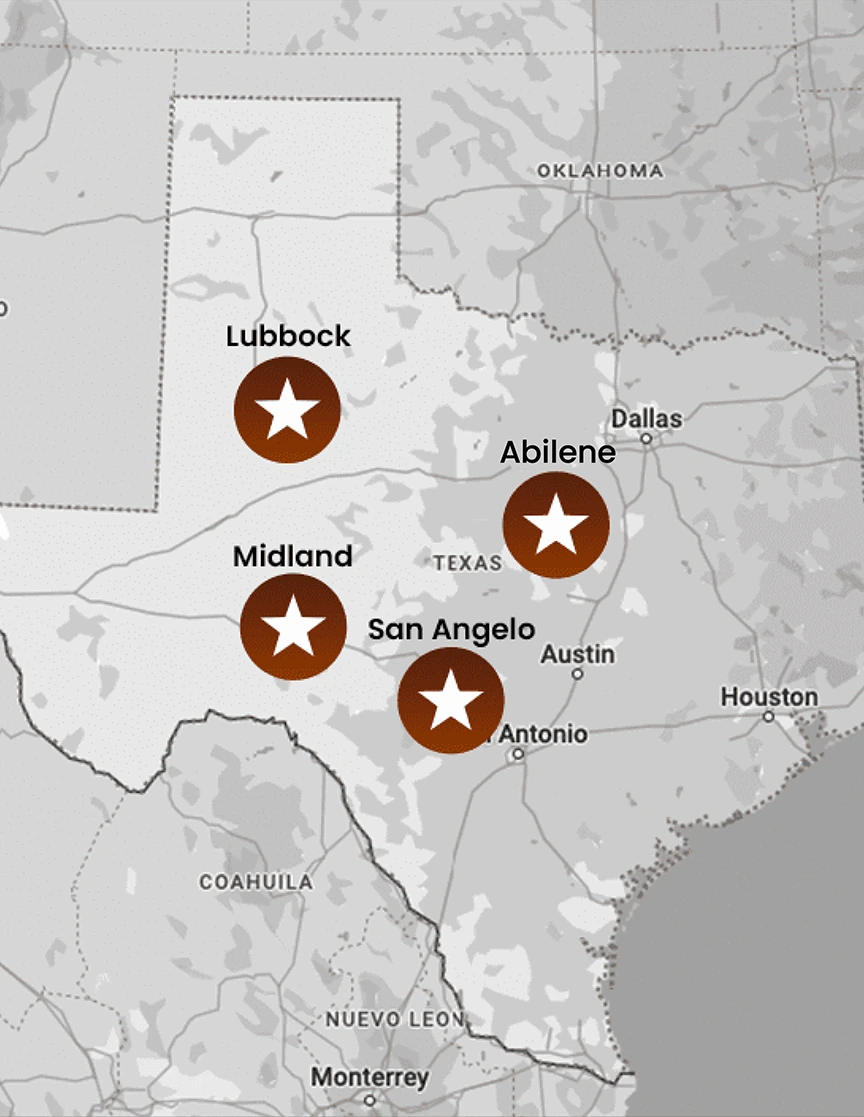
We’re committed to being the best in the West! Proudly serving clients throughout Abilene, Lubbock, San Angelo, Midland & all of West Texas.
