A car wreck is over in seconds. The hard part comes later, when you can’t get out of bed, can’t cover your shift, and the paycheck you were counting on never shows up.
While you heal, the bills keep coming. The truck note is still due, and the mortgage doesn’t care that some stranger ran a light and changed your year.
Texas law lets you get that lost income back. The trouble is that insurance companies count on you not knowing what your time is worth, so you take their first low offer just to make the pressure stop.
Closing that gap, between what you’re owed and what they hope you’ll settle for, is what Russell Lorfing and our team do every day. If your wreck happened in or around Lubbock, our Lubbock car accident lawyers can take the claim off your hands.
The steps below show you how the process works.
What “lost wages” actually means in a Texas claim
The adjuster wants to count your base hourly pay, multiply it by the days you missed, and call it a day. That number is almost always too small.
Your real losses are bigger than one line on a pay stub. A full lost wages claim can include:
- Regular wages or salary for every hour and day you missed
- Overtime you normally worked and counted on
- Bonuses or commissions you lost because you couldn’t be on the job
- Self-employment profit your business lost while you were laid up
- Paid sick or vacation days you were forced to spend covering your recovery
Lost wages are economic damages under Texas law, meaning real, countable dollars. They sit alongside pain and suffering, but they’re far easier to prove, which is exactly why the insurer fights to keep the number low.
Lost wages vs. lost earning capacity, and why the difference matters
There are two kinds of money on the table here, and most people only ever ask for one. That mistake can cost a working person more than the wreck itself did.
Lost wages are the income you’ve already missed. Lost earning capacity is the income you will miss because your body can’t do the same work it used to.
You don’t have to be flat-out unable to work to claim earning capacity. If a bad back means you can’t climb a derrick anymore, or a wrecked hand means you can’t swing a hammer at full speed, the difference in what you’ll earn over your lifetime belongs to you, not the insurance company.
This is the single most overlooked dollar figure we see. People settle for last month’s missing checks and walk away from twenty years of future losses they never knew they could claim.
Not sure whether your injury changed what you can earn going forward? It costs nothing to find out, and the future number is usually the bigger one. Call (325) 225-0143 or ask Russell a question for free.
Who pays your lost wages in Texas?
Texas is an at-fault state, so the driver who caused the crash, along with that driver’s insurance, owes you for what you lost. That responsibility is set out in the Texas Transportation Code.
In real life, your money can come from three different doors. The insurance company is hoping you only knock on the one with the least cash behind it.
The at-fault driver’s liability insurance
If another driver caused the crash, you file against their bodily injury coverage. Texas only requires drivers to carry $30,000 in bodily injury coverage per person, a figure confirmed by the Texas Department of Insurance.
That low minimum is a trap for serious injuries. A bare-minimum policy can run dry long before your real losses are covered, and a bad injury blows past $30,000 fast.
Your own personal injury protection (PIP)
Your own Texas policy almost certainly includes Personal Injury Protection (PIP) unless you turned it down in writing. PIP is no-fault, so it pays whether the crash was your fault or not.
PIP covers 80% of your documented lost wages up to your policy limit, and it’s usually the fastest cash you can get while the bigger claim grinds on. Under Texas Insurance Code Section 1952.156, the insurer must pay your benefits within 30 days of getting reasonable proof of your loss.
Uninsured and underinsured motorist (UM/UIM) coverage
When the at-fault driver has no insurance, or nowhere near enough, your own UM/UIM coverage can fill the hole. Too many people quit at the other driver’s low limits, never realizing their own policy could pay the rest.
Before you accept that you’ve “maxed out” a claim, let someone check every policy that might apply. We do that for our clients without being asked.
The step-by-step process for claiming lost wages
A lost wages claim isn’t won by hoping the adjuster is fair. It’s won by handing them a record they can’t argue with, and you build that record one step at a time.
Step 1. Get a doctor’s note putting your injury in writing
Your medical records are the spine of the whole claim. The insurer wants proof that a doctor, not you, decided you couldn’t work, and for how long.
Ask your treating physician to write down that your injuries kept you off the job, the exact dates you couldn’t work or were on light duty, and the limits that stop you from doing your normal tasks. Skip this step and the insurer gets an easy reason to deny you. No medical note, no claim.
Step 2. Tell your employer and track every missed day
Let your employer know what happened and keep your own count of every day you miss. Then ask for a letter, on company letterhead, that nails down the facts.
That letter should spell out your job title, your pay rate, the dates you were out, whether you used sick or vacation time, and any overtime you’d normally have worked. Ask for it early, while the details are still fresh in everyone’s mind.
Step 3. Pull together your proof of income
The insurer has to see what you actually earned before the wreck, so make the math impossible to dispute. For most employees that means pay stubs from the months before the crash, your latest W-2, last year’s tax return, and any record of bonuses or commissions.
The steadier your income history looks on paper, the harder it is for them to shave the number down. Consistency is your friend here.
Step 4. Add up the real total
Once your paperwork is in hand, the math is usually simple.
- Hourly workers take the hours missed times your hourly rate, including the overtime you normally pulled.
- Salaried workers divide annual salary by 52 weeks, then multiply by the weeks missed (or use your daily rate times the days you were out).
- Paid leave counts too, so add back every sick or vacation day the wreck forced you to spend.
Money you would have earned still counts, even when it didn’t come as flat hourly pay. Leave the bonuses and overtime off, and you’re handing the insurer a discount.
Step 5. File with the right insurer, and don’t pick just one
You can often run two claims at once, and using both gets money to you faster. File a PIP claim with your own insurer for quick, no-fault cash, and file a bodily injury claim against the at-fault driver for your full losses.
The moment the at-fault insurer disputes your claim or floats a lowball offer is the moment having Russell and our team in your corner changes the whole conversation. Adjusters treat a represented claim very differently from one they think they can run over.
Step 6. Don’t let the clock beat you
Texas gives you two years from the date of the crash to file suit, under Texas Civil Practice and Remedies Code Section 16.003. Your lost wages ride along with that injury claim.
When the insurer says your self-employed income is too hard to prove
If you draw a day rate, run cattle, or swing a hammer for yourself, you’ve probably already been told your income is “too hard to prove.” That line isn’t the truth. It’s just the insurance company hoping you’ll give up and go away.
You earn just as real a living as anyone on a W-2, and the law treats your losses the same. The proof just looks different.
Instead of pay stubs, you’ll lean on tax returns from the past year or two, including your Schedule C if you’re a sole proprietor, plus 1099s, bank deposits, invoices, and the contracts you couldn’t fulfill. Those cancelled jobs, the texts turning down work you physically couldn’t do, become some of your strongest evidence.
Out here, income runs in seasons and hitches, and that trips up a lot of claims. If you make most of your money in one stretch of the year, a single slow month’s records will badly undersell what this wreck actually cost you.
| If you’re a… | Bring this proof | And watch out for |
|---|---|---|
| Oilfield or energy worker | Tax returns, 1099s, day-rate contracts, hitch schedules | A slow month isn’t a typical month |
| Rancher or ag worker | Schedule F, sale receipts, livestock and crop records | Income tied to seasons and market swings |
| Independent tradesperson | Invoices, contracts, 1099s, bank deposits | Jobs you had to turn down |
| Salaried employee | Pay stubs, W-2, employer letter | Overtime and bonuses left off the claim |
| Cash-paid worker | Bank deposits, client receipts, witness statements | A heavier burden of proof, but still a real claim |
Roughnecks, ranchers, and tradespeople have every right to recover lost income, and we know how to put a hard number on the way West Texans actually earn it.
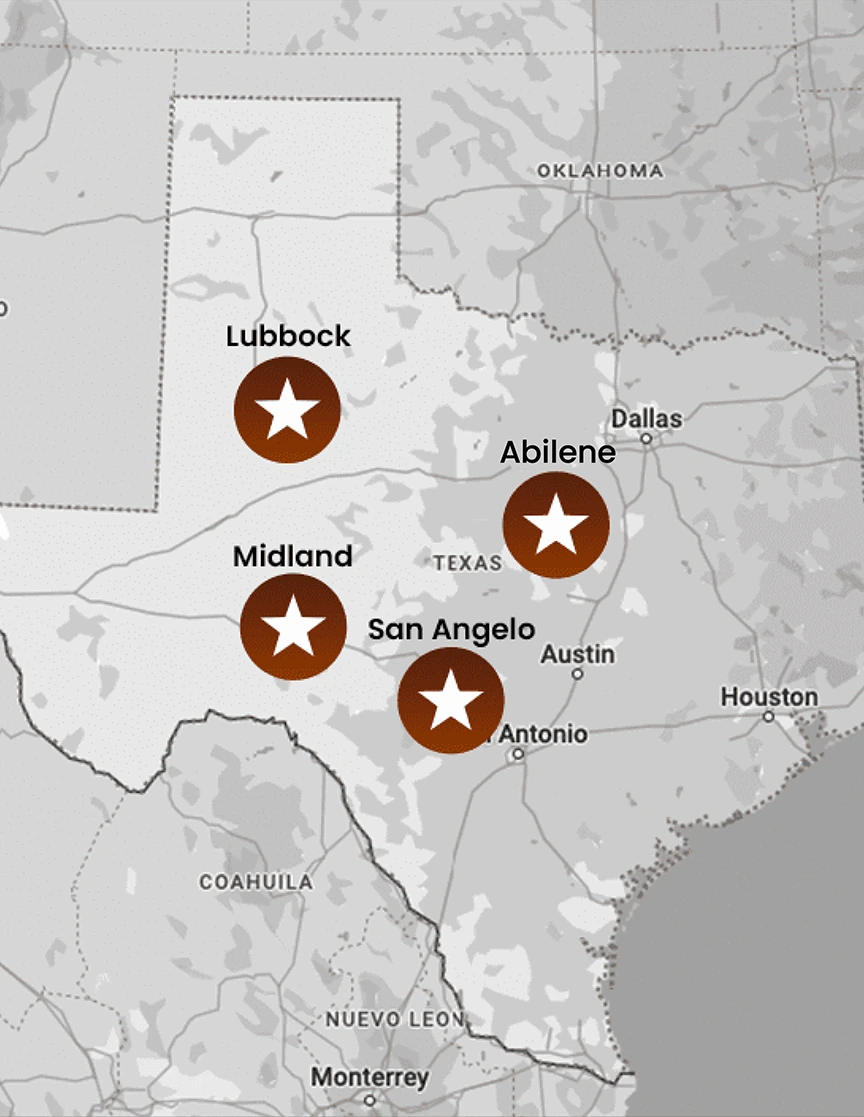
Ready to find out what this wreck really cost you? We serve clients across Abilene, Lubbock, San Angelo, Midland, and all of West Texas. Call (325) 225-0143 or request your free consultation.
What it really looks like when the numbers stack up
Picture a roughneck on a $1,200-a-day rotation who gets rear-ended on the highway and misses eight weeks. (This is a hypothetical, not one of our cases, but the math is true to life.)
His missed day rate is the obvious number, and the insurer would love to stop there. His real loss also includes the overtime hitches he’d have pulled, the completion bonus tied to the job, and the two weeks of paid leave his company made him spend.
| What he lost | How it’s proven |
|---|---|
| Eight weeks of day-rate pay | Contracts and 1099s |
| Overtime hitches he’d have worked | His past schedules |
| Project completion bonus | Prior pay records |
| Forced paid leave | Reimbursed as lost wages |
Handle that claim alone, and you’d likely ask for the base pay and nothing more. The overtime, the bonus, and the burned leave, often the biggest slice of the total, quietly disappear. Closing that gap is the whole point of having us in your corner.
When the injury takes more than a paycheck
Some wrecks don’t just cost you a few weeks. They take the work itself.
If your injuries mean you can’t do your trade anymore, or you’re stuck with fewer hours and lower pay for good, you may have a lost earning capacity claim that reaches years into the future. For someone who built a whole life on his back and his hands, that loss is everything.
Proving it takes more than a pay stub. It usually calls for a vocational expert who measures what your body can still do, a forensic economist who calculates what those future losses are worth today, and medical proof that the limits are permanent.
The numbers can be life-changing. A 40-year-old tradesman who can’t do physical labor after a spine injury may be looking at twenty-five years of reduced earnings, and that future belongs in your claim, not in the insurance company’s pocket.
Why hurt West Texans put their trust in Keith & Lorfing
When you’re out of work and the money’s getting tight, you don’t want a lawyer who talks about settling. You want one who’s spent his career in front of juries and knows how the other side thinks.
Russell Lorfing is a former federal prosecutor in Lubbock, and our firm is stacked with former state and federal prosecutors. Between us, our attorneys have tried more than 500 cases to a jury and carry over 75 years of combined courtroom experience.
We don’t chase work in Dallas or Houston. We do this out here because West Texas is home, from the Panhandle to the Llano Estacado down toward Big Bend. These are our people, and our Lubbock car accident lawyers know the local courts and the adjusters you’ll be up against.
Insurance companies know the difference between a claim that’s represented and one that isn’t. When they see a trial-tested team behind you, the delays and the lowball offers tend to dry up.
What You Earned
Frequently asked questions
What documents do I need to claim lost wages?
You’ll want a doctor’s note saying you couldn’t work and for how long, an employer letter confirming your absence and pay, and recent pay stubs or tax returns to prove your income. Self-employed workers swap the employer letter for tax returns and business records.
What if I’m paid in cash?
You can still file. You just prove it a different way. Bank deposits, client receipts, and statements from the people who paid you can all establish your income, and we can build a strong case from whatever records you’ve got.
Can I claim the sick or vacation days I used?
Yes. If you only spent that time off because of the wreck, those days are lost wages too. Track every one of them and put them in the claim.
How does PIP help with lost wages?
PIP pays 80% of your documented lost wages, up to your limit, no matter who caused the crash. It’s often the fastest money available, which is a lifeline when the other driver’s insurer is dragging its feet.
What if the other driver barely had any insurance?
If their policy comes up short, your own underinsured motorist coverage may cover the rest. Other sources can come into play too, such as a commercial truck or an employer being involved, and we’ll track down every policy that owes you.
Do I need both a lost wages and an earning capacity claim?
Lost wages cover what you’ve already missed, while earning capacity covers what you can no longer earn. Heal up and go back to the same job at the same pay, and you likely have just a lost wages claim. If the injury follows you for years, you may have both, and the future loss is usually the larger one.